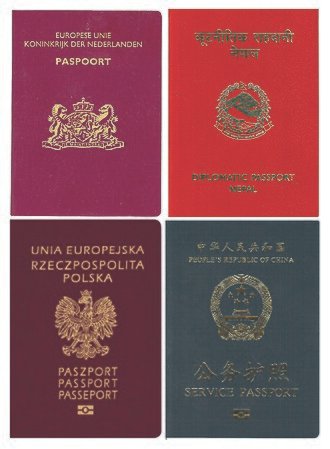
The 2026 Henley Passport Index ranks 199 passports by how many destinations they allow visa-free or visa-on-arrival entry. Singapore tops the list with 195 destinations. Afghanistan’s passport opens 28. The gap matters more than people realize — it’s the difference between catching a same-day flight and waiting 90 days for an embassy interview.
Last verified: June 2026. Data based on the Henley Passport Index methodology, cross-referenced with IATA Travel Information Manual and individual country immigration sites.
The top 10 strongest passports in 2026
| Rank | Passport | Destinations | Notable inclusions |
|---|---|---|---|
| 1 | Singapore | 195 | USA, Canada, UK, EU, China, Japan, Brazil |
| 2 | Japan | 193 | USA, EU, UK, almost all of Asia |
| 2 | South Korea | 193 | USA, EU, UK, China (limited) |
| 3 | Germany | 192 | USA, UK, EU, Schengen, Brazil |
| 3 | Spain | 192 | Same as Germany + EU treaty access |
| 3 | Italy | 192 | Same + Argentina ancestry treaty |
| 3 | France | 192 | USA, EU, most of Africa visa-free |
| 3 | Finland | 192 | EU, USA, UK, Schengen |
| 4 | Austria | 191 | EU + Schengen + USA |
| 4 | Denmark | 191 | EU + USA + Schengen |
| 4 | Ireland | 191 | EU + USA (E-3 visa access) |
| 4 | Netherlands | 191 | EU + USA + Schengen |
| 4 | Sweden | 191 | EU + USA + Schengen |
| 5 | Belgium | 190 | EU + USA |
| 5 | Luxembourg | 190 | EU + USA + Schengen |
| 5 | New Zealand | 190 | USA, UK, EU, Pacific |
| 5 | Norway | 190 | EU + USA + Schengen |
| 5 | Portugal | 190 | EU + Brazil + Lusophone Africa |
| 5 | Switzerland | 190 | EU + USA + Schengen |
| 5 | UK | 190 | USA, EU (90/180), Commonwealth (visa-free in many) |
| 5 | USA | 190 | EU (90/180), most of world but with reciprocity quirks |
The top 10 weakest passports in 2026 (and what their holders deal with)
| Rank | Passport | Destinations | Practical reality |
|---|---|---|---|
| 199 | Afghanistan | 28 | Cannot enter most countries without months of embassy processing |
| 198 | Syria | 29 | War + sanctions = severe restrictions |
| 197 | Iraq | 30 | Improving but still very limited |
| 196 | Yemen | 33 | War, sanctions |
| 195 | Pakistan | 34 | Most travel requires advance visa |
| 194 | Somalia | 36 | Many countries deny entry |
| 193 | Nepal | 40 | India treaty mitigates much practical impact |
| 192 | Palestine | 40 | Recognition issues + visa difficulty |
| 191 | Bangladesh | 41 | Improving slowly |
| 190 | North Korea | 41 | Heavy sanctions |
What “190 destinations” actually means in practice
The number of “visa-free destinations” is a useful headline but misses important nuance:
- Visa-on-arrival counts as “visa-free” in Henley methodology. But VOA fees ($30-100) and queues at the airport are real friction.
- Some “visa-free” entries have onerous conditions: Maldives is free, but you need return ticket + hotel proof. Saudi Arabia’s e-Visa is “easy” but takes 24-72 hours.
- eTA (electronic travel authorization) is technically a visa but most lists count it as visa-free: USA-ESTA, Canada-eTA, UK-ETA (introduced 2024), EU ETIAS (launches 2025).
- Length of stay varies dramatically: 14 days (Bhutan), 90 days (most Schengen), 6 months (UK), no limit (some bilateral agreements).
- Reciprocity matters: US passport gives 190 destinations but some Latin American countries charge $160 “reciprocity fee” because the US charges their citizens.
The premium passport tier (190+ destinations)
The top 5 Henley rankings are functionally identical from a travel perspective. Differences come from:
- Citizenship-by-treaty access: EU passports give freedom of movement to all 27 EU states + Switzerland + EEA. UK passport has Ireland CTA access. NZ-Australia have free movement.
- Special visa programs: Singapore, Japan have privileged business visas to many countries. UK and Ireland have US E-3 visa access.
- Tax treaty network: USA, UK, Germany have the most extensive double-taxation treaties.
- Dual citizenship rules: Most top-10 allow dual; Singapore doesn’t.
The “middle” passport tier (130-180 destinations)
Most BRICS and emerging-market passports cluster here:
- UAE (rank ~10, 180 destinations) — fastest-rising passport over the past decade. From 38 destinations in 2010 to 180 today through aggressive diplomatic agreements.
- Brazil (rank ~15, 172 destinations) — strong in Latin America, EU access, Mercosur freedom of movement.
- Russia (rank ~50, 116 destinations) — declining since 2022 sanctions; visa-waivers being revoked by Western states.
- Turkey (rank ~36, 119 destinations) — strong Middle East + parts of Asia, blocked from most Western states without visa.
- China (rank ~58, 84 destinations) — improving with new agreements; still requires visa for most Western states.
How to upgrade your passport
Three paths, ranked by cost and timeline:
Path 1: Citizenship by descent (cheapest if you qualify)
Costs $500-5,000 in fees + lawyer. Timeline 6-24 months. Permanent solution.
- Italian descent: any Italian-born ancestor (with caveats per 2024 court ruling). Italian passport ranks #3 globally.
- Irish descent: grandparent born in Ireland. Foreign Birth Register. Irish passport ranks #4 with US E-3 access.
- German descent: parent or grandparent. 2024 reforms allow more dual citizenship.
- Polish, Hungarian, Lithuanian, Latvian, Estonian descent: ancestor pre-1940 typically qualifies.
- Spanish descent (Sephardic Jewish): program closed 2019. General descent: 1 year residency if grandparent was Spanish.
- UK descent: parent born in UK. Right of Abode for some Commonwealth nationals.
Path 2: Naturalization through residency (5-10 years)
Costs vary; main cost is time spent in country.
- Portugal D7 (passive income): 5 years → EU passport. €820/month income requirement is the lowest in EU.
- Spain Non-Lucrative Visa: 10 years residency → Spanish citizenship.
- Argentina: 2 years continuous residency → Argentine citizenship (200+ destinations including Schengen, UK, Brazil).
- Uruguay: 3 years (married) or 5 years (single) → Uruguayan citizenship.
- Canada: 3 years (1,095 days) physical presence in past 5 → Canadian citizenship.
Path 3: Citizenship by investment (4-12 months)
Costs $130K-$1M+. Fastest route but most expensive.
- Caribbean: Dominica $200K, Antigua $230K, St. Kitts $250K, Grenada $235K, St. Lucia $240K. All grant 140+ destination visa-free passports (Schengen, UK, Singapore).
- Turkey: $400K real estate. Turkish passport adds 110 destinations including US E-2 treaty access.
- Vanuatu: $130K, fastest (1-2 months). EU revoked visa-waiver in 2024 — significant downgrade.
- Malta: €700-750K contribution + €700K real estate + 12-36 months residency. The only EU passport via investment (under EU pressure).
What a passport upgrade actually changes
Concrete examples:
- Indian passport → Portuguese passport (via D7 + 5 years): 58 destinations → 190. Schengen included. Work rights in all EU. EU citizenship for kids.
- Pakistani passport → Caribbean CBI: 32 → 144 destinations. Schengen access. Banking in EU possible.
- Russian passport → Argentine (2-year naturalization): 116 → ~170 destinations. Schengen restored. Visa-free Brazil, US (B1/B2 easier).
- UAE-born child of Indian parents → UAE Golden Visa → still Indian passport: passport doesn’t change, but UAE residency permits you to live tax-free, fly to 80+ countries from Dubai without UAE visa.
The hidden tier difference: airport experience
Even at “rank 5” tier, passports differ in real-world airport friction:
- UK passport at Heathrow: e-gate, 30 seconds.
- UK passport at JFK: Global Entry available; otherwise 20-60 min queue.
- Indian passport at Heathrow: 60-90 min queue, secondary screening common.
- US passport at Dubai: e-gate. 30 seconds.
- US passport at Beijing: 15 days max stay, 24-hour notification rule.
“Best passport” is partially about visa-free count, partially about how immigration officers treat you on arrival.
What’s changed in 2025-26
- EU ETIAS launches in 2025: US, UK, Canada, Australia, Japan citizens will need €7 pre-authorization for Schengen entry.
- UK ETA launched 2024: most non-EU visitors need £10 ETA before travel.
- Russia drops several visa-waivers due to sanctions response.
- UAE rises 3 positions via new agreements with African and South American states.
- Caribbean CBI tightens: Saint Lucia, Saint Kitts increased minimum investments and added in-person interview requirements.
The single most actionable move
If you hold a passport in the 60-100 destination range AND have any qualifying European ancestry, claim it. Italian, Irish, Polish, Hungarian, German descent applications are 5-50x cheaper than citizenship-by-investment for an equivalent passport. A great-great-grandfather you’ve never heard of might be worth $200K in passport-equivalent value.
Related guides
- Easiest countries to get citizenship in 2026
- Visa-free countries for Indian passport
- Best digital nomad visas 2026
- Cheapest countries to live in 2026
Passport quality is the single most underrated form of capital. Whether you upgrade by descent, naturalization, or investment, the ROI compounds across travel, banking, business, and life optionality.
Want updates as the Henley Index shifts? Subscribe to The Weekly Dispatch.
Further reading
- Netherlands visa guide 2026: DAFT, startup visa, highly skilled migrant and more
- Turkey residency guide 2026: short-term permit, property route and citizenship
- Costa Rica visa guide 2026: pensionado, rentista and investor residency
- Georgia visa and residency guide 2026: the ultimate low-tax expat base
- Panama visa guide 2026: Pensionado, Friendly Nations and investor routes