Panama combines a dollarized economy, proximity to the USA, territorial tax system, and some of the most accessible residency programmes in the Americas. It has been the retirement destination of choice for North Americans for decades. Here is the complete guide for 2026.
Panama’s residency options
| Visa | Who it’s for | Key requirement | Duration |
|---|---|---|---|
| Pensionado (Retiree) | Anyone receiving a lifetime pension | USD 1,000/month pension minimum | Permanent residency |
| Friendly Nations Visa (FNV) | Citizens of 50 designated nations | Qualifying employment or investment + USD 5,000 bank deposit | Permanent residency |
| Qualified Investor Visa | Real estate or stock exchange investors | USD 300,000 real estate investment (or lower in Panama City) | 5-year → permanent |
| Self-Sufficient Retiree Visa | No pension, but significant savings/investments | USD 1,000/month passive income from investments | Permanent residency |
| Economic Solvency Visa | High-income passive earners | USD 2,000/month passive income | Permanent residency |
| Remote Worker Visa (2021) | Remote employees of non-Panamanian companies | USD 36,000/year income + foreign employer | 9 months, renewable |
The Pensionado Visa — Panama’s flagship retirement programme
Panama’s Pensionado (Retiree) Visa is considered one of the world’s best retirement visas. The requirements are simple: a lifetime pension of at least USD 1,000 per month from a government, military, or certified private pension institution. Retired military or government personnel with USD 500/month pensions qualify at the lower threshold. There is no age minimum.
Benefits of the Pensionado Visa extend far beyond residency: 50 percent discount on entertainment (cinema, theatre, concerts, sport events), 30 percent off bus, boat, and train fares, 25 percent off airline tickets, 50 percent off hotel stays Monday to Thursday (with lower discounts Friday to Sunday), 25 percent off restaurant bills, 15 percent off hospital bills, 10 percent off prescription drugs, 15 percent off dental and eye exams. These discounts are legally mandated — any business refusing to honour them is in violation of Panamanian law. The net effect is a significantly lower cost of living than the nominal prices suggest.
Application: submit pension verification letter, background check, medical certificate, passport photos, and proof of identity. Process at the National Immigration Service (Servicio Nacional de Migración) in Panama City typically takes 2 to 4 months. Many applicants use an immigration lawyer (abogado migratorio) — legal fees are approximately USD 1,000 to 2,000. Total cost including government fees: approximately USD 1,500 to 3,000.
Friendly Nations Visa — the most flexible route
The Friendly Nations Visa (FNV) is available to citizens of 50 countries (including USA, UK, Canada, Australia, most EU member states, and Japan) and is one of the more straightforward PR pathways globally. The FNV grants immediate permanent residency and requires one of: a qualifying employment relationship with a Panamanian company, professional or economic ties established through a Panamanian business or professional licence, or investment in a Panamanian real estate (typically a property purchase in your name). Additionally, a bank deposit of USD 5,000 in a Panamanian bank is required.
Check the current FNV eligible country list on the Panamanian immigration website — the list has changed over the years and citizens of countries removed from the list must use other visa categories. Processing the FNV takes approximately 6 months for the full permanent residency. A provisional temporary residency permit (carnet temporal) is issued while the permanent card is processed.
Tax in Panama — territorial system
Panama operates a strict territorial tax system: only income derived from activities within Panama is subject to Panamanian income tax. Foreign-source income — salary from a foreign employer, pension from abroad, investment returns from overseas accounts, rental income from foreign property — is completely exempt from Panamanian tax regardless of whether you are a Panamanian tax resident. This makes Panama one of the most tax-efficient long-stay destinations in the world for retirees and foreign-income earners.
Panama’s income tax on Panamanian-source income: progressive from 15 percent (on income above USD 11,000/year) to 25 percent (above USD 100,000/year). The territorial principle means most expats living on foreign income pay zero Panamanian tax.
Panama City — the financial hub
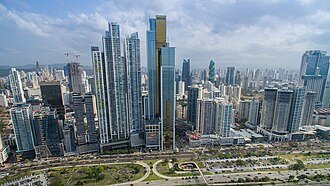
Panama City is the most developed and cosmopolitan city in Central America — a modern skyline, a full range of international amenities, a well-functioning private healthcare system, international schools, and excellent air connectivity through Tocumen International Airport (regional hub with direct routes to Europe, North America, and across Latin America). The cost of living is higher than most Latin American capitals but lower than comparable North American or European cities. A modern 1-bedroom apartment in Punta Pacifica or Marbella costs USD 900 to 1,500 per month. El Valle, Boquete, and Coronado are popular retirement communities outside Panama City.
Panama’s USD currency (the Balboa is pegged 1:1 to the US dollar, with US dollars as legal tender) eliminates exchange rate risk for Americans and simplifies banking for anyone earning in USD. Panamanian banks (Banistmo, Banco General, Global Bank) are generally well-regarded and accessible to legal residents — a Panamanian bank account is required for most visa applications anyway.
Further reading
- Colombia visa guide 2026: digital nomad visa, pensionado and investment residency
- Malaysia MM2H visa guide 2026: the My Second Home long-stay programme
- Australia visa guide 2026: skilled worker, permanent residency and WHV
- Italy visa guide 2026: digital nomad visa, elective residence and working routes
- Ireland visa guide 2026: work permit, critical skills and stamp system explained