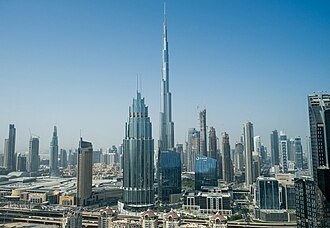
The UAE — particularly Dubai — has become a serious expat destination for high-income earners seeking the combination of zero personal income tax, world-class infrastructure, and a global hub lifestyle. Here are every legal route for long-term residence in 2026.
UAE residency options
| Route | Who it’s for | Key requirement | Duration |
|---|---|---|---|
| Golden Visa | Investors, skilled professionals, outstanding talents, researchers | Property AED 2M+ / company investment / talent | 10 years, renewable |
| Remote Work Visa (Dubai) | Remote workers employed by non-UAE companies | Monthly income of USD 5,000+, employer letter | 1 year renewable |
| Green Visa (Freelancer) | Self-employed freelancers in approved categories | Proof of income + freelance permit | 5 years renewable |
| Employment Visa | Employed by UAE-registered company | Job offer from UAE employer | 2 to 3 years renewable |
| Investor Visa | Business ownership or investment in UAE company | AED 150,000+ company capital | 3 years renewable |
| Retirement Visa | Over 55 with savings, property, or income | AED 1M property or savings + pension income | 5 years renewable |
The Golden Visa — the UAE’s flagship long-stay permit
The UAE Golden Visa grants a 10-year renewable residency to qualifying investors, entrepreneurs, and skilled professionals. Key qualifying categories: real estate investors with property valued at AED 2,000,000 or more (approximately USD 545,000) — the property must be completed, not off-plan; investors with AED 2,000,000 deposited in a UAE financial institution; entrepreneurs with existing UAE businesses meeting certain revenue or investment thresholds; and ‘outstanding talents’ in the sciences, arts, culture, sport, or digital economy (requires approval from a relevant UAE ministry).
The Golden Visa does not require an employer or employment in the UAE. Holders can live anywhere in the UAE, sponsor immediate family members (spouse, children, parents), and maintain the visa with no minimum UAE presence requirement — though staying away for more than 6 months at a time can affect other administrative statuses. The application is made through the UAE’s Federal Authority for Identity, Citizenship, Customs and Ports Security (ICP) or through an AFAD (authorised facilitator) and typically takes 2 to 4 weeks to process.
Dubai Remote Work Visa
Dubai launched its Remote Work Visa in 2021 — one of the first formal remote work visas globally. It allows non-UAE residents to live in Dubai while working for employers or clients outside the UAE. Requirements: current employment with a company outside the UAE, minimum monthly income of USD 5,000 (or equivalent), 3 months of recent bank statements, employment certificate from employer, health insurance valid in the UAE, and a valid passport with at least 6 months’ validity.
The visa is valid for 1 year and must be renewed annually. It does not grant the right to work for UAE-based companies — only for the foreign employer. The application is through Dubai’s Department of Economy and Tourism. Cost: approximately AED 1,521 (USD 414) including the processing fee. Family members can be sponsored as dependents.
Green Visa for Freelancers
The Green Visa (introduced 2022) targets self-employed individuals working in priority UAE sectors. To qualify: obtain a UAE freelance permit from a free zone (Dubai Media City, twofour54, and Dubai Knowledge Park all issue freelance permits) or the Ministry of Human Resources. The freelance permit requires proof of qualifying activity and typically a track record of income. Annual cost for a free zone freelance permit: AED 7,500 to 15,000 (USD 2,000 to 4,100) depending on the free zone. The Green Visa itself is 5 years and renewable.
UAE income tax — the main attraction
The UAE has no personal income tax on employment income, business income, or investment returns for individuals. The UAE implemented a 9 percent corporate tax in 2023 on business profits above AED 375,000 — but individuals are not subject to personal income tax. For UK citizens who leave the UK and establish UAE tax residency, UK income tax no longer applies to income earned after leaving (subject to meeting HMRC’s Statutory Residence Test non-residence criteria). US citizens are different — the USA taxes citizens on worldwide income regardless of where they live, so US citizens in the UAE still owe US tax.
Cost of living reality check
Dubai is not cheap — it is a premium city with premium prices in most categories. A modern 1-bedroom furnished apartment in Dubai Marina or Downtown Dubai costs AED 7,000 to 12,000/month (USD 1,900 to 3,300). DIFC (financial district) is higher: AED 12,000 to 20,000. More affordable areas: Jumeirah Village Circle (JVC) at AED 4,500 to 7,000 or Al Barsha at AED 4,000 to 6,500. Healthcare is private and excellent but expensive without health insurance — employer-provided or self-purchased insurance is essential.
The UAE tax advantage only materialises if you genuinely establish non-tax-residency in your home country. For UK citizens, this means meeting HMRC’s Automatic Overseas Tests under the Statutory Residence Test — typically spending fewer than 16 days per year in the UK. Many UAE-based British expats inadvertently maintain UK tax residency by spending too much time in the UK. Get specialist advice from a dual-jurisdiction tax advisor before relocating.
Is UAE right for you?
The UAE suits high-income earners (typically earning USD 100,000+/year) for whom the tax saving makes the higher cost of living worthwhile. The infrastructure is world-class, the expat community is enormous, and the lifestyle is cosmopolitan. The trade-offs: very hot from May to September (40°C+, outdoor life becomes unpleasant), limited permanent residency pathway (no equivalent of EU citizenship after 5 years), and social restrictions in some areas compared to Western Europe. Abu Dhabi, Dubai, and Ras Al Khaimah each have slightly different environments — research which emirate fits your lifestyle.
Further reading
- Greece Digital Nomad Visa 2026: complete application guide
- New Zealand visa guide 2026: skilled migrant, work to residence and more
- Mexico residency visa guide 2026: temporary and permanent residency explained
- Japan visa guide 2026: work, digital nomad, retirement and long-stay options
- Canada permanent residency guide 2026: Express Entry, PNP and family class