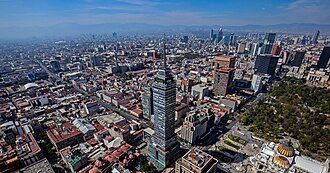
Mexico is one of the largest expat communities in the world for Americans and Canadians — and increasingly for Europeans. Its residency system is relatively straightforward once you understand the two-tier structure and the income requirements. Here is the complete guide for 2026.
Mexico’s two residency categories
| Status | Who it’s for | Income requirement (approx 2026) | Duration |
|---|---|---|---|
| Temporary Resident (Residente Temporal) | Remote workers, retirees, investors, students, family members of residents | Approx MXN 25,000/month (~USD 1,470) net income | 1 year, renewable to 4 years |
| Permanent Resident (Residente Permanente) | After 4 years TR, or retirees meeting higher income threshold, or family of Mexican citizen | Higher income or 4 years TR history | Indefinite |
Temporary Residency — the main entry point
Mexico’s Temporary Resident Visa (Visa de Residente Temporal) is the standard route for most expats. It is income-based — you must demonstrate a regular monthly income meeting a threshold set by the Instituto Nacional de Migración (INM) and updated periodically. The 2026 threshold for a single applicant is approximately MXN 25,000 per month (USD 1,400 to 1,500 depending on exchange rate). Income can come from any source: salary, pension, rental income, dividends, savings interest, or foreign remote work.
Application process: apply at a Mexican consulate in your home country with 6 months of bank statements showing the required income, your passport, a completed application form, and a passport photo. Processing takes 1 to 3 weeks. You receive a visa sticker in your passport — enter Mexico on this visa within 6 months and visit the local INM office to exchange it for your Residente Temporal card (tarjeta de residente temporal). The card is initially valid for 1 year. You can then renew for 1, 2, or 3 additional years.
Permanent Residency — two routes
Permanent residence (Residente Permanente) can be obtained: (1) After 4 years of Temporary Residency with no significant absences from Mexico. The 4-year renewal converts automatically to permanent status at the INM. (2) Directly at a Mexican consulate for those meeting a significantly higher income threshold — approximately MXN 67,000 per month (USD 4,000+) or demonstrating liquid assets of approximately MXN 2,800,000 (USD 165,000+). Retirees with substantial pension income are the typical direct-to-permanent applicants. Family members of Mexican nationals or permanent residents can also qualify directly.
What Temporary Residency allows
A Residente Temporal card allows you to: live in Mexico indefinitely (with annual renewals), open a Mexican bank account, obtain a CURP (unique citizen number), apply for an RFC (tax number), rent property (most landlords require TR status for longer leases), drive with a foreign licence (for the first year, then a Mexican licence is recommended), and travel freely in and out of Mexico.
It does NOT automatically allow you to work for a Mexican employer or run a Mexican business — that requires a separate work permit or your Temporal card endorsed for ‘work activities’. Many digital nomads work for foreign companies on a TR without this endorsement — technically in a grey area but routinely done and rarely enforced against those clearly earning income from abroad.
Opening a Mexican bank account
A Mexican bank account makes life significantly easier — paying rent, utilities, phone, and services in pesos avoids international card fees and exchange rate losses. Santander, HSBC, BBVA, and Banorte all have English-speaking branches in major expat areas. Most require: your passport, your Residente Temporal card, a CURP (unique citizen number, obtained at the INM or online at gob.mx/curp), and proof of address (rental contract).
Tax residency in Mexico
If you spend more than 183 days per year in Mexico, you become a Mexican tax resident. Mexico taxes residents on worldwide income — there is no territorial tax system. Mexico has double-taxation treaties with the UK, USA (limited), Canada, Germany, and most major economies. The Mexican income tax (ISR) rate is progressive from 1.92 percent to 35 percent. Remote workers earning from foreign companies are technically required to register with the SAT (Mexico’s tax authority) and declare foreign income — enforcement for foreign remote workers has historically been low but is increasing.
Popular expat cities and their cost of living
Mexico City (CDMX): largest expat community, excellent cultural and food scene, affordable for North American incomes. Roma Norte and Condesa are the expat heartlands. Oaxaca City: UNESCO Heritage, arts scene, slower pace, lower cost than CDMX. Puerto Vallarta and Riviera Nayarit: beach access, large American retirement community. Mérida (Yucatán): fast-growing expat scene, affordable, cultural history, tropical climate. Guadalajara: Mexico’s second city, business focus, cheaper than CDMX.
Mexico’s INM has a quota system for some immigration categories. Some consulates have significant appointment backlogs — book your consulate appointment as early as possible and bring more financial documentation than required (the consulate can ask for additional evidence). Three months of bank statements is the minimum; six months is safer.
Healthcare access
Mexico’s IMSS (Instituto Mexicano del Seguro Social) public health insurance is technically available to legal residents who can voluntarily enrol and pay premiums — approximately MXN 5,000 to 8,000 per year. The public system is adequate for routine care. Most expats use private healthcare, which is excellent quality and affordable by North American and European standards. A GP consultation at a private clinic costs MXN 400 to 800 (USD 24 to 47). Comprehensive private health insurance in Mexico costs MXN 5,000 to 15,000 per month (USD 300 to 900) depending on age and coverage.
Further reading
- Japan visa guide 2026: work, digital nomad, retirement and long-stay options
- Canada permanent residency guide 2026: Express Entry, PNP and family class
- Germany visa guide 2026: work permit, job seeker, EU Blue Card and more
- Thailand long-stay visa guide 2026: every option from tourist to retirement
- Spain visa guide 2026: every legal route for long-term stays