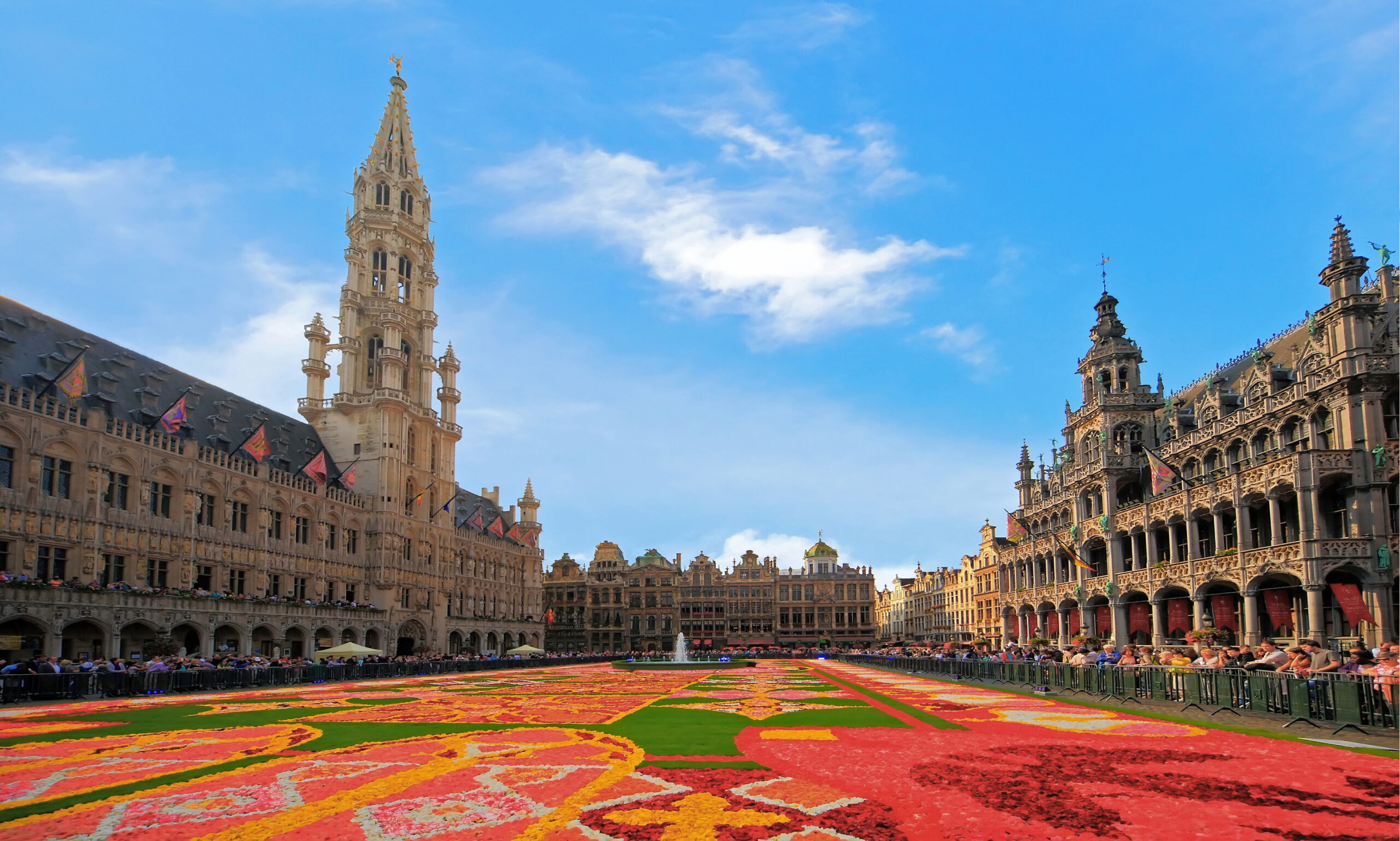
Belgium’s Professional Card is a quieter EU self-employment path — Brussels at the EU’s institutional heart, central rail access to all major capitals, 5-year PR. Verified 2026 detail.
Last verified: May 26, 2026.
Professional Card (Self-Employed Permit) overview
- Income: viable business plan + reserves typically €10,000+
- Validity: 2 years renewable, PR after 5 years
- Tax: 25-50% progressive + 21% social security; Belgium is high-tax
- EU + Schengen + Eurozone
- Cost: €140 application + business registration
Why Belgium works
- Brussels is EU institutional capital — bilingual French/Dutch, English in EU bubble
- Central EU location — Paris 1.5h, Amsterdam 2h, London 2h by train
- Strong public services + healthcare
- Quick PR path (5 years)
Eligibility requirements
- Non-EU citizen
- Business plan demonstrating economic contribution to Belgium
- Belgian business registration
- Rental contract
- Health insurance + social security registration
Cost of living — Belgium 2026
- 1-bed Brussels: €900-1,400/month
- 1-bed Ghent/Antwerp: €750-1,100/month
- Restaurant meal: €15-30
- Couple comfortable monthly: €2,500-4,000
Belgium Professional Card — application process
Belgium’s Professional Card is a regional permit (issued separately by Flanders, Wallonia, or Brussels-Capital Region). Most international applicants go through Brussels-Capital. Verified 2026 process:
- Step 1 — Prepare business plan. Belgium scrutinizes economic contribution — your plan must demonstrate Belgian client base, employment creation potential, or innovation.
- Step 2 — Register Belgian business entity. Either sole-trader (entreprise individuelle) or SRL (limited company) at Crossroads Bank for Enterprises (BCE/KBO).
- Step 3 — Submit Professional Card application at SPW Economie (Wallonia), VLAIO (Flanders), or Brussels Economy and Employment.
- Step 4 — Decision in 4-5 months (Belgium is slower than most EU). Approval rate ~70% for well-prepared applications.
- Step 5 — Receive Professional Card. Combined with residence permit. Valid 2 years initial, renewable.
- Step 6 — Register at commune (municipality), enroll in mutuelle (health insurance), open bank account.
Belgium tax + social-security reality
Belgium has Europe’s highest combined tax burden — but also extensive social benefits. Real numbers for self-employed at €60,000/year:
- Income tax (progressive 25-50%): ~€18,000-€22,000
- Social-security contributions (~21% of taxable revenue): ~€10,000-€12,000
- Net take-home: ~€26,000-€32,000 (about 45-55% of gross)
Offsets: free healthcare (mutuelle covers most), high-quality public education, strong unemployment insurance, generous family benefits, world-class infrastructure.
Brussels — the EU bubble + practical realities
Brussels is unique among EU capitals: an officially bilingual (French + Dutch) city with the largest English-speaking expat community in continental Europe (due to EU institutions). Specifically:
- Schuman + Etterbeek + Ixelles districts house most EU staff + lobbyists. English everywhere.
- Saint-Gilles + Saint-Boniface: creative + foodie scene, French-speaking but English-friendly
- Outside the EU bubble + Ixelles: French/Dutch only, less English-friendly
- Cost of living: 1-bed central €900-€1,400, lower than Amsterdam or Paris
- Train: 1.5 hours to Paris, 2 hours to Amsterdam, 2 hours to London via Eurostar
Ghent + Antwerp + Liège — alternatives to Brussels
Ghent
University town, beautiful canals, primarily Dutch-speaking but English-friendly. €750-€1,100 for 1-bed. Strong startup + biotech scene.
Antwerp
Belgium’s economic heart, port + diamond trade + fashion. Dutch-speaking, English in business. €800-€1,200 for 1-bed. Wealthy, sophisticated, less internationally diverse than Brussels.
Liège
French-speaking, less expat infrastructure. €600-€900 for 1-bed. Lower cost but limited English-only services.
More FAQ
Belgium vs Netherlands for English-speaking professionals?
Netherlands has higher English fluency nationally and is easier to navigate without local language. Brussels rivals Amsterdam for English ease IF you stay in the EU-bubble districts. Outside Brussels, Belgium is harder for English-only. DAFT (Netherlands) is also significantly easier and cheaper than Belgium Professional Card.
Citizenship timeline?
Belgium’s naturalization: 5 years legal residency + integration test (knowledge of one of the three official languages — French, Dutch, or German — at A2 level) + economic integration proof. Faster than most EU but with real requirements.
Can my spouse work on family-reunification?
Yes — Belgium grants automatic work authorization to spouses of Professional Card holders. Family-reunification permits typically processed in 3-6 months.
FAQ
Which Belgian region — Flanders, Wallonia, Brussels?
Brussels is the natural choice for international remote workers (English-friendly EU bubble). Flanders (Antwerp, Ghent) is wealthy but mostly Dutch-speaking. Wallonia is cheaper but mostly French-only.
Banking + practical setup in Belgium
Top banks for foreign residents: KBC, BNP Paribas Fortis, ING Belgium, Belfius. KBC + BNP Paribas Fortis offer English service in Brussels. Account requires Belgian National Register number issued at commune registration. Many newcomers use a Wise multi-currency account in parallel with local bank for first 3-6 months while local account paperwork completes.
Cultural notes — what newcomers should know
Three linguistic regions with distinct identities — Walloons (French-speakers), Flemings (Dutch-speakers), German-speaking East. Brussels is officially bilingual French + Dutch. Beer + chocolate + frites are national obsessions. Sunday closures strict.
More FAQ
Time zone working from Belgium?
Belgium operates in GMT+1/+2. This is favorable for collaboration with EU clients (most of EU same zone). For US East Coast remote work: 6-hour difference (your 9am = their 3am EST). For US West Coast: 9-hour difference. Asia-Pacific: 5-8 hours behind. Plan async-first work with morning sync windows for US East.
Language barrier in Belgium?
French (Wallonia), Dutch (Flanders), German (small east region). English in Brussels EU bubble. In the capital and tech districts, English-only operation is viable for most daily life — banking, healthcare, restaurants, transport. Outside major cities, expect local language only. Budget 3-6 months of basic local-language learning (italki, Duolingo, in-person classes) for confident integration.
Best season to arrive in Belgium?
Most administrative offices in Belgium slow significantly in July-August. April-May or September-October are typically the smoothest months for residency permit applications, business registration, and bank account opening. Winter months can extend processing by 2-4 weeks.
Related: full visa comparison · Portugal D7 · Spain NLV.
✓ Last verified: May 26, 2026.
Further reading
- Netherlands visa guide 2026: DAFT, startup visa, highly skilled migrant and more
- Turkey residency guide 2026: short-term permit, property route and citizenship
- Costa Rica visa guide 2026: pensionado, rentista and investor residency
- Georgia visa and residency guide 2026: the ultimate low-tax expat base
- Panama visa guide 2026: Pensionado, Friendly Nations and investor routes