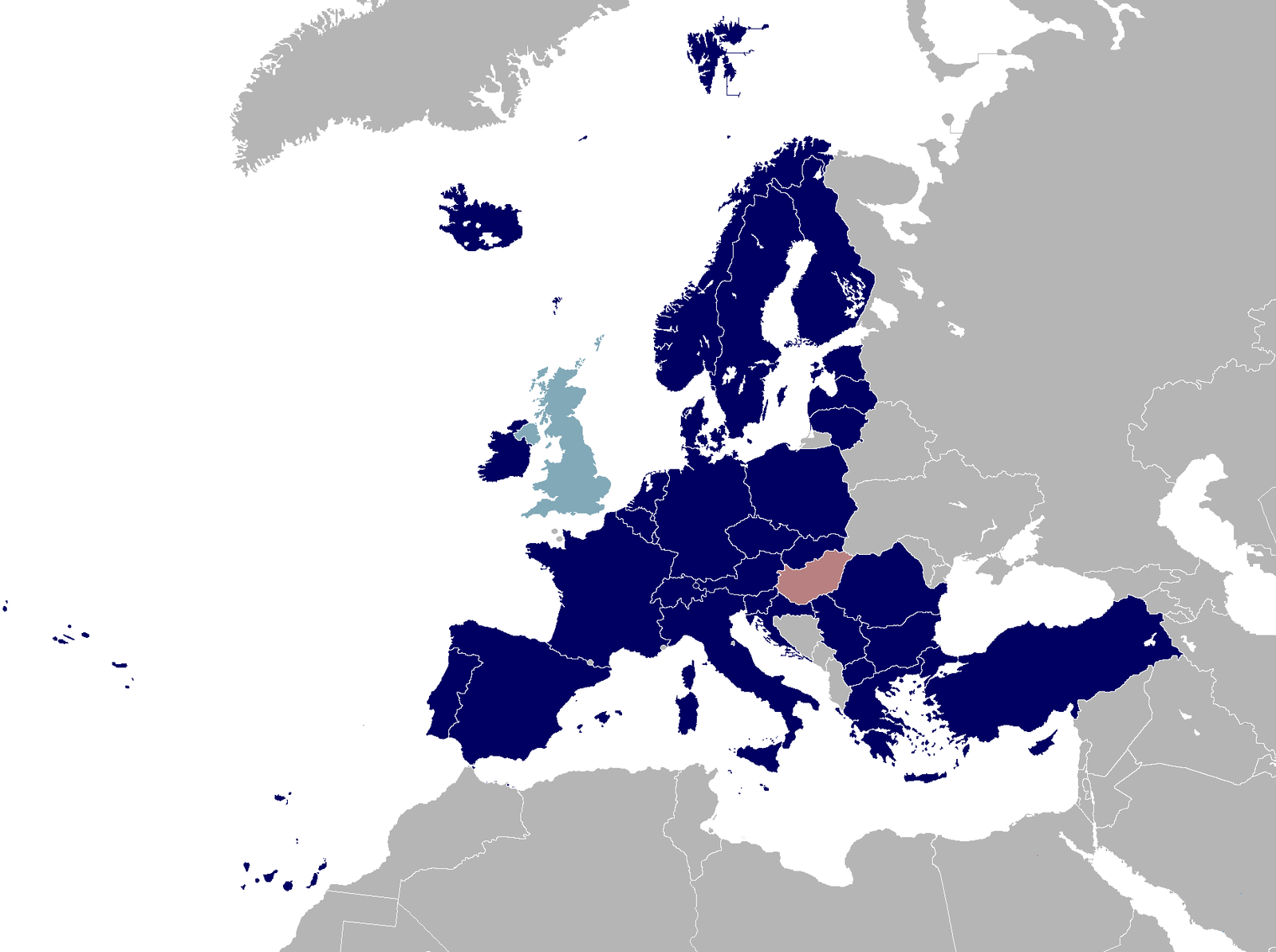
Erasmus+ is the European Union’s education exchange program — funding university exchanges, traineeships abroad, and youth projects across 33 program countries and 150+ partner countries. In 2026 the programme has expanded significantly: the 2021–2027 budget is EUR €26.2 billion (nearly double the previous cycle), and the program now explicitly targets lower-income participants and shorter mobility opportunities. Here is how to apply and what you actually get.
What Erasmus+ covers in 2026
Erasmus+ for higher education students covers two main activities:
1. Study exchanges (KA131 and KA171)
Spend 3–12 months studying at a partner university in another Erasmus+ country. Your home university pays a monthly grant; the host university charges no tuition fees (you continue paying your home university fees). The grant is meant to cover the additional cost of living abroad — not the full cost.
Monthly grants for 2025–2026 academic year (based on destination):
- Group A (higher cost): Denmark, Finland, Iceland, Ireland, Liechtenstein, Luxembourg, Norway, Sweden — EUR €600–€800/month
- Group B (medium cost): Austria, Belgium, Cyprus, France, Germany, Greece, Italy, Malta, Netherlands, Portugal, Spain — EUR €400–€600/month
- Group C (lower cost): Bulgaria, Croatia, Czech Republic, Estonia, Hungary, Latvia, Lithuania, North Macedonia, Poland, Romania, Serbia, Slovakia, Slovenia, Turkey — EUR €300–€400/month
Top-up grants for students from lower-income backgrounds (Erasmus+ green travel top-up, fewer opportunities top-up): additional EUR €250/month on top of the base grant.
2. Traineeships (work placements abroad)
Erasmus+ also funds 2–12 month work placements at companies, research centres, or organisations in another Erasmus+ country. Monthly grants are EUR €50/month higher than study exchanges to the same country. Traineeships can be found independently or through your university’s career services — the grant follows the student regardless of where the placement is.
Who can apply for Erasmus+ in 2026
- Students enrolled at any Erasmus+ accredited higher education institution
- No age limit for higher education mobility
- Must have completed at least one year of higher education (first-year students cannot apply for semester exchanges, but can apply for shorter mobilities in some cases)
- UK students: UK left the Erasmus+ programme in 2021; the replacement is the Turing Scheme (UK government funding for international study and work placements) — similar structure, different funding source. turingscheme.org.uk
How to apply for Erasmus+ 2026
- Apply through your home university’s International/Erasmus office — not directly to the EU
- Each university has its own internal selection process (usually GPA-based with a preference statement)
- Application deadlines are typically November (for the following academic year) or February (for autumn semester only)
- You select 2–5 partner universities in order of preference; your university negotiates the place
- Once selected, apply to the host university separately (usually a simplified process for Erasmus students)
Erasmus+ vs Turing Scheme (UK students)
- Turing Scheme grants: GBP £335–£490/month depending on destination; additional bursary for students from disadvantaged backgrounds
- Coverage: any country worldwide (not just Europe) — US, Australia, Japan, India all eligible under Turing but not Erasmus+
- Apply through: your UK university’s international office; Turing funds are allocated to universities which then run their own selection
Erasmus Mundus Joint Masters
Separate from the exchange program: Erasmus Mundus Joint Masters (EMJM) are fully-funded international Masters programs run jointly by 3–4 universities in different countries. Students study in at least two countries and receive a double or joint degree. The scholarship covers tuition, a monthly living allowance (EUR €1,400/month), travel, and installation costs.
Competition is high — acceptance rates are typically 2–8% for the scholarship version. Catalog of programs: eacea.ec.europa.eu/erasmus-plus/emjm-catalogue. Over 200 programs available across all disciplines. Non-EU students can apply for the scholarship version; EU students can self-fund but do not receive the full scholarship amount.
FAQ
Do Erasmus+ credits transfer to my home degree?
Yes — Erasmus+ uses the European Credit Transfer and Accumulation System (ECTS). Before your exchange, you and your home university agree a Learning Agreement specifying which courses you will take abroad and how many ECTS credits will be recognised at home. As long as you pass those courses, the credits count toward your degree. The Learning Agreement is legally binding on both institutions.
Can I do Erasmus+ if my university is outside Europe?
Under KA171 (International Credit Mobility), students from non-EU countries can participate in Erasmus+ if their home university has a bilateral agreement with an Erasmus+ programme country university. The grant is funded by the European university’s Erasmus+ allocation, so availability depends on whether your university has such agreements. Check with your international office — many universities in India, South Africa, Morocco, and Georgia have KA171 agreements.
Further reading
- Netherlands visa guide 2026: DAFT, startup visa, highly skilled migrant and more
- Turkey residency guide 2026: short-term permit, property route and citizenship
- Costa Rica visa guide 2026: pensionado, rentista and investor residency
- Georgia visa and residency guide 2026: the ultimate low-tax expat base
- Panama visa guide 2026: Pensionado, Friendly Nations and investor routes