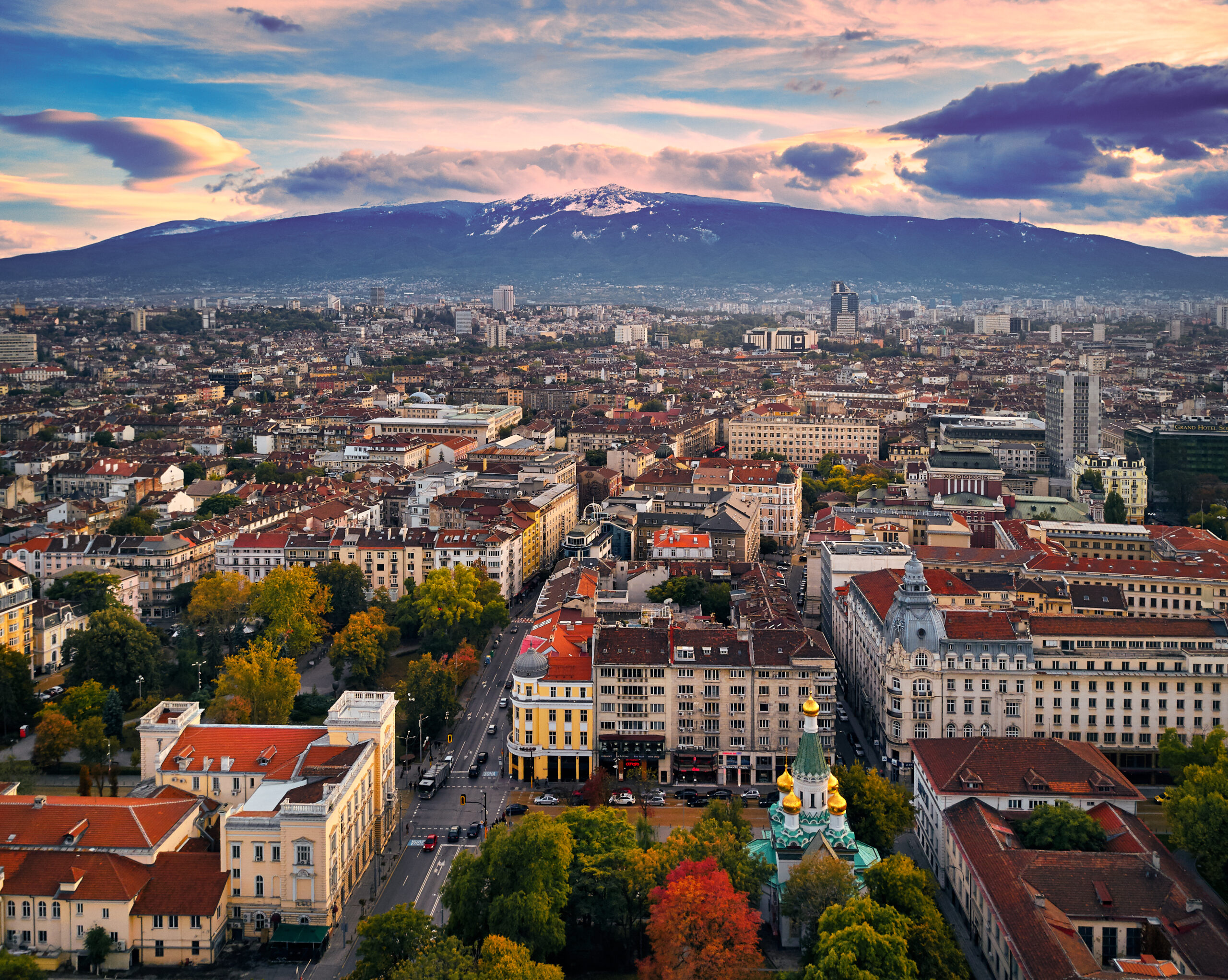
Bulgaria’s freelancer visa combines EU’s lowest flat tax (10%), new Schengen access (2025), and cost of living 50-60% under Western Europe. Here’s the verified 2026 path.
Last verified: May 26, 2026.
Type D Long-Stay Visa for Freelancers overview
- Income: no fixed threshold but generally €1,500+/month accepted; bank reserves ~€7,200
- Validity: Type D 6-12 months, can roll into 1-year residency permit, PR track after 5 years
- Tax: 10% flat income tax — lowest in EU
- EU + Schengen (joined Schengen 2025)
- Cost: ~€100 visa + €500-1,000 lawyer fees typical
Why Bulgaria works
- 10% flat tax — beats Malta, Cyprus, every other EU country
- Now in Schengen (2025) — full free movement
- Cost of living 50-60% below Western EU
- Black Sea coast (Burgas, Varna) + mountain options (Bansko famous nomad hub)
- Quick PR track (5 years to permanent)
Eligibility requirements
- Non-EU/EEA citizen
- Freelance contract, business registration, or sole-trader status (most pick EOOD — single-member LLC)
- Bulgarian rental contract
- Bank balance ~€7,200 minimum
- Health insurance valid in Bulgaria
- Criminal record check apostilled
Cost of living — Bulgaria 2026
- 1-bed Sofia center: €450-750/month
- 1-bed Plovdiv/Varna: €350-550/month
- 1-bed Bansko (winter ski + summer nomad): €300-500/month
- Restaurant meal: €5-12
- Couple comfortable monthly: €1,200-2,000
Bulgaria freelancer visa — application process
Bulgaria’s freelancer route is a two-step process: enter on Type D long-stay visa from outside Bulgaria, then convert to a one-year residence permit on arrival. Verified 2026 process:
- Step 1 — Register a Bulgarian business entity. Most freelancers register an EOOD (single-member limited liability company) with 2 BGN (~€1) minimum capital. Cost: €500-€1,500 with lawyer.
- Step 2 — Apply for Type D visa at the Bulgarian consulate in your home country. Required: business registration, business plan, proof of €7,200+ in bank, health insurance, accommodation proof in Bulgaria. Processing: 30-90 days.
- Step 3 — Enter Bulgaria on Type D visa. Must enter within 6 months of visa issue.
- Step 4 — Apply for 1-year residence permit at Bulgarian Migration Directorate within 14 days of arrival. Required: D visa, residence registration (rental contract), business activity proof.
- Step 5 — Receive Bulgarian ID card (LNCH). Annual renewal for first 4 years.
- Step 6 — Apply for permanent residency after 5 years. Bulgarian citizenship possible after 5 years PR (10 years total residency).
Why Bulgaria works mathematically for high earners
Bulgaria’s effective tax structure makes it one of Europe’s most attractive jurisdictions for self-employed professionals. The math:
- Personal income tax: 10% flat — EU’s lowest.
- Corporate tax (EOOD profits): 10% flat.
- Dividend tax: 5% on dividends from EOOD to you personally.
- Effective combined rate for EOOD-structured freelancer: ~14-15% all-in vs. 35-50% in Western Europe.
- VAT registration threshold: BGN 100,000 (~€51,000) annual revenue. Below this, no VAT obligation.
Example: a software developer earning €120,000/year via EOOD: corporate tax 10% (€12,000) + 5% dividend tax on remainder (€5,400) = €17,400 total tax. Same earner in Germany would pay ~€45,000+ in combined income tax + social security.
Bansko and Sofia — the two practical bases
Sofia
Capital city, full infrastructure, growing tech scene (SoftServe, Sirma, Telerik, EPAM). Fiber internet 1 Gbps available in most areas for €15-25/month. Sofia has a metro, Western-style supermarkets (Lidl, Kaufland, Billa), good private healthcare (Acibadem, Pirogov Memorial). Average rent for modern 1-bed: €450-€750 in central districts.
Bansko
Mountain town, ski resort in winter, nomad hub spring-fall. Bansko Nomad Fest (annual) draws 600+ nomads. Coworking spaces (Coworking Bansko, Altspace) with €70-€150/month memberships. Fiber 200-500 Mbps for €20/month. Apartments €300-€500/month for modern 1-bed.
Bulgaria pitfalls — three things that surprise newcomers
1. Cyrillic everywhere. Outside Sofia + Bansko, most signage is Cyrillic only. Bulgarian is similar to Russian — Cyrillic-readers have a head start. Plan a Duolingo or italki Bulgarian module for the first month.
2. Cash culture persists. Bulgaria is the most cash-heavy economy in the EU. Many smaller shops, restaurants, taxis still prefer cash. ATM access is good (DSK, Postbank, UniCredit Bulbank all support international cards).
3. Bureaucracy speaks Bulgarian. Migration Directorate, tax office (NRA), and most government offices serve customers in Bulgarian. Hire a Bulgarian lawyer or accountant for first 6 months. Annual accountant fee for EOOD: €600-€1,200.
More FAQ
Is Bulgaria really in Schengen now?
Yes — Bulgaria joined Schengen for air and sea travel in March 2024, and for land borders in January 2025. Full Schengen access means free movement to the other 28 Schengen countries on your Bulgarian residence permit.
Bulgaria EOOD vs Estonian e-Residency OÜ?
Estonia e-Residency does not give you Estonian tax residency or any residency permit. It only lets you operate a company online. Bulgaria EOOD + Type D visa gives you actual residency + EU residence card. For most freelancers wanting to live in EU, Bulgaria wins. Estonia e-Residency makes sense if you want EU corporate structure but plan to live elsewhere.
Can my US clients pay my Bulgarian EOOD directly?
Yes — Bulgarian EOODs can invoice US clients directly. US-Bulgaria tax treaty handles withholding. Most US clients can pay via ACH/wire to your EOOD’s Bulgarian bank account or Wise Business account.
FAQ
Is Bulgaria’s EOOD setup worth it?
For many freelancers, yes — register a Bulgarian EOOD (single-member LLC), pay yourself salary + dividends. Combined effective tax can drop to 12-15% all-in. Setup costs €500-1,500. Talk to a Bulgarian accountant.
Why is Bansko famous?
Bansko Nomad Fest, cheap winter ski + summer hiking, fast fiber, organized nomad community. Many nomads use Bansko as Schengen-area winter base.
Related: full visa comparison · Portugal D7 · Spain NLV.
✓ Last verified: May 26, 2026.
Further reading
- Netherlands visa guide 2026: DAFT, startup visa, highly skilled migrant and more
- Turkey residency guide 2026: short-term permit, property route and citizenship
- Costa Rica visa guide 2026: pensionado, rentista and investor residency
- Georgia visa and residency guide 2026: the ultimate low-tax expat base
- Panama visa guide 2026: Pensionado, Friendly Nations and investor routes