A local phone number seems like a minor detail until your bank refuses to send an SMS verification code to a foreign number, your landlord stops replying to WhatsApp messages sent from a UK number, or your delivery app requires local phone registration. A local number matters practically and quickly.
Why a local phone number matters beyond making calls
The practical uses of a local phone number that catch expats off guard include:
- Bank two-factor authentication (2FA): local banks in most countries only send SMS codes to local numbers. A UK number registered with a Spanish bank may not receive these codes reliably.
- WhatsApp with local businesses: estate agents, tradespeople, and local shops in Southeast Asia and Southern Europe primarily communicate via WhatsApp. A local WhatsApp number signals you are actually based there.
- Healthcare and appointment booking: GP surgery booking apps, hospital portals, and pharmacy apps typically require local phone verification.
- Ride-hailing and food delivery: Grab, Bolt, Rappi, Glovo, and other local apps require a phone number registered in their operating region.
- Government services: local government portals for tax registration, residence applications, and social security typically use SMS verification to local numbers.
- Calling local businesses: many businesses screen calls from foreign numbers or charge premium rates for answering them.
Prepaid SIM: the fastest option
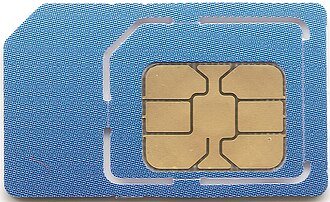
A prepaid SIM card bought at the airport or from a phone shop is the simplest start. In most Southeast Asian and Latin American countries, you need only your passport. In many European countries, registration is also straightforward, though Germany now requires an online ID verification process through a registered service.
The main limitation of prepaid SIMs is that they come with data plans rather than calling plans optimised for local use. For pure data and occasional calls, prepaid is fine. For regular calling, a local contract plan offers better rates.
| Country | Best prepaid networks | Monthly cost (data + calls) | Registration requirement |
|---|---|---|---|
| Spain | Orange, Vodafone, Lebara, Yoigo | EUR 10 to 20 for 20GB+ | Passport only |
| Portugal | NOS, MEO, Vodafone | EUR 10 to 15 | Passport only |
| France | Free Mobile, SFR, Orange | EUR 10 to 20 | Passport + proof of address |
| Germany | Aldi Talk, Lidl Connect, Congstar | EUR 10 to 15 | Online ID verification required |
| Thailand | DTAC, AIS, True Move H | THB 299 to 499 for 30GB+ | Passport only |
| Vietnam | Viettel, Mobifone | VND 150,000 to 300,000 per month | Passport only |
| UAE | Etisalat (e&), du | AED 50 to 150 | Emirates ID or tourist permit |
| Mexico | Telcel, AT&T Mexico | MXN 100 to 200 | Passport only |
| Indonesia | Telkomsel, XL, Indosat | IDR 30,000 to 80,000 | Passport only, finger scan in some shops |
Local postpaid contract: better for longer stays
A postpaid (contract) plan gives you lower monthly rates, a stable number, and often better network priority on congested networks. The catch is that most operators require a local bank account or credit card for direct debit and sometimes a local identity card (residence permit, NIE, NIF, etc.).
In Western Europe, 30-day rolling SIM-only contracts are widely available. In Spain, Orange and Vodafone offer rolling contracts from EUR 15 to 25 per month with 30 to 100GB of data. In Germany, providers like Congstar and Simyo offer no-commitment monthly plans. In the UK, Three, Vodafone, and O2 all have 30-day rolling SIM-only deals from GBP 5 to 15 per month.
eSIM: adding a local number digitally
eSIM technology allows you to add a local number to your phone as a digital profile alongside your existing SIM — no physical card needed. Most modern smartphones (iPhone XS and later, Google Pixel 3 and later, Samsung Galaxy S20 and later) support eSIM.
The limitation: most consumer eSIM data plans (Airalo, Holafly, SimOptions) only provide data — no local calling minutes or SMS. This is fine for internet access but does not solve the local phone number problem. For a genuine local eSIM number, you need a country-specific carrier eSIM that includes voice:
- Spain: Orange, Vodafone, and Yoigo all offer eSIM voice plans.
- Germany: Telekom and O2 both offer eSIM contracts with local calling.
- UK: All major networks (EE, Three, Vodafone, O2) support eSIM with voice.
- UAE: Etisalat and du both offer eSIM-based postpaid plans.
- Thailand: AIS and True Move H have eSIM data and voice plans for longer stays.
- Worldwide option: Google Fi offers US-number eSIM with calling and SMS that works in over 200 countries on local networks.
Keeping your home-country number active
Most UK mobile networks allow you to keep your number active while abroad on a monthly retention plan, typically costing GBP 2 to 5 per month with no active usage required. This preserves your UK number for UK banking 2FA codes, which is important because changing a bank-registered phone number often requires visiting a branch in person.
For US numbers abroad, T-Mobile Stateside International Talk maintains your US number internationally. Verizon and AT&T have similar international plans, though costs are higher.
An alternative: port your home number to a VoIP service. Google Voice (US) and Hushed (UK and US) let you retain your number permanently as an internet-based number, accessible from any device via the app, at low cost. The advantage is that your number is no longer tied to any physical SIM and can never be taken away by a carrier change.
Getting a number before you arrive
Some providers allow you to buy and activate a foreign SIM before you travel. UK-based WorldSIM and international airport SIM services sell pre-loaded foreign SIMs that activate on arrival. These are useful as a bridging solution for the first few days while you source a local plan in person.
For Germany in particular, the online ID verification requirement (BundID or VideoIdent) for SIM registration means you cannot just buy a SIM at a petrol station. Researching which providers accept your passport for registration before arrival saves a frustrating first week.
WhatsApp and local number strategy
If you want to maintain WhatsApp on your home-country number (for existing contacts) while also having a local WhatsApp account, WhatsApp Business allows you to run two accounts on one device simultaneously on iOS and Android. Alternatively, use WhatsApp on your main personal number and switch it to your local number once you have established contacts in your new country.
Register your local SIM as soon as you arrive — ideally at the airport. In Germany and some other EU countries, SIM registration now involves ID verification that cannot be skipped. The sooner you start this process, the sooner your local number is active and ready for the bank, the landlord, and the doctor.
Further reading
- Public healthcare abroad for expats 2026: where residents get free or low-cost care
- Setting up electricity, gas, water and broadband internet abroad 2026: expat guide by country
- International schools vs local schools abroad 2026: what expat parents need to know
- Best virtual mailbox services for expats 2026: Anytime Mailbox vs Traveling Mailbox vs PostScan
- Converting your driving licence when living abroad 2026: country-by-country guide