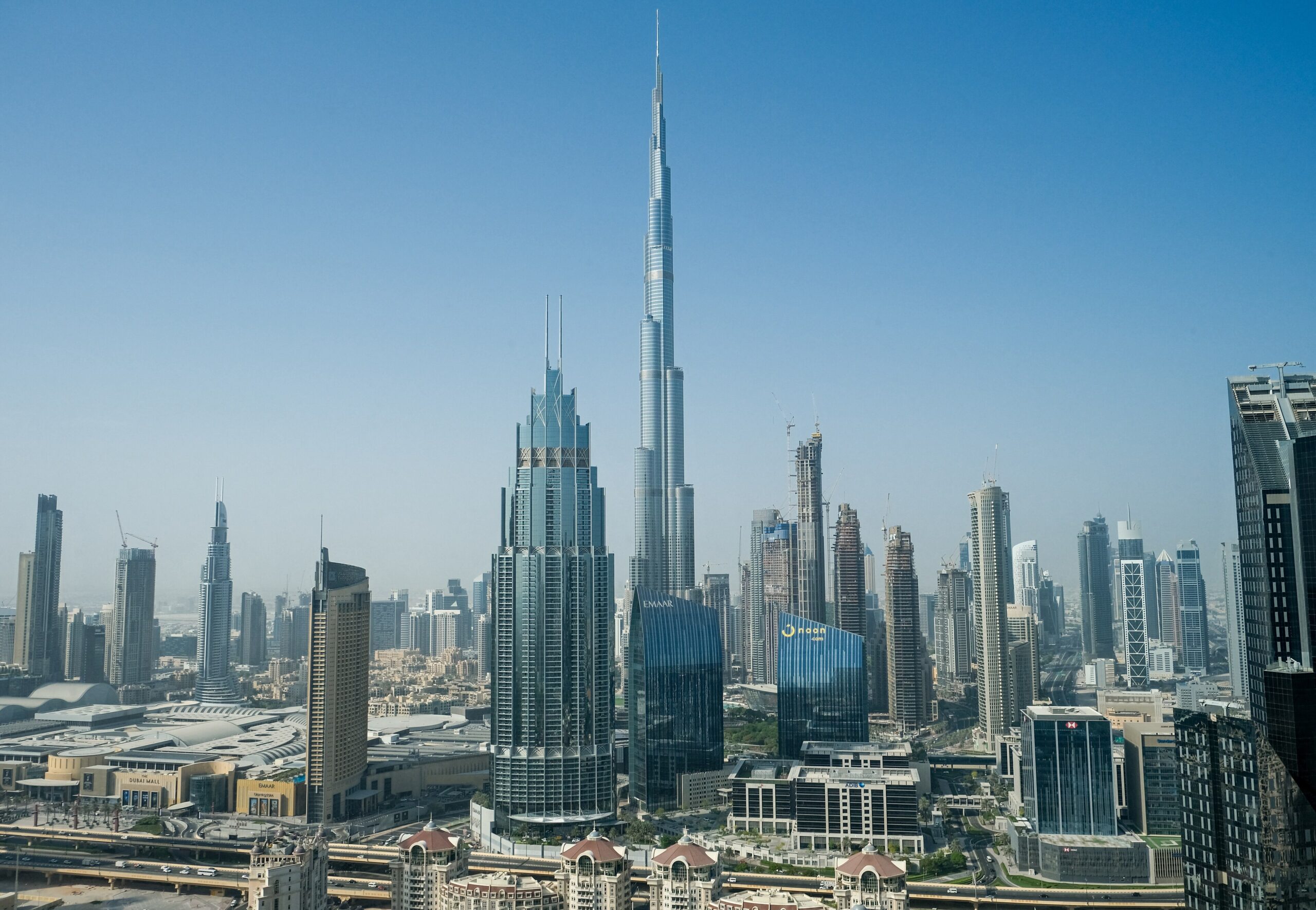
The UAE Virtual Working Programme — launched 2021, expanded in 2024 — lets remote workers and entrepreneurs live in Dubai or Abu Dhabi for one year while paying zero personal income tax. With Dubai’s world-class infrastructure, Abu Dhabi’s quieter pace, and the Gulf’s strategic location between Europe and Asia, it’s the most-applied-for nomad visa outside the EU.
Last verified: May 26, 2026.
UAE Virtual Working Programme overview
- Initial validity: 1 year, renewable
- Income threshold: $3,500/month minimum ($42,000/year)
- Eligibility: non-UAE citizens working remotely for non-UAE employers or self-employed
- Cost: $611 visa fee + $300 medical + $200 ID + bank/medical insurance
- Tax: 0% personal income tax (UAE has no income tax)
- Includes: Emirates ID, ability to open UAE bank accounts, family sponsorship
- Cannot: work for a UAE employer or receive UAE-source income
Why the UAE works for remote workers
- Zero income tax: the UAE has no personal income tax, full stop. Remote workers banking USD/EUR pay 0% in UAE
- World-class infrastructure: Dubai metro, Etihad Rail expansion, 5G nationwide, AED stable since 1997 pegged to USD
- English everywhere: 90%+ of expats work in English; government services fully bilingual
- Strategic location: 8-hour flights to London, Singapore, Mumbai, Johannesburg — perfect midpoint
- Year-round sun: Oct-April is perfect (20-28°C); May-Sept is brutal (40-45°C+ humid)
- Premium amenities: beaches, gyms, restaurants, malls, art (Louvre Abu Dhabi, Alserkal Avenue)
Eligibility requirements 2026
- Non-UAE citizen
- Remote work for foreign employer/clients: employment contract OR business ownership documentation
- Income proof: $3,500/month for last 3 months — bank statements + employment letter
- Valid passport: 6+ months remaining
- Health insurance: UAE-valid coverage for visa duration
- Clean criminal record: notarised + apostilled from home country
- If self-employed: company registration documents (DED, mainland or free-zone)
Application process step-by-step
Step 1: Apply online via GDRFA portal
- Where: gdrfad.gov.ae (Dubai) or icp.gov.ae (Abu Dhabi)
- Documents: passport, employment proof, bank statements, health insurance, accommodation
- Fee: ~$611 (~AED 2,250)
- Processing: 2-5 business days for initial approval
Step 2: Entry permit + medical fitness
- Once approved, receive entry permit (e-visa)
- Within 60 days: fly to UAE, complete medical fitness test ($120-180)
- Biometrics + Emirates ID application
Step 3: Visa stamping + Emirates ID
- Within 2 weeks of arrival: visa stamped in passport
- Emirates ID issued (~$280) — this is your essential ID for opening bank accounts, signing leases, mobile contracts
- Total processing: typically 3-6 weeks from initial application to Emirates ID in hand
Dubai vs Abu Dhabi for remote workers
Dubai — global hub, fastest pace
Larger expat population (~85% of Dubai is foreign-born), 1-bed apartments AED 4,500-7,500/month (~$1,225-2,040), all global brands, 12+ hours of city activity nightly. Best if you want maximum amenities + nightlife + airport access. Trade-off: rent jumped 25-40% in 2024-25 due to demand surge.
Abu Dhabi — quieter, more cultural
Cleaner, slower, more Emirati-feeling. 1-bed apartments AED 3,500-5,500/month (~$950-1,500). Louvre Abu Dhabi, Sheikh Zayed Grand Mosque, F1 circuit. Better if you want calmer expat life + lower rent. Trade-off: fewer coworking spaces, less nightlife, more conservative dress code expected.
Cost of living — Dubai 2026
- 1-bed central (Dubai Marina, Downtown): AED 5,500-8,000/month (~$1,500-2,180)
- 1-bed mid (Al Barsha, JLT): AED 3,800-5,500/month (~$1,035-1,500)
- Coworking (Astrolabs, Letswork, A4 Space): AED 800-1,800/month
- Restaurant meal: AED 60-150 mid-range, AED 200+ upscale
- Groceries: AED 1,500-2,500/month (Carrefour, Spinneys, Choithrams)
- Metro pass: AED 350/month silver, AED 700 gold class
- Total monthly comfortable: AED 12,000-18,000 (~$3,270-4,900) all-in for 1 person
Tax treatment for Virtual Working Programme holders
The UAE has 0% personal income tax. There’s no tax on salary, freelance income, dividends, capital gains, or rental income for individuals. The UAE introduced 9% corporate tax in June 2023 — but that applies to UAE-registered companies with profits over AED 375,000 (~$102K). Personal remote work from foreign employers is NOT subject to corporate tax.
If you become a UAE tax resident (which Virtual Working Programme holders are), you can request a UAE Tax Residency Certificate. This is critical for US/UK/EU taxpayers — your home country may stop taxing you on income earned during UAE residency (subject to your home country’s tax treaty + residency rules). US citizens still pay US federal tax worldwide, but can use FEIE ($120,000 exclusion in 2026) + UAE-resident treaty benefits.
Common Virtual Working Programme pitfalls
Pitfall 1: Trying to work for a UAE employer. The Virtual Working Programme explicitly prohibits UAE-source income. If you take a UAE-based job, your visa is invalid. The right path then is a regular employment visa sponsored by the UAE employer.
Pitfall 2: Underestimating Dubai rent. Dubai rent increased 25-40% in 2024-25. Some 2023 articles still cite AED 3,000/month for 1-beds in Marina — that’s now AED 5,500-7,500. Budget current market or commit to Abu Dhabi for 20-30% rent savings.
Pitfall 3: Skipping medical insurance. Mandatory for all visa holders in UAE. Plans start AED 1,500/year basic (~$410) but go to AED 8,000-12,000 for comprehensive. Don’t gamble on visa-only minimum if you actually need healthcare.
Pitfall 4: Summer reality check. June-September: 40-48°C with 80%+ humidity. Outdoor activities pause. AC bills surge (~AED 800-1,500/month summer vs AED 300 winter). Plan to either embrace indoor life or travel out during peak summer.
Banking in the UAE for Virtual Working Programme holders
With Emirates ID + UAE residency visa, all major banks open accounts for individuals. Most popular for expats:
- Emirates NBD: largest UAE bank, English-friendly, app excellent. Min balance AED 3,000-5,000 typical
- FAB (First Abu Dhabi Bank): Abu Dhabi-headquartered, strong corporate banking, premium offerings
- Mashreq Neo: digital-first, no min balance, perfect for nomads
- HSBC UAE: good for cross-border transfers if you have HSBC in home country
- Wise: not technically a UAE bank but most nomads use it for multi-currency holdings
FAQ
How long can I stay outside the UAE on Virtual Working Programme?
180 days continuous max — exceed it and the residency visa is cancelled automatically. Track entry/exit dates carefully.
Can my family join me on Virtual Working Programme?
Yes — spouse + children dependents can apply. Each adds ~AED 1,000 processing fees. Spouse cannot work in UAE under the programme.
Does the UAE Virtual Working Programme lead to citizenship?
No direct path. UAE citizenship is extremely restrictive — granted by Royal Decree, requires 30+ years residency typically. The Virtual Working Programme is a 1-year visa renewable; longer-term residency requires Golden Visa or property investment routes.
Can I open a business while on Virtual Working Programme?
Yes — UAE free zones (IFZA, DMCC, Meydan, RAKEZ) let you set up a company in 1-2 weeks. Mainland businesses require local sponsor or 100% ownership in approved sectors. Many remote workers stack Virtual Working Programme + free zone company for business banking + Emirates ID.
What about Saudi or Bahrain — alternatives?
Bahrain Golden Visa offers 10-year residency for $100K investment or pension. Saudi Arabia Premium Residency requires SAR 800,000 (~$213K) for permanent. Both are higher-cost paths but include permanent residency, unlike UAE’s 1-year cycle. Bahrain Golden Visa, Saudi Premium Residency.
Related: visa comparison · banking in UAE · best eSIM UAE.
✓ Last verified: May 26, 2026.
Further reading
- Netherlands visa guide 2026: DAFT, startup visa, highly skilled migrant and more
- Turkey residency guide 2026: short-term permit, property route and citizenship
- Costa Rica visa guide 2026: pensionado, rentista and investor residency
- Georgia visa and residency guide 2026: the ultimate low-tax expat base
- Panama visa guide 2026: Pensionado, Friendly Nations and investor routes