Choosing the wrong shipping method costs expats thousands. Air freight is fast but expensive; sea containers are cheap but slow; couriers suit small shipments. This guide covers all three, with verified 2026 cost ranges and the paperwork you need to clear customs.
The three ways to ship belongings abroad
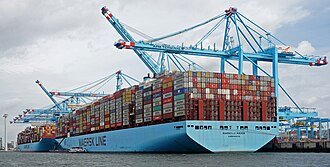
Sea freight is the cheapest option for large shipments — typically a Full Container Load (FCL) or a share in a Less than Container Load (LCL). Transit times run 2–8 weeks depending on destination. A standard 20-foot container fits a 2-bedroom home’s contents.
Air freight costs 4–6× more than sea but delivers in 3–10 days. It makes sense for high-value, lightweight items — laptops, musical instruments, jewellery — where transit time matters more than cost.
International courier (DHL, FedEx, UPS) is ideal for small shipments under 30kg. Door-to-door tracking, customs handled by the carrier, but expensive per kilo.
Cost comparison 2026
| Method | Typical cost | Transit time | Best for |
|---|---|---|---|
| LCL sea (1 CBM) | £150–£300 | 4–8 weeks | Small apartment worth of goods |
| FCL sea (20ft) | £1,200–£2,500 | 3–6 weeks | Full 2-bed home |
| FCL sea (40ft) | £2,000–£4,000 | 3–6 weeks | Full 3–4 bed home |
| Air freight (50kg) | £400–£800 | 5–10 days | High-value, low-volume items |
| DHL courier (20kg) | £120–£250 | 3–7 days | Small parcels, documents |
Costs vary by route. UK-to-Australia and UK-to-South-America corridors cost more than UK-to-Europe or UK-to-UAE. Get quotes from at least 3 companies before committing.
Top international removal companies
- Pickfords — UK’s largest, strong on Europe and Australia routes. Full-service packing available.
- Crown Relocations — corporate relocation specialist, operates in 60+ countries.
- Excess Baggage Company — good for smaller LCL shipments and air freight.
- Seven Seas Worldwide — move cube model (pre-sized boxes you pack yourself), often cheaper for smaller loads.
- AnyVan — marketplace model, competitive quotes from vetted carriers, strong on Europe routes.
- SendMyBag — luggage-based shipping, excellent for students and short moves under 100kg.
Packing for an international move
Removal companies distinguish between packing they do (which they insure) and self-packed boxes (which they typically insure at a lower or ‘owner packed’ rate). If you want full insurance coverage, use their packing service for valuable items.
- Use double-walled boxes for heavy items — single-wall boxes collapse under the weight of other boxes in a container.
- Fill all air space with packing paper or bubble wrap — items that shift damage each other and may not be covered by insurance.
- Label every box with contents AND destination room.
- Keep a written inventory — customs requires it and insurance needs it if anything goes missing.
- Don’t ship flammables, perishables, or certain electronics (lithium batteries have airline/shipping restrictions).
Customs documentation — what you need
Every country requires a customs declaration for shipped household goods. The core documents:
- Unaccompanied Baggage Declaration (or Inventory of Personal Effects) — a room-by-room list of items and approximate values. Most removals companies provide a template.
- Passport copy + visa copy — proving you’re a resident (or incoming resident) usually unlocks duty-free or reduced-duty treatment.
- Proof of prior residence — utility bills or bank statements from your old address, showing you lived there for 12 months (some countries require this).
- Bill of lading or air waybill — shipping company provides this once goods are loaded.
Duty-free allowances for household goods
Most countries allow you to import used personal effects duty-free if you can prove you’ve owned them for 6–12 months and are relocating permanently. ‘Used’ is key — new, boxed goods (especially electronics) typically attract import duty.
- European Union: full duty-free relief on household goods if relocating permanently from outside the EU and goods owned 6+ months.
- Australia: personal effects and household goods duty-free on a subclass 176/887 or PR visa; duty may apply on vehicles.
- USA: duty-free household goods (Schedule 9816) for US residents returning and immigrants arriving; commercial goods attract duty.
- UAE: household effects shipped to Dubai / Abu Dhabi are duty-free once; proof of employment/residency visa required.
Insurance for your shipment
Standard liability from removal companies is minimal — typically ‘SDR per kg’ which often works out at £5–£15/kg, far less than the real value of electronics or antiques. Always take out specialist marine transit insurance.
Marine transit insurance costs roughly 1–2% of declared value. On £10,000 of goods, that’s £100–200 for full replacement-value cover. Worth every penny given the handling goods go through in a container terminal.
Get at least three quotes. Spread is huge: the same LCL shipment from London to Bangkok can range from £420 to £780 depending on carrier and route — a 90-minute comparison saves real money.
What to sell instead of shipping
Shipping large furniture rarely makes economic sense. A standard sofa costs £80–£200 to ship by sea; a comparable second-hand sofa in most destinations costs £50–£150. Beds, wardrobes, and dining tables are almost always cheaper to sell and replace.
High-value items worth shipping: your own bed (mattresses can be surprisingly expensive to replace in Southeast Asia), quality pots and pans, all electronics (voltage compatibility permitting), books, and anything with sentimental value.
Timeline for an international move
- 8 weeks before departure: get 3 removal quotes, book your preferred company, start decluttering.
- 6 weeks: decide what ships, what sells, what stores. List items on Facebook Marketplace / eBay.
- 4 weeks: pack non-essential items. Sort customs documents with your removal company.
- 2 weeks: pack remaining items. Confirm shipment date and customs paperwork.
- 1 week: sign bill of lading. Keep tracking number and contact details accessible during transit.
- After arrival: allow 2–6 weeks for delivery. Customs clearance can add 1–2 weeks at the destination end.
Tip: ship a smaller air freight parcel with items you’ll need immediately — bedding, a few clothes, kitchen basics — so you’re not waiting 6 weeks for a kettle.
Further reading
- Finding long-term accommodation abroad 2026: furnished apartments, local rentals, platforms compared
- US F-1 student visa 2026: complete application guide, financial requirements, OPT and H-1B pathway
- Countries with golden visa programs in 2026: investment requirements, residency rights, citizenship pathways
- Erasmus+ 2026: monthly grants, how to apply, Erasmus Mundus Joint Masters, Turing Scheme for UK
- Masters in Australia for international students 2026: tuition, Student visa, post-study work permit