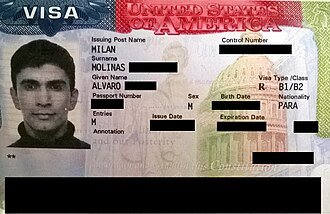
The F-1 student visa is the primary visa for international students studying full-time at US colleges, universities, and language schools. It is one of the most scrutinised visa categories at US consulates globally, and the application process is more intensive than most countries’ student visas — but the process is predictable when you know exactly what to prepare. This is the complete guide for 2026.
F-1 visa: the basics
The F-1 visa is for full-time academic study at a SEVP-certified (Student and Exchange Visitor Program) institution. It is issued for the duration of your program plus 60 days (known as D/S — duration of status). Unlike most visas, there is no fixed expiry tied to your program end date — you can remain in the US on F-1 status as long as you are enrolled full-time and in good standing.
Step-by-step F-1 application process 2026
Step 1: Get admitted and receive your I-20
You cannot apply for an F-1 visa until you have a Form I-20 — a document issued by your US institution confirming you have been accepted as a full-time student. The I-20 includes: your program start date, program end date, and the estimated cost of attendance (tuition + living expenses + other costs). Keep the I-20 safe — you need it throughout your time in the US.
Step 2: Pay the SEVIS fee
Before applying for the visa, you must pay the SEVIS (Student and Exchange Visitor Information System) fee: USD $350 for F-1 students. Pay online at fmjfee.com. Keep the payment receipt — you will need it for your visa interview. Do not pay the SEVIS fee until you have your I-20; the SEVIS ID on your I-20 must match what you enter in the payment system.
Step 3: Complete the DS-160 form
The DS-160 is the online nonimmigrant visa application form, completed at ceac.state.gov. It takes 1–2 hours to complete and must be done in one session (save your application ID code to resume if interrupted). Key questions: your US contact at the university, purpose of travel, prior US visits, travel history, background questions. Be thorough and accurate — inconsistencies between DS-160 answers and your interview answers are a common cause of visa refusal.
Step 4: Schedule your visa interview
Visa interviews are conducted at US embassies and consulates. Appointment wait times in 2026 vary enormously by country: India and some West African countries have wait times of 3–12 months. Apply for your visa interview appointment as soon as you receive your I-20 — you can apply up to 365 days before your program start date (but cannot enter the US more than 30 days before your program start). Most students try to interview 3–6 months before their program starts.
Step 5: Attend the visa interview
Documents to bring: original I-20, SEVIS fee payment receipt, DS-160 confirmation page, visa application fee payment receipt (USD $185 for F-1), valid passport, passport-sized photos, financial documents (see below), and any supporting documents for your application (offer letters, scholarship letters, etc.).
Interview questions typically cover: why this university, why this program, what do you plan to do after graduation, how will you fund your studies, what ties do you have to your home country that will bring you back. The consular officer is assessing one primary question: are you likely to overstay or work illegally? Demonstrating home country ties (family, job offer upon return, property, ongoing business) significantly strengthens your application.
Financial requirements for the F-1 visa
You must prove you can cover the full cost of attendance shown on your I-20 for the first year, plus demonstrate ongoing financial capacity. Accepted financial evidence:
- Personal bank statements (3–6 months, showing adequate balance throughout — lump sums deposited recently are viewed skeptically)
- Scholarship letter (if you have a scholarship covering tuition and/or living costs)
- Sponsor letter from parent or family member + their financial documents
- Proof of assets (property, investments) that could be liquidated if needed
There is no specific minimum bank balance required by the State Department — the consular officer uses judgment based on your I-20 cost of attendance. For a USD $50,000/year program, you need to demonstrate access to approximately USD $50,000–$60,000 in readily available funds.
Working on an F-1 visa
- On-campus work: up to 20 hours/week during the academic year; full-time during university breaks. No special permission needed.
- Off-campus work (CPT — Curricular Practical Training): requires authorisation from your DSO (Designated School Official); must be an integral part of your program; can be part-time or full-time
- OPT (Optional Practical Training): 12 months of work authorisation in your field after graduation. STEM graduates can apply for a 24-month STEM OPT extension = 3 years total. OPT is the primary bridge to H-1B sponsorship. Apply for OPT up to 90 days before graduation; work can begin up to 60 days after graduation.
F-1 to green card: realistic pathways
The typical sequence: F-1 student → OPT (1–3 years) → H-1B lottery (annual, results April) → if successful, H-1B (3+3 years) → EB-2 or EB-3 employer-sponsored green card (timeline varies by country of birth: 1–2 years for most nationalities, 5–10+ years for Indian nationals due to per-country caps). The H-1B lottery is the main bottleneck — only 85,000 visas issued annually for 400,000+ applications in recent years. STEM OPT is critical because it gives 3 years to attempt the lottery (3 chances).
FAQ
Can I apply for a US student visa without a scholarship?
Yes — a scholarship is not required. You need to demonstrate financial capacity through family funds, personal savings, or a combination. Many international students attend US universities on family funding without any scholarship. The financial documentation just needs to prove you can pay for the program without needing to work illegally.
What happens if my F-1 visa application is refused?
You will be given a refusal reason under a specific INA section (most common: 214(b) — failure to prove nonimmigrant intent). You can reapply immediately — there is no waiting period. Strengthen your application by: improving financial documentation, providing stronger evidence of home country ties, and directly addressing the specific reason for refusal in a new DS-160 or at the interview. Many students who are refused once are approved on reapplication with stronger documentation.
Can I travel outside the US on an F-1 visa?
Yes — but you need a valid (unexpired) F-1 visa stamp to re-enter. The F-1 status (D/S) remains valid while you are enrolled, but the visa stamp in your passport has a separate expiry. If your visa stamp expires while you are in the US, you must get a new one at a US consulate abroad before you can re-enter after travel. Plan international travel carefully if your visa stamp is near expiry.
Further reading
- Netherlands visa guide 2026: DAFT, startup visa, highly skilled migrant and more
- Turkey residency guide 2026: short-term permit, property route and citizenship
- Costa Rica visa guide 2026: pensionado, rentista and investor residency
- Georgia visa and residency guide 2026: the ultimate low-tax expat base
- Panama visa guide 2026: Pensionado, Friendly Nations and investor routes