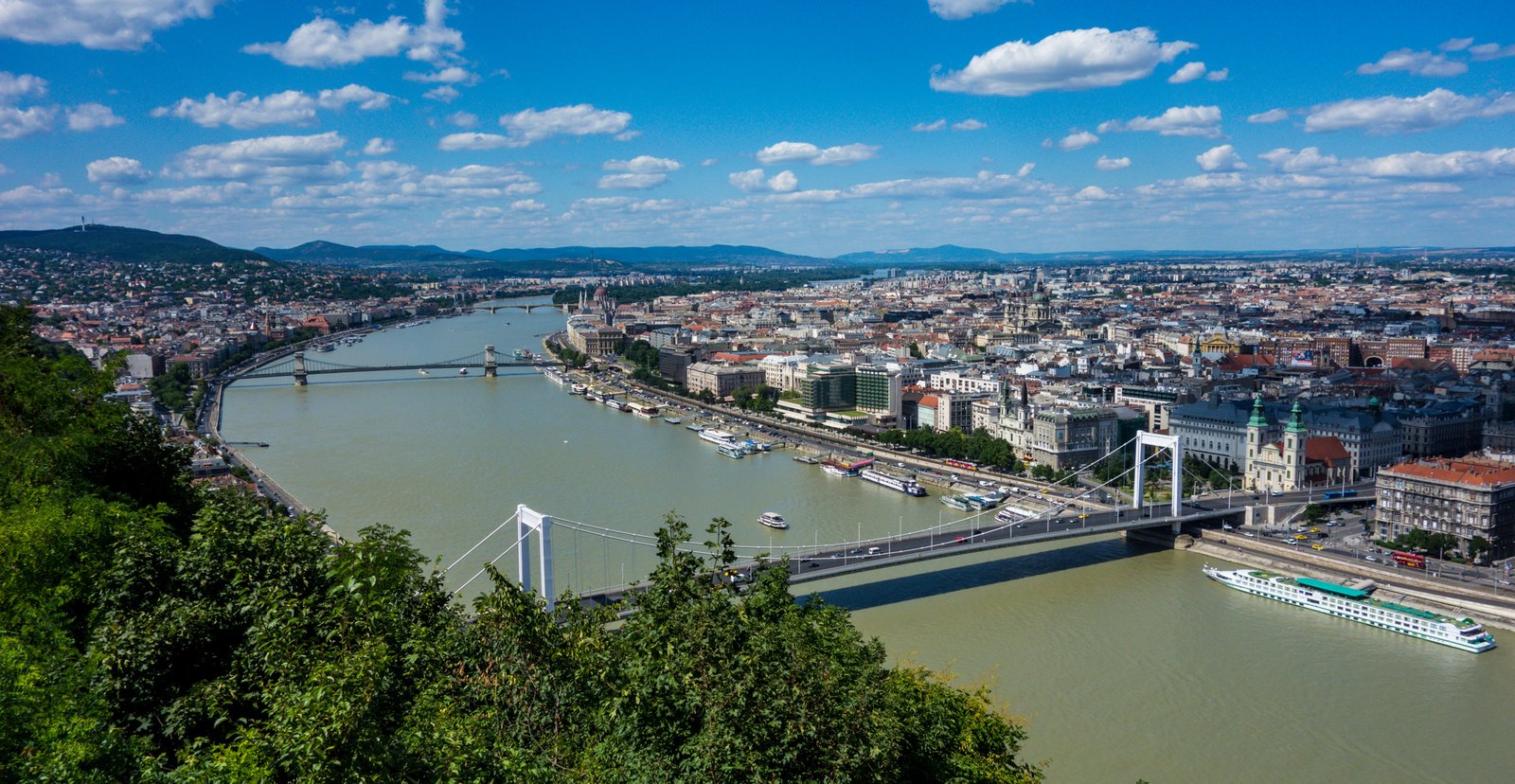
Budapest combines UNESCO river views, EU membership, a thermal bath culture unique in Europe, and monthly costs that sit 40 to 50 percent below Paris or Amsterdam. Here is the full 2026 expat breakdown.
Currency: Hungarian Forint (HUF). All budget figures in EUR for readability. 1 EUR ≈ 400 HUF. Monthly estimates based on July 2026 data.
| Category | Budget | Comfortable | Premium |
|---|---|---|---|
| Accommodation (furnished 1-bed) | EUR 550–750 | EUR 750–1,100 | EUR 1,100–2,000 |
| Groceries and eating out | EUR 200–350 | EUR 350–550 | EUR 550–900 |
| Transport (monthly pass + occasional taxi) | EUR 25–60 | EUR 60–120 | EUR 120–250 |
| Utilities (electric, gas, internet) | EUR 80–130 | EUR 130–200 | EUR 200–350 |
| Entertainment, gym, socialising | EUR 100–200 | EUR 200–350 | EUR 350–700 |
| Total monthly estimate | EUR 955–1,490 | EUR 1,490–2,320 | EUR 2,320–4,200 |
Why expats choose Budapest
- EU capital with full Schengen travel freedom — easy access to Vienna, Prague, Ljubljana, and Bratislava by train or bus.
- Hungarian Forint means local costs in EUR terms remain moderate despite EU membership.
- Rich cultural calendar — State Opera, Müpa music venue, summer festivals (Sziget), ruin bars.
- Excellent public healthcare available to registered residents.
- Strong English proficiency in the under-40 demographic, professional services, and hospitality.
- Increasingly significant tech scene — Prezi, LogMeIn and numerous EU-backed startups based here.
Neighbourhoods to live in
District V (Belváros): the historic inner city, walking distance to everything, most expensive. 1-bed furnished: EUR 850 to 1,300. District VI (Terézváros): popular with younger expats, Andrássy Avenue, Opera nearby. EUR 750 to 1,100. District VII (Erzsébetváros/Jewish Quarter): the ruin bar district, vibrant, eclectic. EUR 650 to 1,000. District II and XII (Buda hills): quieter, green, more residential, popular with families and older expats. EUR 700 to 1,100.
Food and café culture
Budapest’s food culture spans extraordinary traditional dishes (gulyás, lángos, töltött káposzta) and a sophisticated modern restaurant scene. A two-course lunch at a traditional étterem costs EUR 6 to 10. Dinner at a mid-range restaurant: EUR 12 to 20 per head. Specialty coffee has exploded in Budapest — Black Cab, Espresso Embassy, and My Little Melbourne are popular with the international crowd, with a flat white costing EUR 2.50 to 3.50.
The Budapest food market scene is excellent. The Grand Market Hall (Vásárcsarnok) on the Danube has fresh produce on the ground floor and tourist craft shops above. A weekly grocery shop at Aldi, Lidl, or Spar for one person runs EUR 30 to 50.
Transport
Budapest has one of Europe’s most integrated public transport systems. Metro (4 lines), trams, buses, and trolleybuses run from 04:30 to midnight daily with night buses from midnight to 04:30. A monthly all-network pass costs HUF 9,500 (EUR 23.75) — extraordinary value for a European capital. A single journey costs HUF 450 (EUR 1.12). The Budapest Card (tourist pass with unlimited transport) is worth buying for the first week while you explore. Bolt and Uber operate for taxis.
Internet and co-working
DIGI and Vodafone Hungary are the main broadband providers, both offering 300 to 1,000 Mbps fibre from EUR 12 to 20 per month including installation within 2 to 5 business days. Budapest’s co-working scene is well-developed: Impact Hub Budapest, Design Terminal (in a beautiful former air terminal), Loffice, and the Telep creative space all offer day passes from EUR 8 to 15 and monthly memberships from EUR 80 to 180.
Visas and residency for non-EU citizens
EU citizens move to Hungary freely — just register at the government window with your passport and proof of accommodation within 90 days of arrival. Non-EU citizens including British passport holders post-Brexit need a Hungarian National D Visa for stays over 90 days. The White Card (Hungary’s Digital Nomad Visa, officially the ‘Hungarian Card for Remote Workers’) allows non-EU remote workers with monthly income above EUR 2,000 to stay for 1 year, renewable. Application through the Hungarian consulate in your home country before travel.
Healthcare
Hungary’s OEP (National Health Insurance Fund) covers all legal residents who are registered and have an active tax number (adóazonosító jel). EU citizens register at the Hungarian equivalent of the NHS. Non-EU residents on work visas are also entitled to public healthcare. In practice, many expats use private clinics (Imed Medical Center, ProVita) for primary care given shorter wait times — a private GP consultation costs EUR 30 to 60. Hungarian dental care is excellent and popular with medical tourists from Austria, Germany, and the UK at roughly half to a third of home-country prices.
Budapest’s biggest hidden cost is heating — central European winters are cold and building insulation varies enormously by age and renovation status. Ask specifically about heating costs before signing a winter lease on an older apartment. Monthly heating costs can reach EUR 100 to 200 from December to February in older buildings.
Is Budapest right for you?
Budapest suits expats who want a proper European capital lifestyle with strong cultural infrastructure — opera, festivals, architecture, cycling along the Danube — without the Western European price tag. It is particularly popular with older professionals, couples, and families who want EU access, reliable healthcare, and a high quality of life. The main limitations: Hungarian is a notoriously difficult language to learn (Finno-Ugric, no Romance or Germanic roots), and the political environment under the current government has created tensions around some social and media freedoms.
Further reading
- Cost of living in Medellín, Colombia 2026: monthly budget for expats
- Cost of living in Chiang Mai, Thailand 2026: monthly budget for expats
- Cost of living in Bali, Indonesia 2026: monthly budget for expats
- Cost of living in Tbilisi, Georgia 2026: monthly budget for expats
- Cost of living in Da Nang, Vietnam 2026: monthly budget for expats