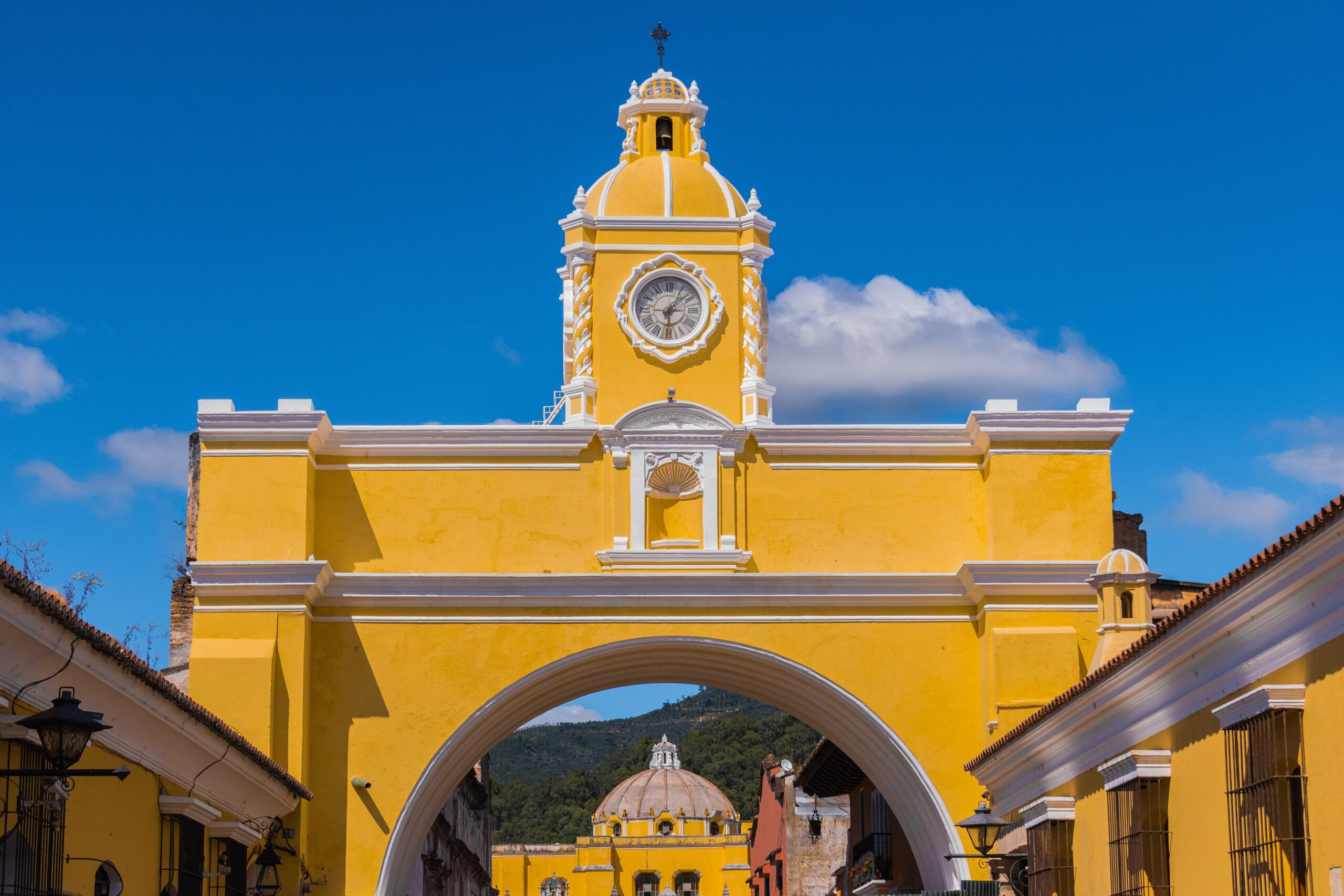
Guatemala’s Rentista residency is the lowest-cost legal-immigration option in Central America — $1,250/month threshold, Antigua’s UNESCO colonial beauty, Lake Atitlán wellness culture. Verified 2026 detail.
Last verified: May 26, 2026.
Rentista Residency overview
- Income threshold: $1,250 USD/month documented for at least 5 years
- Validity: 2-year temporary residency, PR after 5
- Tax: Territorial — foreign-source income not taxed
- Cost: $300-500 USD government fees + lawyer fees ($1,000-2,500)
Why Guatemala works
- Spanish immersion gold standard — Antigua + Quetzaltenango (Xela) are world-famous language-school towns
- Lake Atitlán (Panajachel, San Pedro, San Marcos) is a wellness/expat hub
- Lowest costs in Central America
- Territorial tax + low setup cost
Eligibility requirements
- Documented passive income $1,250+/month for 5 years
- Apostilled criminal record (Spanish-translated)
- Health certificate
- Guatemalan address proof + lawyer for application
Cost of living — Guatemala 2026
- 1-bed Antigua (UNESCO colonial town): $500-900/month
- 1-bed Panajachel / Lake Atitlán: $400-700/month
- 1-bed Guatemala City (Zona 10, Zona 14): $500-900/month
- Restaurant meal: $5-12
- Couple comfortable monthly: $1,500-2,500 USD
FAQ
Is Guatemala safe for retirees?
Guatemala City + some rural areas have safety concerns. Antigua, Lake Atitlán, and Xela are well within retiree-comfort safety norms. Standard precautions apply — most expat-popular areas are safer than US averages.
Rentista Residency application — step by step
Step 1. Apply at Instituto Guatemalteco de Migración (IGM). Most applicants use a Guatemalan attorney ($1,000-$2,500).
Step 2. Required: $1,250+/month documented passive income for 5+ years, apostilled criminal record + birth certificate with sworn Spanish translation, health certificate.
Step 3. Application fee: ~$300-$500 government.
Step 4. Processing: 6-12 months typical.
Step 5. Receive 2-year temporary residence. After 5 years, eligible for permanent residency.
Step 6. Tax: territorial — foreign-source income exempt from Guatemalan tax.
Banking + practical setup in Guatemala
Major banks: Banco Industrial, Banrural, BAM (Banco Agromercantil), Banco G&T Continental.. Banco Industrial largest + most foreigner-friendly. Account opening requires DPI (residence ID) + passport + utility bill (rental contract). USD accounts available.
Cultural notes for newcomers
Guatemala has Latin America’s strongest Mayan cultural presence — 23 indigenous languages alongside Spanish. Antigua’s UNESCO colonial center + Lake Atitlán’s indigenous villages are world-renowned. Catholic + traditional. Pacific coast (Monterrico) for beach; highlands (Quetzaltenango/Xela) for cooler climate.
Real cost of living + practical lifestyle
Antigua couple lifestyle: $1,500-$2,500/month. Lake Atitlán (Panajachel, San Pedro): $1,200-$2,000. Guatemala City (Zona 10, Zona 14): $1,800-$3,000. Healthcare: Hospital Herrera Llerandi, Hospital Centro Médico in Guate City for major care; routine local clinics for primary.
Most common newcomer pitfall
Safety concerns are real in parts of Guatemala City + some rural areas. Antigua, Lake Atitlán, Xela (Quetzaltenango) are well within retiree-comfort safety norms. Standard precautions apply — most expat-popular areas safer than US averages.
How Guatemala compares to peers
Vs Costa Rica: Guatemala 30-50% cheaper but less infrastructure + smaller expat community. Vs Mexico: Guatemala cheaper + more dramatic indigenous culture but Mexico safer + better infrastructure.
Additional FAQ
Best time to arrive in Guatemala?
Most LATAM administrative offices slow significantly during Christmas/New Year + Easter Week (Semana Santa). January (post-holiday catch-up) and September-November tend to be the smoothest months for residency applications, banking, and rental searches.
Can I bring my US/EU/Canadian driver license?
Most LATAM countries honor foreign driver licenses for 90-180 days as a tourist. After residency, you generally need to obtain a local license — sometimes via simple conversion (Costa Rica, Panama, Mexico), sometimes via local test (Brazil, Argentina). International Driving Permit (IDP) recommended for the transition period.
Healthcare for retirees in Guatemala?
Public systems vary widely (Costa Rica’s Caja excellent; Bolivia’s very limited). Most expat retirees combine: cash for routine care (often dramatically cheaper than US — $30-60 specialist visits), private insurance for catastrophic ($100-$400/couple/month for Cigna, Bupa, local equivalents), and travel back to home country for very complex procedures if needed.
Why this country in 2026 specifically
Guatemala’s 2026 retirement appeal centers on three distinct experiences: Antigua’s UNESCO colonial perfection (cobblestone streets, volcano views, baroque churches, world-class restaurants), Lake Atitlán’s indigenous lakeside villages (Mayan culture, wellness retreats, spectacular natural setting), and Quetzaltenango (Xela) for Spanish-immersion at world-class language schools. Cost of living among Central America’s lowest.
Guatemala’s political instability historically has been a barrier, but the 2023-2024 Arévalo presidency stabilized institutions. US State Department Level 3 advisory remains but is heavily geography-specific — Antigua, Lake Atitlán, Cobán, Xela are not the high-risk areas. The cultural depth (23 indigenous languages + Spanish, 2,000-year Mayan heritage) creates retirement experience unlike anywhere else in Americas.
Even more FAQ
How safe is Antigua specifically for retirees?
Antigua is among the safest cities in Central America — heavily tourist-oriented economy creates strong security presence. Standard precautions apply (don’t walk unfamiliar areas late, don’t flash valuables). Most retirees report safety levels comparable to US Tier-2 cities. Lake Atitlán villages (San Pedro, San Marcos, Santa Cruz) similarly safe; some villages have specific reputations to avoid post-dark.
Can I really learn Spanish in Antigua + then move comfortably?
Yes — Antigua + Xela have world-class Spanish-immersion schools ($150-$300/week including homestay + 20-30 hours instruction). Many retirees plan 3-6 months Spanish immersion before settling. Guatemala Spanish (especially Antigua’s standard variety) is one of Latin America’s clearest. Many retirees describe the immersion as a defining cultural experience.
Related: full visa comparison · Mexico Temporary Resident · Best places to retire abroad.
✓ Last verified: May 26, 2026.
Further reading
- US F-1 student visa 2026: complete application guide, financial requirements, OPT and H-1B pathway
- Countries with golden visa programs in 2026: investment requirements, residency rights, citizenship pathways
- Erasmus+ 2026: monthly grants, how to apply, Erasmus Mundus Joint Masters, Turing Scheme for UK
- Masters in Australia for international students 2026: tuition, Student visa, post-study work permit
- Masters in Canada for international students 2026: tuition, Study permit, PGWP, Express Entry