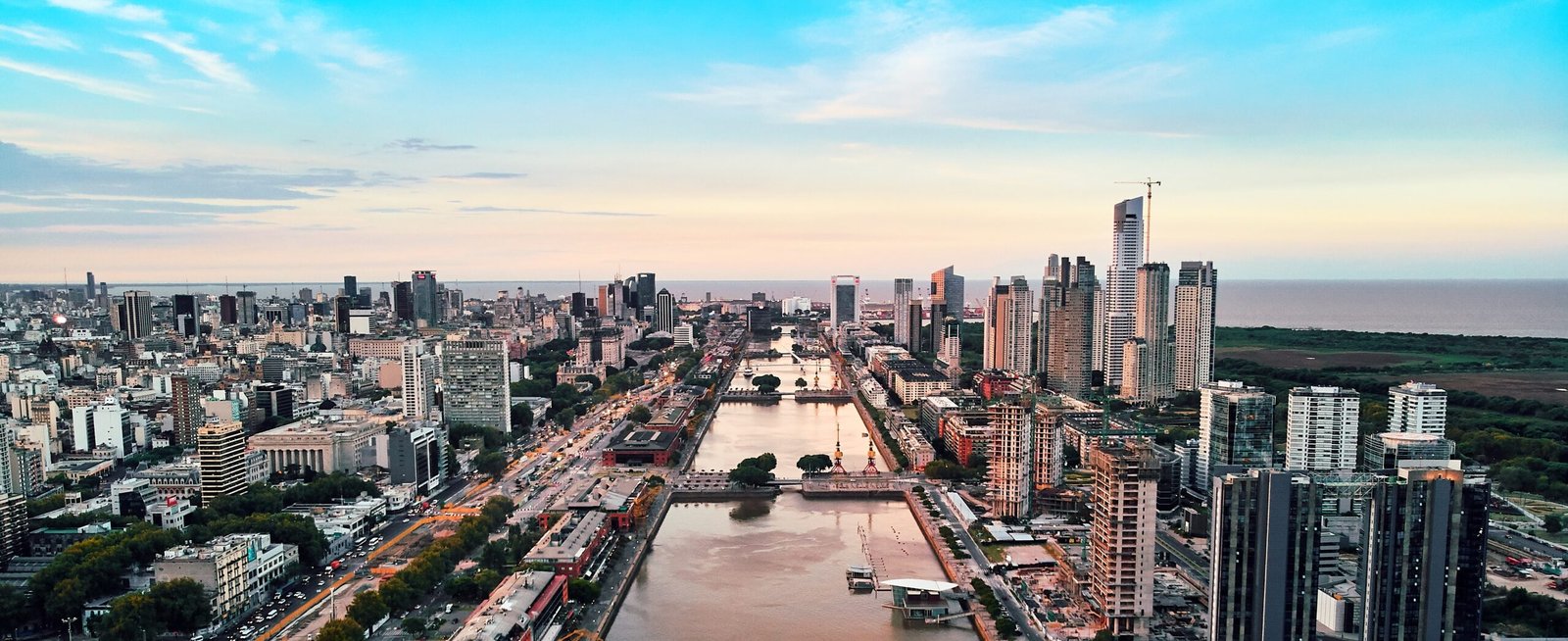
Buenos Aires is one of the great cities of the Americas — sophisticated, culturally rich, enormous, and in 2026 extraordinarily affordable for anyone earning in USD or GBP due to Argentina’s exchange rate structure. Here is the honest cost of living breakdown.
Currency: Argentine Peso (ARS). Most expats access a parallel exchange rate (MEP or CCL dollar) that is legally obtainable and significantly more favourable than the official oficial rate. All figures below use the parallel rate, approximately 1 USD = 1,100 ARS in mid-2026. The official rate produces costs 30 to 50 percent higher — confirm current rates before relying on these numbers.
| Category | Budget | Comfortable | Premium |
|---|---|---|---|
| Accommodation (furnished 1-bed) | $350–$600 | $600–$1,000 | $1,000–$2,500 |
| Food and eating out | $150–$300 | $300–$500 | $500–$900 |
| Transport (Sube card + Uber) | $30–$60 | $60–$120 | $120–$300 |
| Utilities (electric, gas, internet, AC) | $60–$100 | $100–$180 | $180–$400 |
| Entertainment, tango, restaurants, gym | $80–$200 | $200–$400 | $400–$900 |
| Total monthly estimate (parallel rate) | $670–$1,260 | $1,260–$2,200 | $2,200–$5,000 |
Understanding Argentina’s exchange rate
Argentina’s economy is characterised by high inflation and multiple exchange rates. The most relevant for foreign expats earning outside Argentina is the MEP dollar (Dólar MEP) or CCL (Contado con Liquidación) rate — both are legal mechanisms to convert foreign currency into Argentine Pesos at a rate significantly above the official ‘tipo de cambio oficial’. In mid-2026 the gap between official and parallel rates ranged from 30 to 60 percent.
In practice, most expats receive USD or GBP income into a foreign account and convert via Wise to a local account, or through brokerage accounts (IOL Invertir Online, Balanz) using the MEP mechanism. This is legal, widely used, and the standard expat approach. Never convert at blue market street cambistas — the MEP method is legal and rates are typically very similar.
Neighbourhoods for expats
Palermo (Soho and Hollywood): Buenos Aires’ most cosmopolitan neighbourhood — parks, restaurants, wine bars, galleries, and the most established expat social scene. A furnished 1-bed: USD 550 to 950. San Telmo: oldest neighbourhood, cobblestone streets, antique markets, tango culture. Cheaper than Palermo: USD 400 to 750. Recoleta: Parisian-style avenues and architecture, upscale restaurants and cafés, the Recoleta Cemetery (one of the world’s great funerary sites). USD 600 to 1,000. Villa Crespo: adjacent to Palermo, slightly cheaper, growing restaurant scene, more local feel: USD 450 to 800.
Argentine food culture and costs
Argentina’s food culture is built on beef, pasta, and pastry — and Buenos Aires delivers all three at an exceptional level. A traditional asado (Argentine barbecue with cuts including bife de chorizo, entraña, and morcilla) at a parrilla restaurant costs USD 15 to 30 for a full meal with wine. House Malbec wine costs USD 4 to 8 per bottle in a restaurant and USD 2 to 4 at a supermarket. Italian heritage runs deep — Buenos Aires has hundreds of excellent Italian restaurants (pasta, pizza) as well as medialunas (Argentine croissants) in every café.
Supermarket shopping at Carrefour or Coto for one week of groceries costs approximately USD 30 to 55 at the parallel rate — lower than anywhere in Western Europe. Buenos Aires’ indoor market Mercado de San Telmo and the organic fairs in Palermo provide good fresh produce.
Buenos Aires’ culture scene
Buenos Aires has one of the richest cultural lives in Latin America: Teatro Colón (one of the world’s great opera houses — tickets from USD 5 to 40), a world-class contemporary art museum (MALBA), hundreds of live music venues spanning tango, jazz, rock, and electronic, and a literary café tradition centred on historic establishments like Tortoni and El Federal. Tango classes (group) run USD 5 to 15 per session. A night out including dinner, a tango show, and Uber home: USD 40 to 80.
Safety in Buenos Aires
Buenos Aires is a large city with urban crime patterns typical of major Latin American capitals. Petty theft (phone snatching, bag grabs in busy areas), motochorro (motorcycle theft), and express kidnappings (rare but exist in tourist narratives) are the main risks. Most expats in Palermo, Recoleta, and San Telmo report comfortable daily life with standard urban precautions: not displaying expensive electronics in crowded streets, using Uber rather than street taxis at night, and staying aware in busy transit areas. Avoid villa (informal settlement) peripheral areas without a local guide.
Visas for long stays
Most Western passport holders enter Argentina on a 90-day tourist visa, extendable for another 90 days (USD 200 fee). Many nomads use the ‘visa run’ approach — a brief crossing to Uruguay (ferry to Colonia del Sacramento or Montevideo) to reset the 90-day clock. The Argentine Digital Nomad Visa was in development as of 2025 but implementation details were still being finalised — check current status with the Argentine consulate. For longer-term residency, a Rentista Visa requires proof of monthly passive income or a Pensionado Visa for retirees over 60 with a foreign pension.
Healthcare
Buenos Aires has excellent private hospitals — Hospital Alemán, CEMIC, and Sanatorio Güemes are internationally recognised. On the parallel exchange rate, a private specialist consultation costs approximately USD 15 to 40 and a full private health insurance plan (OSDE, Swiss Medical, Medicus) runs USD 80 to 200 per month. Argentina’s public hospital system is excellent by Latin American standards and technically available to all residents, though expats typically use private care for speed and English language access.
Argentina’s inflation has been extreme in recent years — prices in USD terms can change month-to-month as the peso devalues. Lock your accommodation costs in USD where possible (most landlords in expat areas price in USD regardless of legal tender laws) and convert pesos to dollars on the MEP regularly rather than holding large ARS balances.
Is Buenos Aires worth it?
Buenos Aires in 2026 is one of the most intellectually and culturally stimulating cities in the world at a cost point that no equivalent city comes close to matching. The food is outstanding, the arts scene is world-class, the parks are beautiful, and the nightlife is extraordinary. The trade-off is Argentina’s macroeconomic instability — exchange rate shifts, inflation, and political uncertainty are real factors that require ongoing attention and flexibility. For expats comfortable navigating that complexity, Buenos Aires offers a quality of life that is very difficult to replicate at the price.
Further reading
- Cost of living in Split, Croatia 2026: expat and digital nomad budget
- Cost of living in Porto, Portugal 2026: expat monthly budget
- Cost of living in Penang, Malaysia 2026: expat monthly budget
- Cost of living in Budapest, Hungary 2026: expat monthly budget
- Cost of living in Medellín, Colombia 2026: monthly budget for expats