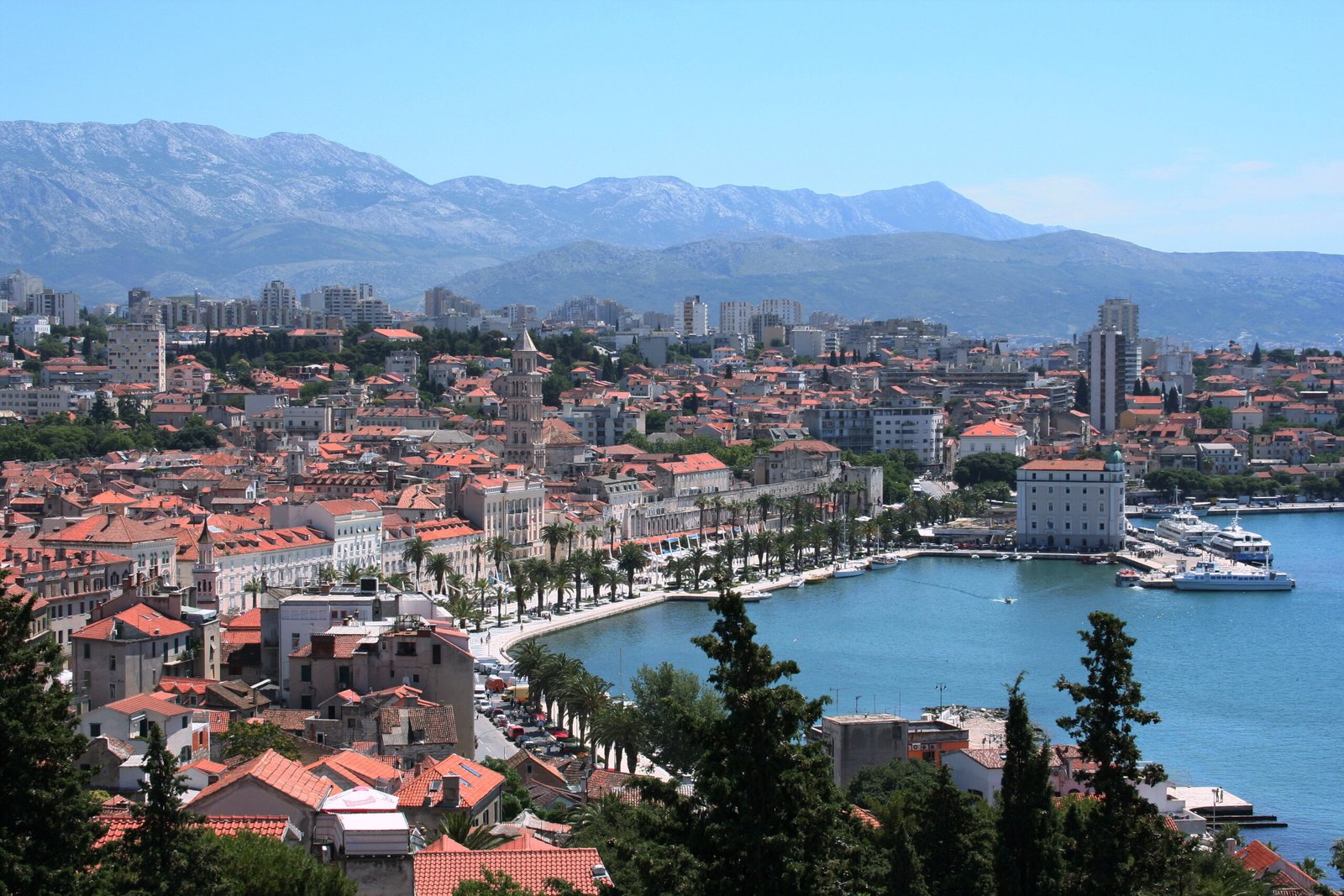
Split is the most dramatically situated city in the Adriatic — a living Roman palace on the Dalmatian coast, Adriatic swimming, and Croatia’s Digital Nomad Visa. Here is the full 2026 cost of living breakdown for expats and remote workers.
Currency: Euro (EUR) — Croatia adopted the Euro in January 2023. Monthly estimates based on July 2026 data.
| Category | Budget | Comfortable | Premium |
|---|---|---|---|
| Accommodation (furnished 1-bed) | EUR 600–850 | EUR 850–1,300 | EUR 1,300–2,400 |
| Food and eating out | EUR 200–350 | EUR 350–550 | EUR 550–900 |
| Transport (bus + taxi) | EUR 30–60 | EUR 60–120 | EUR 120–280 |
| Utilities (electric, gas, internet, AC) | EUR 80–130 | EUR 130–210 | EUR 210–400 |
| Entertainment, beach activities, socialising | EUR 80–150 | EUR 150–280 | EUR 280–600 |
| Total monthly estimate | EUR 990–1,540 | EUR 1,540–2,460 | EUR 2,460–4,580 |
Why Split is becoming a serious expat destination
- Croatia joined the Eurozone in 2023 — banking and financial transactions are now straightforward across EU borders.
- Croatia’s Digital Nomad Temporary Stay permit was among the first in Europe and is well-established.
- Split has a genuine city character beyond its coastal beauty — a local university, arts scene, and football culture.
- Ferries from Split reach the islands of Brač, Hvar, Šolta, and Vis — weekend island life is part of the lifestyle.
- Costs are still 30 to 40 percent below equivalent coastal towns in France or southern Italy.
- English is widely spoken in the service industry and among under-40s.
Living inside Diocletian’s Palace
Split’s most remarkable feature is that Diocletian’s Palace — a 3rd-century Roman emperor’s retirement complex — is not a museum but a living neighbourhood. Apartments occupy ancient Roman foundations and walls. The Peristyle (palace courtyard) hosts summer concerts and daily life. Living inside the Palace walls puts you in one of the most atmospheric residential environments in the Mediterranean.
A flat inside the Palace itself costs EUR 900 to 1,600 per month for a furnished 1-bedroom — the premium reflects both the uniqueness and the tourism pressure on the central area. The bones are extraordinary; the infrastructure (plumbing, electrical, WiFi) in older buildings can be inconsistent. Inspect thoroughly before signing.
Neighbourhoods outside the Palace
Meje and Bačvice: west of the old town, residential, beach access at Bačvice (famous for local sport picigin), popular with young professionals. EUR 700 to 1,100. Firule: quiet suburb east of the centre, beach access, less tourist pressure. EUR 650 to 1,000. Spinut: north of the old town, local and residential, closest suburb to the bus station. EUR 600 to 950. Trogir: a separate town 25km west, UNESCO Heritage as well, cheaper but requires daily commuting by bus.
Seasonal costs — the summer problem
Split is highly seasonal. From June to September, the Adriatic tourism season dominates and apartment prices can rise 30 to 50 percent. Summer tourists mean busy restaurants, higher prices, and reduced availability. For long-term expat stays, the most effective strategy is to sign a 12-month lease before the summer season begins (February to April) at the off-peak rate, which locks in a fair price through summer. Month-to-month availability in July and August at reasonable prices is scarce in the central areas.
Food and Dalmatian cuisine
Dalmatian cooking is built on simple, excellent ingredients — fresh Adriatic fish, lamb from the islands, local olive oil, and Croatian wines from the Pelješac peninsula (Dingač, Postup). A meal at a konoba (traditional Dalmatian restaurant) — fresh grilled fish, salad, local wine — costs EUR 20 to 35 per person and is worth every euro. Tourist-facing restaurants on the Riva (the main promenade) are EUR 25 to 50 per head. The local market (Pazar, adjacent to the Palace east gate) sells fresh produce, cheese, and cured meats at reasonable prices daily.
Digital Nomad Visa in detail
Croatia’s Digital Nomad Temporary Stay permit allows non-EU citizens to live and work remotely in Croatia for up to 1 year. The permit is non-renewable — after 1 year, you must exit Croatia for a period before reapplying. Requirements include: proof of remote employment with a company outside Croatia, proof of regular monthly income of at least EUR 2,539.30 (updated periodically), valid health insurance covering Croatia, and proof of accommodation. EU citizens use freedom of movement and are not subject to the permit — register a local address at the police after 90 days.
Internet and co-working
Croatia’s urban internet is good — A1 Croatia and HT (Hrvatski Telekom) both offer 100 to 500 Mbps fibre in Split from EUR 15 to 30 per month. Installation is typically 1 to 2 weeks. Split’s co-working scene is growing but remains small compared to Lisbon or Budapest: Shift Split is the best-established option, with day passes at EUR 10 to 15 and monthly memberships from EUR 100. Many cafés in the Meje area and around Bačvice beach have reliable WiFi for casual working.
Healthcare
Croatia’s HZZO (Croatian Health Insurance Fund) covers all legal residents including EU citizens who register and non-EU citizens with a Temporary Stay permit (the digital nomad visa). Non-EU applicants must maintain private health insurance as a condition of the permit. A private GP consultation costs EUR 30 to 60. KBC Split (University Hospital) handles emergencies and specialist care for the region. Private clinics in Split include Poliklinika Bonifarm and Poliklinika Dalmacija — good quality for routine care.
Split’s summers are magnificent but genuinely crowded — the old town feels like a different city in August, dense with cruise ship day-trippers. If you are here for productive remote work rather than the beach, October to May offers a quieter, more liveable city. The islands (Brač, Hvar) are accessible by ferry and dramatically quieter from September onward.
Is Split a good long-term base?
Split works best as a 6 to 12 month base rather than a permanent destination. The seasonal rhythm — electric summers, quiet but pleasant winters — suits a nomadic lifestyle. The lack of a major digital nomad ecosystem means you need to be self-reliant for professional community. The Adriatic lifestyle, island access, and Dalmatian food and wine compensate generously. For anyone who has ever wanted to live inside a Roman palace with Adriatic swimming within walking distance, Split is a singular opportunity.
Further reading
- Cost of living in Porto, Portugal 2026: expat monthly budget
- Cost of living in Penang, Malaysia 2026: expat monthly budget
- Cost of living in Budapest, Hungary 2026: expat monthly budget
- Cost of living in Medellín, Colombia 2026: monthly budget for expats
- Cost of living in Chiang Mai, Thailand 2026: monthly budget for expats