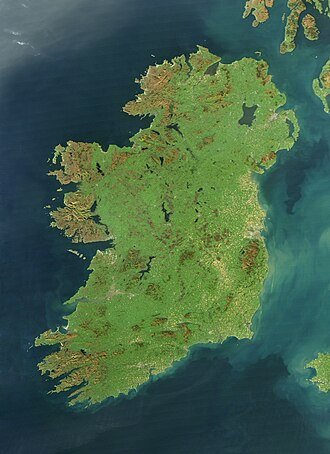
Ireland is one of the most attractive English-speaking EU members for international workers — and since 2021, the only English-speaking country in the EU for British citizens. The system is stamp-based and permit-driven. Here is the full picture for 2026.
Ireland’s immigration routes at a glance
| Route | Who it’s for | Salary minimum (2026) | Duration |
|---|---|---|---|
| Critical Skills Employment Permit (CSEP) | Shortage occupations (IT, engineering, science, finance) + degree holders with EUR 64,000+ offer | EUR 38,000 (CSEP list) / EUR 64,000 (other) | 2 years → renewal → PR |
| General Employment Permit (GEP) | All other occupations with job offer | EUR 34,000 (most roles) | 2 years → renewal |
| Start-Up Entrepreneur Programme (STEP) | Innovative business founders | EUR 75,000+ funding | 2 years → renewable |
| Internationalisation Employment Permit | Non-EEA workers transferred within multinationals | EUR 40,000 | 2 years → renewable |
| Stamp 0 — Independent Means | Retirees, passive income holders | EUR 50,000/year + EUR 100,000 savings | Annual renewal |
| Stamp 4 — immediate PR equivalent | After 5 years on appropriate stamp | Employment history | 5 years |
Critical Skills Employment Permit — the premium route
The Critical Skills Employment Permit (CSEP) is Ireland’s priority work permit for high-demand occupations. The Department of Enterprise, Trade and Employment maintains a list of occupations eligible at the lower salary threshold of EUR 38,000 — currently including software engineers, data scientists, cybersecurity specialists, financial analysts, and medical professionals. Applicants in occupations not on the list can still obtain a CSEP with a salary offer of EUR 64,000 or more.
Key advantage of the CSEP over the General Employment Permit: after just 1 year in Ireland on a CSEP, you can apply for a Stamp 4 — effectively full work authorisation without employer sponsorship. Your spouse or partner also gets permission to work in Ireland immediately upon your CSEP grant (Stamp 1G — open work permit). After 5 years, CSEP holders can apply for Long-Term Residency (effectively permanent residency).
Application process: the employer applies on your behalf through the Department of Enterprise employment permits portal. Processing typically takes 4 to 8 weeks for standard applications, faster for Premium Processing (EUR 1,000 additional fee). You then apply for your entry visa at the Irish consulate in your country (if from a visa-required country) — most non-EU nationals need a visa even with a permit.
General Employment Permit
The General Employment Permit (GEP) is available for roles paying at least EUR 34,000 per year that are not on the ineligible occupations list (the ineligible list covers low-wage roles where Irish unemployment or labour surplus is high). The employer must demonstrate that genuine efforts to recruit from the EEA were made and failed — typically through advertising with the national employment service (Intreo) and relevant job boards for at least 2 weeks.
Spouses of GEP holders get a Stamp 3 (no work authorisation) rather than the Stamp 1G available to CSEP holders. This is a significant practical disadvantage for couples. The GEP renewable after 2 years and leads to the same Long-Term Residency pathway as the CSEP after 5 years total in Ireland.
Ireland’s stamp system explained
Ireland does not use traditional residence permit cards — instead, your passport is endorsed with a ‘stamp’ indicating your permission type. Stamp 0: no work permitted, income of EUR 50,000+/year required (for retirees and those with passive income). Stamp 1: work permit conditions apply (specific employer, specific role). Stamp 1G: graduate student or CSEP spouse — permission to work without employer restriction. Stamp 2: full-time students. Stamp 3: spouse of most work permit holders — no work permitted. Stamp 4: permission to work without employment permit — equivalent to long-term residency. Stamp 5: without condition as to time (permanent).
PPS number — the essential first step
A Personal Public Service (PPS) number is Ireland’s equivalent of the UK’s National Insurance number or the US Social Security number — required for employment, accessing public services, and most administrative tasks. You apply for a PPS number at a local Intreo Centre or Department of Social Protection office with your passport and proof of address in Ireland (utility bill or rental contract). Processing is typically immediate at the office.
Post-study work rights for international graduates
Non-EEA graduates of Irish universities and colleges can apply for a Stamp 1G (permission to seek employment without permit requirement) for 1 year after graduation (extended to 2 years for graduates with master’s degrees or higher). This allows unrestricted work in Ireland while looking for a qualifying CSEP or GEP role. Several major employers actively recruit international graduates specifically to sponsor employment permits — particularly in Dublin’s tech sector.
The British citizen factor post-Brexit
British citizens are not EU citizens and therefore require employment permits to work in Ireland like any other non-EEA national. However, the Common Travel Area (CTA) between Ireland and the UK — which predates EU membership — still gives British citizens the right to enter, live, and work in Ireland without an employment permit. The CTA is an administrative arrangement between the two governments, not an EU treaty provision, so it survived Brexit. British citizens in Ireland get Stamp 4 rights from day one. This makes Ireland the only EU member state where British citizens have full work rights without any permit.
Dublin property prices and rents are among the highest in Europe — average rent for a 1-bedroom in Dublin city is EUR 2,000+ per month. Many CSEP holders live in satellite towns (Maynooth, Bray, Swords) and commute. Your EUR 38,000 salary minimum looks very different after Dublin rent — budget carefully.
Irish citizenship pathway
Ireland offers citizenship by naturalisation after 5 years of reckonable residency (Stamp 1, 4, or certain Stamp 3 combinations). One of the 5 years must be continuous residency immediately preceding the application. You can be absent for up to 6 weeks per year in each qualifying year. Dual citizenship is permitted — Ireland does not require renunciation of your original nationality. Irish citizenship, once obtained, gives you EU citizenship and full EU work and residency rights across all 27 EU member states.
Further reading
- UAE residency guide 2026: Golden Visa, remote work visa and freelance licence
- Greece Digital Nomad Visa 2026: complete application guide
- New Zealand visa guide 2026: skilled migrant, work to residence and more
- Mexico residency visa guide 2026: temporary and permanent residency explained
- Japan visa guide 2026: work, digital nomad, retirement and long-stay options