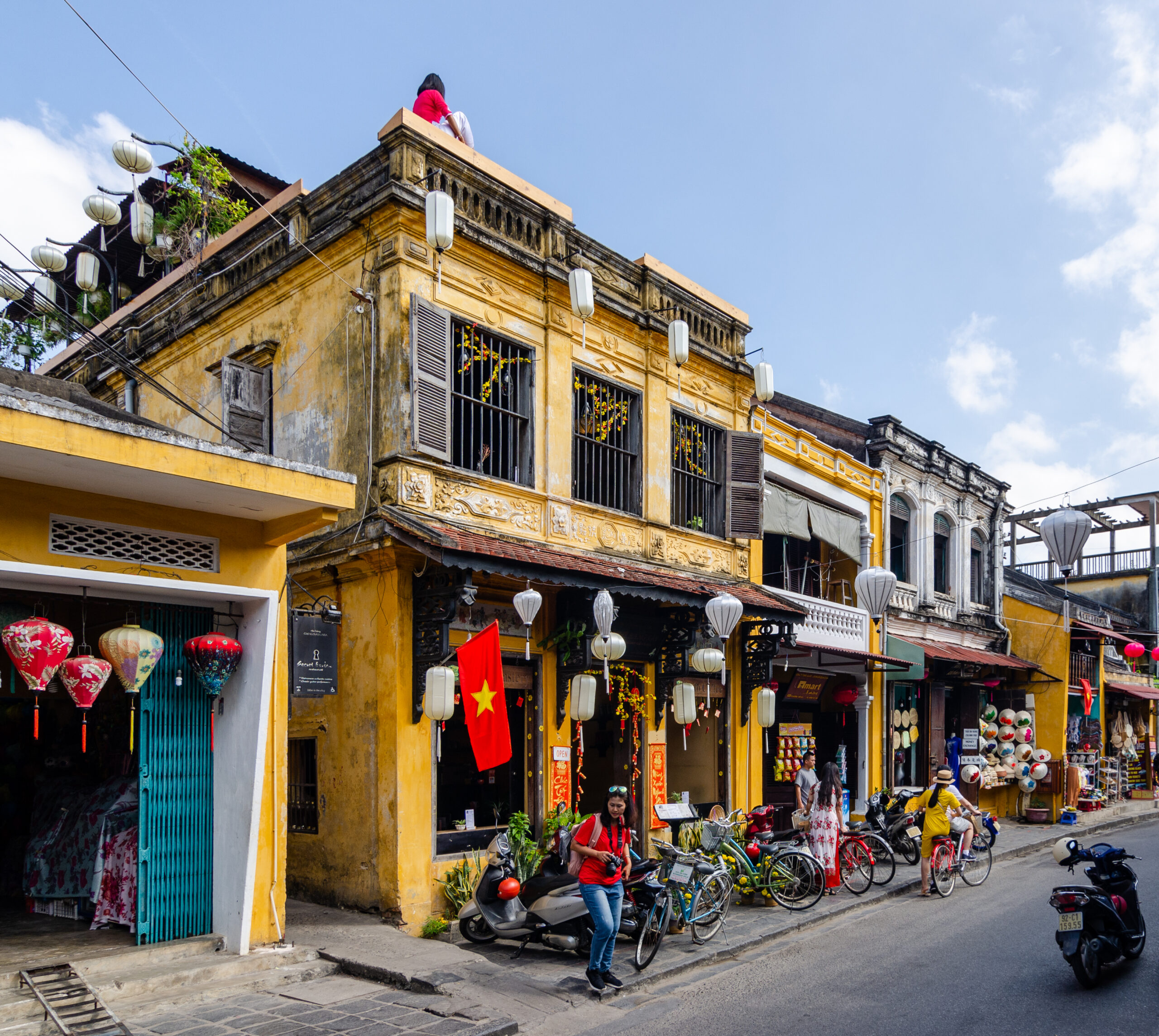
Hoi An is small, walkable, and at its best Feb–April. Outside that window, you risk monsoon flooding (Sept–Nov) or extreme heat (May–Aug). Here’s the breakdown.
Last verified: May 6, 2026.
Quick answer
Best: February–April. Dry, warm, manageable crowds. Worst: September–November (monsoon flooding can leave streets under 1m of water).
Month-by-month
- Feb–Apr: 22–28°C, low humidity, dry. Best window. Tet Feb 17, 2026 closes things for ~5 days.
- May–Jun: 28–35°C, hot and increasingly humid. Beach great. Old Town brutal at midday.
- Jul–Aug: 30–35°C peak heat. Tourist peak. Avoid if heat-sensitive.
- Sep–Oct: Monsoon hits. Old Town floods regularly Oct–Nov.
- Nov: Tail-end of monsoon, cooler (24–28°C), occasional flooding, cheap.
- Dec–Jan: Cooler (20–25°C), some rain, peak Christmas-NY tourist demand drives prices up.
Full Moon Lantern Festival (the big draw)
On the 14th day of every lunar month, Hoi An’s electric lights are switched off and the Old Town lights only by lanterns. 2026 dates: Feb 14, Mar 16, Apr 14, May 14, Jun 13, Jul 12, Aug 11, Sep 9, Oct 9, Nov 8, Dec 7. Best months for this experience: March, April, October (weather + atmosphere balance).
Beach season (An Bang + Cua Dai)
- Best: April–August (warm water, calm sea)
- Worst: October–December (rough sea, beach erosion at Cua Dai)
Tailoring shops timing
If you’re getting clothes tailored, leave 5+ days in Hoi An. The major shops (Yaly, Be Be, A Dong Silk) need fittings + adjustments. Don’t compress this into 2 days.
Related: best time to visit Vietnam.
Practical tips that make the difference
- Plan in advance: book major attractions + restaurants 4-8 weeks ahead in peak season
- Use the local apps: country-specific transport, payment, and food delivery apps work better than generic international ones
- Carry small cash: card acceptance varies; €20-50 in local currency saves moments
- Travel insurance: even a $50 policy saves you from $5,000+ medical bills
- Photograph everything important: passport, BRP, important addresses, emergency numbers
Common mistakes to avoid
- Booking too tight: build 30-50% buffer between commitments. Strikes, weather, jet lag all cause delays
- Skipping local etiquette: brief research on greetings, tipping, and dress codes saves embarrassment
- Eating at tourist-trap restaurants near monuments: walk 2-5 minutes off main squares for better food + better prices
- Underestimating walking: most European + Asian cities are walked, not driven. Comfortable shoes essential
- Ignoring transit cards: city travel cards (Oyster, Suica, Navigo, etc.) are 30-50% cheaper than single tickets
When to consider professional help
For more complex situations — multi-country tax planning, complicated visa applications, or substantial property purchases — engaging a regulated professional saves money and stress in the long term. Look for: OISC-registered immigration advisers (UK), Spanish gestores (Spain), German Steuerberater (Germany), or cross-border tax specialists (any country).
Practical tips that make the difference
- Plan in advance: book major attractions + restaurants 4-8 weeks ahead in peak season. Cancellation is usually free up to 24-48 hours before arrival
- Use the local apps: country-specific transport, payment, and food delivery apps work better than generic international ones. Examples: Grab in SE Asia, Bolt in Europe, DiDi in China, MTR app in Hong Kong
- Carry small cash: card acceptance varies; small amounts in local currency saves moments. Always have $50-100 equivalent in cash for emergencies
- Travel insurance: even a $50 policy saves you from $5,000+ medical bills. Doctor visits abroad average $30-150; emergency rooms can run $1,500-15,000 for serious cases
- Photograph everything important: passport, BRP, important addresses, emergency numbers, insurance policy, contact details. Store in cloud + offline
- Get an eSIM before you fly: avoid paying $10-15/day in roaming charges. Airalo and Holafly start at $4 for short trips
Common mistakes to avoid
- Booking too tight: build 30-50% buffer between commitments. Strikes, weather, jet lag all cause delays
- Skipping local etiquette: brief research on greetings, tipping, and dress codes saves embarrassment
- Eating at tourist-trap restaurants near monuments: walk 2-5 minutes off main squares for better food at lower prices
- Underestimating walking: most European + Asian cities are walked, not driven. Comfortable shoes essential. Plan for 15,000-25,000 steps per day on active travel
- Ignoring transit cards: city travel cards (Oyster, Suica, Navigo, etc.) are 30-50% cheaper than single tickets
- Booking accommodation by stars rating only: read reviews from past 6 months specifically. Old reviews can mislead about current state
Money-saving strategies
- Free walking tours: most major cities have tip-based walking tours. Excellent way to orient yourself + learn history. Sandeman, Free Tour brand operate in 30+ cities
- Lunch menus vs dinner: many restaurants offer lunch fixed-price menus 30-50% cheaper than equivalent dinner
- Public transport day passes: usually 2-3x cheaper than 4 single tickets
- Book flights mid-week, fly Tuesday/Wednesday: typically cheapest days. Avoid Friday and Sunday flights
- Hostel private rooms: 20-30% cheaper than hotels for similar quality. Many have great social common areas
- Local SIM cards in 3+ week stays: cheaper than eSIM for longer stays in single country
When to consider a guide or local expert
For more complex situations — multi-country tax planning, complicated visa applications, or substantial property purchases — engaging a regulated professional saves money and stress in the long term. Look for: OISC-registered immigration advisers (UK), Spanish gestores (Spain), German Steuerberater (Germany), or cross-border tax specialists (any country). For travel-specific questions, local certified tour guides offer expertise generic guides can’t match.
Further reading
- Cost of living in Split, Croatia 2026: expat and digital nomad budget
- Cost of living in Porto, Portugal 2026: expat monthly budget
- Cost of living in Penang, Malaysia 2026: expat monthly budget
- Cost of living in Budapest, Hungary 2026: expat monthly budget
- Cost of living in Medellín, Colombia 2026: monthly budget for expats