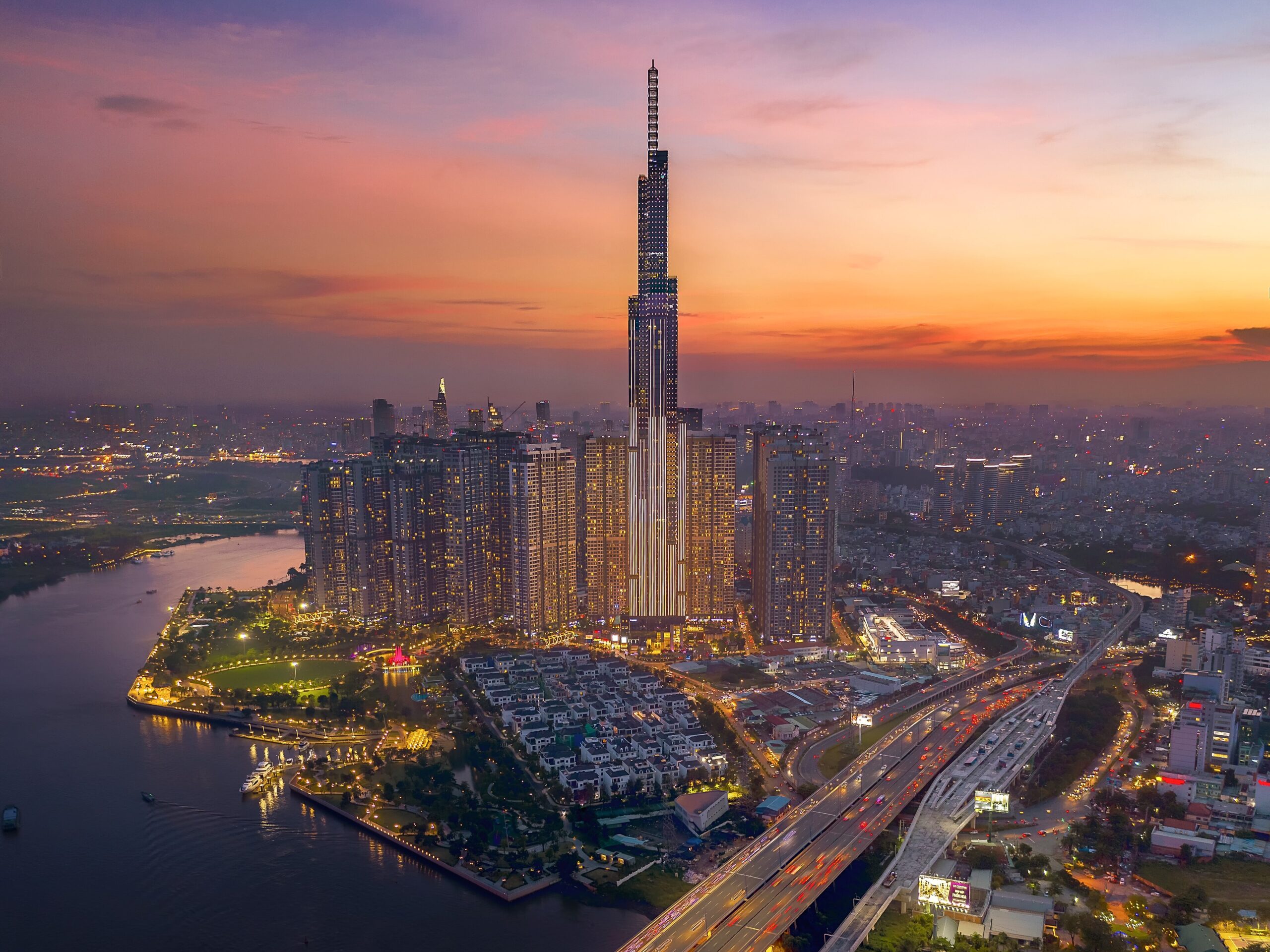
Ho Chi Minh City (still Saigon to most locals) moves faster than Hanoi, has better infrastructure, and worse weather. The war history museums are a must. Here’s 3 days.
Last verified: May 6, 2026.
Day 1 — District 1 + war history
- Morning: Reunification Palace (the building where the war ended)
- Mid-morning: War Remnants Museum — heavy but essential. Allow 2.5 hours minimum.
- Lunch: banh mi at Banh Mi Huynh Hoa (Cô Giang street, line forms by 1pm)
- Afternoon: Notre Dame Cathedral + Central Post Office + Book Street
- Late: Ben Thanh Market + nearby street food alleys (better food just outside the market)
- Dinner: pho at Pho Hoa Pasteur or Pho Quynh
Day 2 — Cu Chi Tunnels half-day
- Morning: Cu Chi Tunnels half-day tour ($25–$50/person)
- Lunch back in city: bun bo Hue at Bun Bo Ganh
- Afternoon: Saigon Skydeck (Bitexco Tower) for the city view
- Evening: rooftop bars in District 1 — Chill Skybar, EON 51, Glow
Day 3 — Mekong Delta day trip
- Group tour to My Tho or Ben Tre — boats through narrow canals, coconut candy factories, lunch by the river ($35–$60/person)
- Returns: 6–7pm
- Alternative: stay in Saigon and explore District 4 (street food district, less touristy than D1)
What to skip in HCMC
- Bui Vien Walking Street — backpacker chaos, overpriced everything
- Ben Thanh Market interior — mostly tourist trash, food prices 3x outside
- Most rooftop pool ‘Instagram’ bars — pretty views, mediocre drinks
Where to stay
- District 1: tourist convenience, walking distance to everything (mid-range $50–$100/night)
- District 3: more local, cafe culture, 10-min Grab to D1
- Thao Dien (D2): expat residential — quieter, more cafes, longer to D1 attractions
Related: Vietnam 10-day itinerary · best time to visit Vietnam.
Practical tips that make the difference
- Plan in advance: book major attractions + restaurants 4-8 weeks ahead in peak season
- Use the local apps: country-specific transport, payment, and food delivery apps work better than generic international ones
- Carry small cash: card acceptance varies; €20-50 in local currency saves moments
- Travel insurance: even a $50 policy saves you from $5,000+ medical bills
- Photograph everything important: passport, BRP, important addresses, emergency numbers
Common mistakes to avoid
- Booking too tight: build 30-50% buffer between commitments. Strikes, weather, jet lag all cause delays
- Skipping local etiquette: brief research on greetings, tipping, and dress codes saves embarrassment
- Eating at tourist-trap restaurants near monuments: walk 2-5 minutes off main squares for better food + better prices
- Underestimating walking: most European + Asian cities are walked, not driven. Comfortable shoes essential
- Ignoring transit cards: city travel cards (Oyster, Suica, Navigo, etc.) are 30-50% cheaper than single tickets
When to consider professional help
For more complex situations — multi-country tax planning, complicated visa applications, or substantial property purchases — engaging a regulated professional saves money and stress in the long term. Look for: OISC-registered immigration advisers (UK), Spanish gestores (Spain), German Steuerberater (Germany), or cross-border tax specialists (any country).
Practical tips that make the difference
- Plan in advance: book major attractions + restaurants 4-8 weeks ahead in peak season. Cancellation is usually free up to 24-48 hours before arrival
- Use the local apps: country-specific transport, payment, and food delivery apps work better than generic international ones. Examples: Grab in SE Asia, Bolt in Europe, DiDi in China, MTR app in Hong Kong
- Carry small cash: card acceptance varies; small amounts in local currency saves moments. Always have $50-100 equivalent in cash for emergencies
- Travel insurance: even a $50 policy saves you from $5,000+ medical bills. Doctor visits abroad average $30-150; emergency rooms can run $1,500-15,000 for serious cases
- Photograph everything important: passport, BRP, important addresses, emergency numbers, insurance policy, contact details. Store in cloud + offline
- Get an eSIM before you fly: avoid paying $10-15/day in roaming charges. Airalo and Holafly start at $4 for short trips
Common mistakes to avoid
- Booking too tight: build 30-50% buffer between commitments. Strikes, weather, jet lag all cause delays
- Skipping local etiquette: brief research on greetings, tipping, and dress codes saves embarrassment
- Eating at tourist-trap restaurants near monuments: walk 2-5 minutes off main squares for better food at lower prices
- Underestimating walking: most European + Asian cities are walked, not driven. Comfortable shoes essential. Plan for 15,000-25,000 steps per day on active travel
- Ignoring transit cards: city travel cards (Oyster, Suica, Navigo, etc.) are 30-50% cheaper than single tickets
- Booking accommodation by stars rating only: read reviews from past 6 months specifically. Old reviews can mislead about current state
Money-saving strategies
- Free walking tours: most major cities have tip-based walking tours. Excellent way to orient yourself + learn history. Sandeman, Free Tour brand operate in 30+ cities
- Lunch menus vs dinner: many restaurants offer lunch fixed-price menus 30-50% cheaper than equivalent dinner
- Public transport day passes: usually 2-3x cheaper than 4 single tickets
- Book flights mid-week, fly Tuesday/Wednesday: typically cheapest days. Avoid Friday and Sunday flights
- Hostel private rooms: 20-30% cheaper than hotels for similar quality. Many have great social common areas
- Local SIM cards in 3+ week stays: cheaper than eSIM for longer stays in single country
When to consider a guide or local expert
For more complex situations — multi-country tax planning, complicated visa applications, or substantial property purchases — engaging a regulated professional saves money and stress in the long term. Look for: OISC-registered immigration advisers (UK), Spanish gestores (Spain), German Steuerberater (Germany), or cross-border tax specialists (any country). For travel-specific questions, local certified tour guides offer expertise generic guides can’t match.
Further reading
- Cost of living in Málaga, Spain 2026: digital nomad and expat budget
- Cost of living in Buenos Aires, Argentina 2026: expat monthly budget
- Cost of living in Split, Croatia 2026: expat and digital nomad budget
- Cost of living in Porto, Portugal 2026: expat monthly budget
- Cost of living in Penang, Malaysia 2026: expat monthly budget