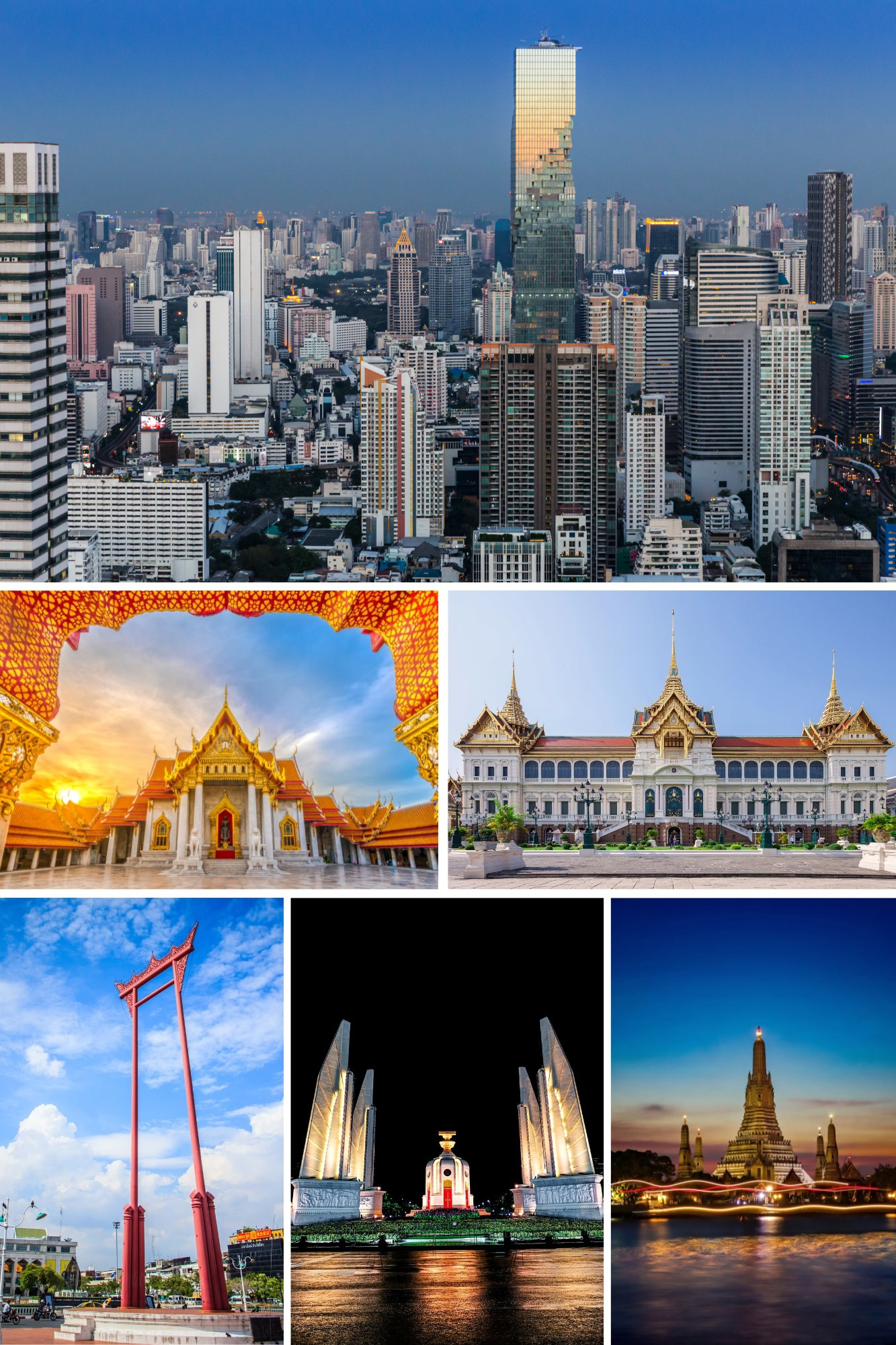
The Destination Thailand Visa (DTV), launched in mid-2024, is now the cleanest path for digital nomads, freelancers, and “soft power” workers to legally stay in Thailand long-term. Last verified: 2026-04-22.
What the DTV actually offers
- 5-year multi-entry visa with each entry allowing up to 180 days in Thailand.
- One free 180-day extension per entry, meaning you can stay up to ~360 days per visit if you renew while inside Thailand.
- Cost: 10,000 THB (~$280 USD) for the 5-year visa.
- You can leave and re-enter as often as you like during the 5 years.
Who qualifies
Three eligibility tracks:
- Workation: Remote workers, freelancers, and digital nomads with a foreign employer or foreign clients.
- Soft Power: Participants in Thai cultural activities — Muay Thai training, Thai cooking schools, Thai language courses, traditional Thai medicine, etc.
- Dependents: Spouses and children under 20 of DTV holders.
The income/financial requirement is 500,000 THB (~$14,000 USD) — you must show this in a bank account, in your name, in the application country. This can be a combination of liquid savings and pay slips/contracts demonstrating ongoing income.
Document checklist
- Passport with 6+ months validity
- Bank statement showing 500,000 THB equivalent
- Proof of remote work (employment letter, contracts with foreign clients, or freelance portfolio)
- Or, for Soft Power: enrollment letter from a Thai cultural institution
- Recent passport photo
- Application fee of 10,000 THB
Where to apply
Apply at any Royal Thai Embassy or Consulate outside Thailand. The most popular processing locations among nomads are KL (Malaysia), Hanoi (Vietnam), and Vientiane (Laos) due to fast turnaround — typically 5–15 working days. Bangkok-based applicants must leave Thailand to apply.
What nobody tells you: The 180-day in-Thailand limit is calculated per entry, not per calendar year. You can theoretically chain multiple 180-day stays back-to-back by exiting briefly and re-entering. Some immigration officers are skeptical of obvious DTV chaining; expect questions if you do five 180-day stints in a row.
DTV vs. Thailand Elite vs. LTR
| Visa | Cost | Length | Best for |
|---|---|---|---|
| DTV | 10,000 THB ($280) | 5 years | Most digital nomads |
| Thailand Privilege (formerly Elite) | 900,000 THB+ ($26,000+) | 5–20 years | High earners wanting permanent base |
| LTR Visa | 50,000 THB ($1,400) | 10 years | $80k+/yr earners or wealthy retirees |
For most readers, the DTV is the right answer. Thailand Privilege is overkill unless you want concierge services and 100% legal-residency assurance. The LTR is excellent if you qualify on income but harder to get approved.
Tax implications
Thailand changed its tax law in January 2024: foreign income remitted to Thailand during the same year it was earned is now taxable. If you stay in Thailand more than 180 days in a calendar year, you become a tax resident. This catches many DTV holders by surprise. Keep your foreign income offshore (don’t transfer it to Thai bank accounts during the same calendar year you earned it) and consult a Thai tax accountant before your second year.
✓ Last verified: 2026-04-22. Sources: Royal Thai Embassy DC, Thai Ministry of Foreign Affairs DTV announcement, Thai Revenue Department guidance.
DTV vs other Thailand long-stay visas
Thailand has multiple long-stay visa options. DTV is one of the easier ones, but not always the best fit:
- DTV (Destination Thailand Visa): 5-year multi-entry, 180 days per entry, extendable for ฿10,000. Best for nomads who travel out and back
- Smart Visa: 4-year visa for high-skilled workers in S-curve industries (tech, biotech, robotics). Need >฿100,000/month income or company endorsement. Limited applicability
- LTR (Long-Term Resident): 10-year visa for wealthy retirees, work-from-Thailand professionals (>$80k/year, >$1M assets). Tax benefits but high bar
- Education visa (ED): 1-year extendable; sponsored by Thai education provider. Needs to be active student
- Retirement visa (O-A): 1-year extendable; 50+ with ฿800,000 in Thai bank or ฿65,000/month income
- Marriage visa (O): Married to Thai citizen + financial requirements
DTV eligibility deep-dive
DTV has 4 application categories. Each has different evidence:
Category 1: Remote workers
Most common DTV path. Eligibility:
- Employment letter from foreign employer OR remote work contract
- Proof of income >฿500,000/year demonstrated via 6 months bank statements
- Proof of remote work (laptop-based, location-independent)
Category 2: Freelancers
Freelance/self-employed evidence:
- Portfolio + client invoices/contracts
- 6 months bank statements showing ฿500,000+ in deposits
- Tax filings or business registration in home country
Category 3: Soft Power activities
Thailand-specific category. Application is to participate in Thai cultural activities:
- Muay Thai training (longer-term, 6+ months)
- Thai cooking classes/courses
- Thai medical/wellness training (massage, traditional medicine)
- Sports training, music, dance, arts
Need approval letter from a Thai cultural/educational institution. The institution sponsors the application.
Category 4: Workshops, training, conferences
Short-term but eligible. Specific events lasting weeks to months. Less common.
The 2024 tax law change: critical for anyone staying 180+ days
Thailand revised its tax framework in 2024, with major implications for long-stay foreigners:
- Pre-2024 rule: tax-residents (180+ days/year in Thailand) were taxed only on Thai-source income, AND on foreign income remitted in the same calendar year as earned. Easy workaround: keep foreign income abroad until next year
- Post-2024 rule: tax-residents are taxed on foreign income remitted EVER (no calendar year escape). Foreign income brought into Thailand is taxable in Thailand at progressive rates (5–35%)
- Exception — pre-2024 income: foreign income earned BEFORE January 1, 2024 is grandfathered. You can remit it without Thai tax. Document this clearly
- LTR visa exception: LTR holders are tax-exempt on foreign income remittance (this is one of the LTR’s biggest advantages over DTV)
Practical implication: if you’re on DTV and tax-resident in Thailand, money you earn abroad and bring into Thailand is now taxable. Many DTV holders structure their finances to: (1) earn abroad, (2) keep funds in non-Thai accounts, (3) only remit minimal amounts for daily Thai expenses, (4) maintain non-Thai tax residency by being <180 days in Thailand.
Banking on DTV: what works and what doesn’t
Most Thai banks open accounts for DTV holders, but with restrictions:
- Bangkok Bank: opens accounts for DTV holders with passport + visa + Thai address. Most internationally-connected Thai bank
- Krungsri (Bank of Ayudhya): easier opening process for foreigners. Mitsubishi UFJ-owned
- Kasikorn (KBank): good app, English support
- SCB (Siam Commercial Bank): traditional, broad branch network
- Wise/Revolut: NOT replacement for Thai bank account. Thai utility companies, landlords often require Thai bank for direct debit
Initial deposit varies (฿500–฿2,000). Some banks require physical visit (multiple visits sometimes). Allow 1–3 weeks for full account setup.
DTV holder daily life and integration
- Where DTV holders cluster: Bangkok (Sukhumvit, Asok, Thonglor), Chiang Mai (Nimman), Phuket (Patong + Rawai), Koh Phangan (specific zones)
- Coworking spaces: WeWork, JustCo, Common Ground in Bangkok. Punspace, Yellow Coworking in Chiang Mai. Day passes ฿200–฿400, monthly ฿3,000–฿6,000
- Healthcare: Bumrungrad, Bangkok Hospital, Samitivej are top private hospitals. Private health insurance recommended
- Visa runs: 180-day exits required. Typical patterns: brief 2–3 day trips to Cambodia, Vietnam, Malaysia, Singapore. Pattaya nail-clipper visa runs (Phnom Penh same-day) common but discouraged by immigration
Family on DTV
DTV holders can bring spouse + children under 20 as dependents. Each dependent applies separately, same fee. Children of school age can attend international or Thai schools.
Note: dependents on DTV CANNOT work in Thailand. If your spouse needs to work, they need their own visa (DTV in their own right, work permit, or other category).
DTV cost breakdown and renewal
Initial DTV application:
- Visa fee: ฿10,000 (~$280 USD) for single-entry, ฿10,000 for multi-entry 5-year
- Application processing: 4–8 weeks via Thai consulate in your home country
- Required documents: passport, financial evidence, application form, photos, in some cases supporting letter from sponsor (cooking school, Muay Thai gym, etc.)
- Total upfront cost: ~$280–$400 USD including service fees
180-day extensions:
- Each entry to Thailand grants 180 days. After this, you can: leave Thailand and re-enter (resets 180 days, valid for 5 years), OR pay ฿10,000 for in-country 6-month extension at Thai immigration
- Multi-entry visa lets you do this multiple times within 5-year visa validity
Soft Power category in detail
Thailand’s ‘soft power’ DTV category targets cultural exchange. Activities that qualify:
- Muay Thai training: at recognised gyms like Tiger Muay Thai (Phuket), Sinbi Muay Thai (Phuket), Petchyindee Academy (Bangkok). 6+ month commitments. Gym provides sponsorship letter
- Thai cooking schools: Cooking with Mom (Chiang Mai), Bangkok Thai Cooking Academy. Course-based
- Thai medical/wellness: Wat Pho (Bangkok), Tao Garden (Chiang Mai). Long-term courses in traditional Thai medicine, massage, herbalism
- Thai music/dance/arts: Patravadi Theatre, Chulalongkorn University extension programs
- Sports training: golf academies, scuba diving institutes, surfing schools
These categories give credibility to your visa application + cultural justification. The activity must be genuine — immigration occasionally checks attendance.
Where DTV holders settle in Thailand
- Bangkok — Sukhumvit/Asok/Thonglor: high-end expat hub, ฿25,000–฿55,000/month rent for 1-bed
- Bangkok — Ari/Ratchathewi: trendy, BTS-connected, ฿15,000–฿35,000
- Chiang Mai — Nimman: digital nomad capital, ฿10,000–฿20,000
- Chiang Mai — Old City/Santitham: ฿6,000–฿15,000
- Phuket — Patong: beach + nightlife, ฿15,000–฿40,000
- Phuket — Rawai/Karon: quieter beach, ฿10,000–฿25,000
- Koh Phangan: wellness/yoga community, ฿8,000–฿20,000
DTV vs visa runs: cost-benefit analysis
Long-stay travelers in Thailand often debate: DTV vs serial tourist visas. Comparison:
- Tourist visa (TR / 60-day visa): ฿1,000 + 30-day extension ฿1,900 = ฿2,900 for 90 days. Need to leave + re-enter for next 90 days. Border-runs add cost + hassle
- DTV (180 days per entry, 5-year validity): ฿10,000 upfront. 180 days per entry. No tax issue from short stays, but 180+ days triggers tax residency
- Serial tourist visas annual cost: ~฿12,000–฿15,000 (4 entries + visa fees + border-run flights/buses)
- DTV cost annual: ฿10,000 upfront amortised over 5 years = ฿2,000/year
DTV is much cheaper if you stay multiple years. Serial tourist visas are easier for <1 year stays.
What DTV does NOT do
- Does NOT permit working for Thai employers: separate work permit needed for any Thai-employer income
- Does NOT grant tax exemption: 180+ days in Thailand still triggers tax residency. DTV doesn’t change this
- Does NOT include healthcare: private travel insurance recommended (SafetyWing, World Nomads). Thai public hospitals charge foreigners higher rates
- Does NOT lead to permanent residency: permanent residency in Thailand requires 3+ consecutive years on work visa with good income, plus quotas
- Does NOT include free 5-year extension: visa is multi-entry within 5 years, but each entry maxes at 180 days. After 5 years, you re-apply
Common mistakes DTV applicants make
- Insufficient bank statements: requires 6 months of statements. Don’t wait until last month to gather. Some applicants only have 1–2 months which gets refused
- Wrong visa category claimed: claiming Soft Power without genuine activity, or remote worker without proof of remote work. Consulate verifies
- Income too inconsistent: some months ฿500,000+, other months ฿0. Show steady deposits matching a believable income source
- Tourism after long absence: if you’ve been on tourist visas in Thailand for years, immigration sometimes views DTV applications skeptically
FAQ — Thailand DTV
Can DTV holders work in Thailand? Not for Thai employers. DTV is for foreign-employer or self-employed remote workers. Working for Thai company requires separate work permit.
Are there any age restrictions? No — DTV is open to all adults regardless of age. Common applicants range 25–65.
Do I need to leave every 180 days? Yes, or pay ฿10,000 for in-country 6-month extension. Most DTV holders alternate: 180 days in Thailand, 1–2 weeks elsewhere, then return for another 180.
Can I bring family members? Yes — spouse and children under 20 can be sponsored as dependents. Each pays separate fees and applies in own application.
Does DTV allow me to buy property in Thailand? Foreigners cannot own land, but can own condominium units (up to 49% foreign ownership in any building). DTV makes the practical purchase process easier (NLR, banking, etc.).
Doing adventure activities (hiking, scuba, motorbike, surf)? Look at World Nomads instead — they cover 200+ activities that SafetyWing excludes, plus lost-gear and trip cancellation. (Affiliate link.)
See it in context: compare this visa against 35+ other nomad, freelancer, and retirement visas worldwide in comparison of all 39 nomad visas — income thresholds, tax treatment, family rules, path to PR. Updated quarterly from official immigration sources.
Real costs reality-check: we tracked real Chiang Mai costs (January 2026) — monthly burn rate, hidden costs, what budget actually feels like on the ground.
Further reading
- Cost of living in Porto, Portugal 2026: expat monthly budget
- Cost of living in Penang, Malaysia 2026: expat monthly budget
- Cost of living in Budapest, Hungary 2026: expat monthly budget
- Cost of living in Medellín, Colombia 2026: monthly budget for expats
- Cost of living in Chiang Mai, Thailand 2026: monthly budget for expats