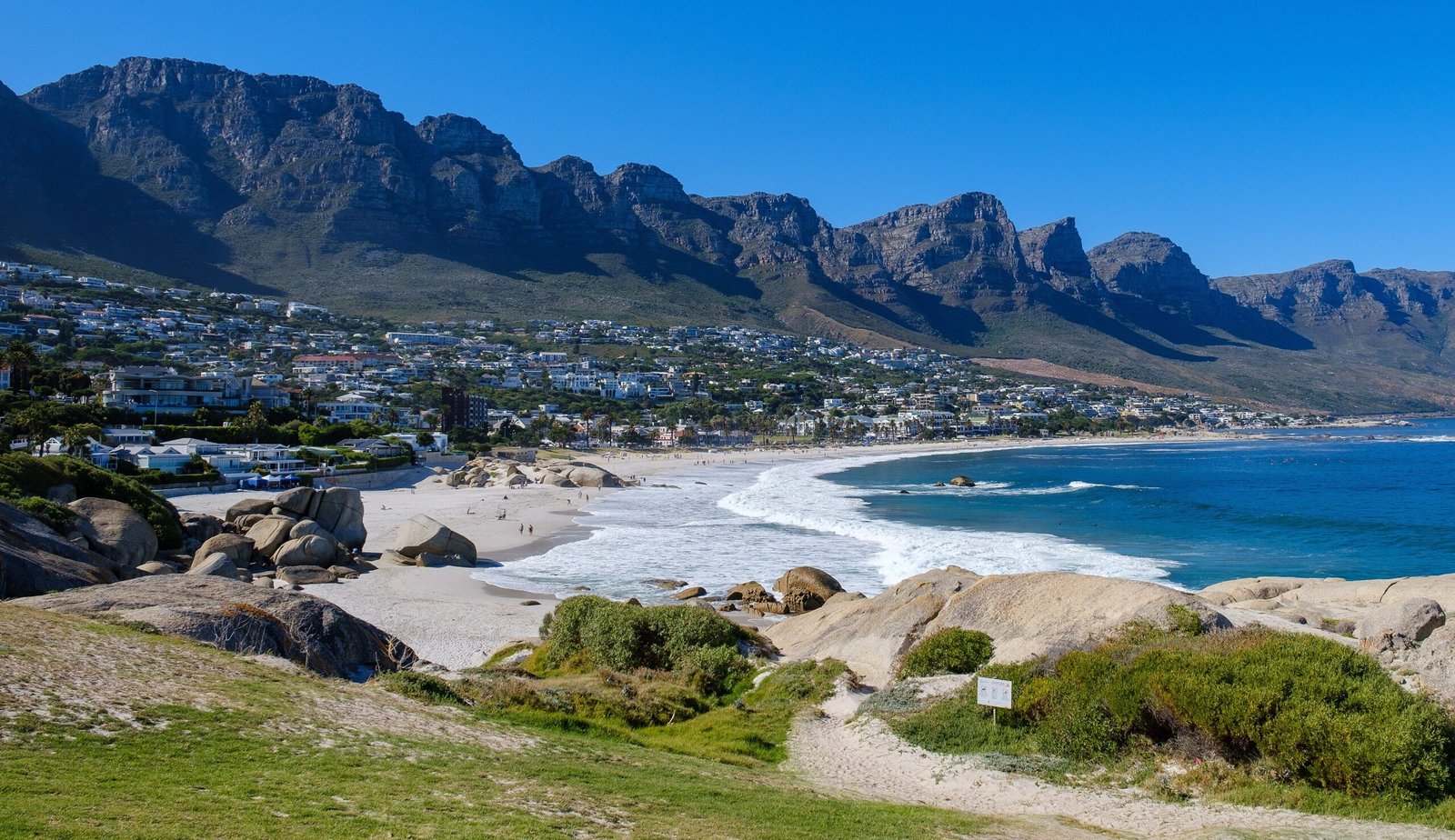
Cape Town is one of the world’s most scenically dramatic cities — Table Mountain, Atlantic coast beaches, wine farms within an hour, and a monthly cost of living that is extraordinary value for USD or GBP earners. The trade-off: load shedding and urban safety require planning. Here is the honest 2026 breakdown.
Currency: South African Rand (ZAR). Approximate USD equivalents used. 1 USD ≈ 18.5 ZAR in mid-2026. Monthly estimates based on July 2026 data from expat communities and local listings.
| Category | Budget | Comfortable | Premium |
|---|---|---|---|
| Accommodation (furnished 1-bed) | $350–$600 | $600–$1,100 | $1,100–$2,500 |
| Food and eating out | $150–$300 | $300–$500 | $500–$900 |
| Transport (Uber + car) | $80–$150 | $150–$250 | $250–$500 |
| Utilities (electric, water, internet, generator) | $80–$150 | $150–$250 | $250–$500 |
| Entertainment, gym, wine farms, socialising | $80–$200 | $200–$350 | $350–$800 |
| Total monthly estimate | $740–$1,400 | $1,400–$2,450 | $2,450–$5,200 |
What Cape Town offers that nowhere else does
Cape Town’s pitch is unique: a major city with first-world hotel and restaurant infrastructure, extraordinary natural scenery (Table Mountain National Park, Cape of Good Hope, Boulders Beach penguins, Cape Winelands), and a monthly cost that undercuts Amsterdam or Sydney by 50 to 70 percent. The Rand’s weakness against USD and GBP is the structural reason — it transforms Cape Town into an aspirational lifestyle destination for foreign-income earners.
Neighbourhoods for expats
Sea Point: Cape Town’s most popular expat neighbourhood — an Atlantic Ocean promenade (Sea Point Promenade), walkable streets lined with restaurants and cafés, good supermarkets. A furnished 1-bedroom costs USD 600 to 1,000. Safe to walk day and night. Green Point and De Waterkant: adjacent to Sea Point, slightly more upscale, close to the V&A Waterfront complex. Gardens and Tamboerskloof: on the slopes of Signal Hill, quiet, leafy, close to the City Bowl. USD 600 to 950. Camps Bay: prestige beachfront, White Sands and Lion’s Head nearby. Beautiful but significantly more expensive: USD 1,200 to 2,500. Worth it for the setting if the budget allows.
Load shedding — the essential briefing
Eskom, South Africa’s state electricity utility, has operated rolling power cuts (load shedding) due to ageing power generation infrastructure. In 2026, while improvements have been made, Stage 2 and Stage 4 load shedding remain common — that means 2 to 4 hours of no electricity per day at Stage 2 and 8 hours at Stage 4.
For expats, the practical impact depends entirely on your accommodation: modern short-term rentals in Sea Point and Camps Bay typically have generators or solar+battery backup systems. When enquiring about an apartment, ask specifically: ‘Is there generator/solar backup for load shedding and what stages does it cover?’ Many modern apartments advertise ‘loadshedding free’ or ‘stage 4 backup’. Without backup, 8-hour daily outages make remote work non-viable.
Food and the Cape Winelands
Cape Town’s restaurant scene is exceptionally strong — Jason Bakery, La Tête, FYN (one of Africa’s best restaurants, Michelin recommended), and the Constantia Wine Estate restaurants represent the premium end. A dinner at a mid-range restaurant in Sea Point or Green Point runs ZAR 300 to 600 (USD 16 to 32) per head. A quick meal at a local café or takeaway: ZAR 80 to 150 (USD 4 to 8). Pick n Pay or Checkers grocery shopping for one week: ZAR 600 to 1,100 (USD 32 to 60).
The Cape Winelands (Stellenbosch 45 minutes, Franschhoek 75 minutes, Paarl 60 minutes) are Cape Town’s weekend destination. A full tasting flight at a world-class wine estate (Boschendal, Spier, Klein Constantia) costs ZAR 100 to 250 (USD 5 to 14). A bottle of excellent Pinotage or Chenin Blanc: ZAR 80 to 200 (USD 4 to 11) from the farm cellar.
South Africa’s Remote Work Visa
South Africa launched a Remote Work Visa (technically via Section 11(2)(b) of the Immigration Act) allowing foreigners to live and work remotely in South Africa for up to 3 years. Requirements: proof of remote employment with an employer outside South Africa or self-employment with foreign clients, health insurance valid in South Africa, proof of accommodation, and a minimum monthly income (threshold is set periodically — confirm with an immigration attorney). Applications are processed at a South African embassy or through a South African immigration specialist.
Safety — an honest assessment
Cape Town’s crime statistics require context. The city has significant inequality and specific high-crime areas, but the neighbourhoods where most expats live (Sea Point, De Waterkant, Green Point, Gardens, Camps Bay) have manageable day-to-day safety with standard urban precautions. The practical rules that experienced Cape Town expats follow: use Uber rather than street taxis, particularly at night; don’t walk with expensive items visible in crowded areas; avoid the CBD (central business district) after dark; follow local advice about which routes and areas to avoid at specific times.
Internet
Cape Town has very good fibre internet infrastructure in residential areas. Openserve, Vumatel, and MetroFibre all have fibre networks in Sea Point and surrounds. A 100 to 200 Mbps home fibre plan costs ZAR 600 to 1,200 (USD 32 to 65) per month. Co-working spaces in Cape Town include Workshop17 (V&A Waterfront and Rosebank), The Attic, and Bandwidth Barn — day passes from USD 10 to 20.
Healthcare
South Africa has a dual public-private healthcare system. The public system (state hospitals) is overburdened; expats always use the private system. Discovery Health, Momentum Health, and Bonitas are the major private medical aid providers. Comprehensive private cover for a healthy adult under 40: ZAR 2,500 to 4,500 (USD 135 to 243) per month. Mediclinic and Netcare hospital groups provide international-standard care across Cape Town. A GP consultation at a private clinic: ZAR 500 to 900 (USD 27 to 49).
Cape Town is windy — specifically, the Cape Doctor (the south-easterly wind that sweeps across the Cape Peninsula from November to February) is fierce. Sea-facing apartments and the Atlantic side of the city are most affected. Ask specifically about building orientation and window exposure when viewing apartments — a south-east facing apartment in summer can be exhausting in the wind, while a north-facing apartment on the same block is tranquil.
Is Cape Town the right base?
Cape Town is one of the world’s most compelling lifestyle destinations at extraordinary value for foreign-income earners. The natural setting is unmatched, the food and wine culture is world-class, and the expat community is established and welcoming. The material trade-offs — load shedding, urban safety requiring awareness, and some infrastructure inconsistency — are real but manageable with preparation. For remote workers who can tolerate those complexities, Cape Town delivers a quality of life that is essentially impossible to replicate at the same monthly cost anywhere in Europe or North America.
Further reading
- Cost of living in Málaga, Spain 2026: digital nomad and expat budget
- Cost of living in Buenos Aires, Argentina 2026: expat monthly budget
- Cost of living in Split, Croatia 2026: expat and digital nomad budget
- Cost of living in Porto, Portugal 2026: expat monthly budget
- Cost of living in Penang, Malaysia 2026: expat monthly budget