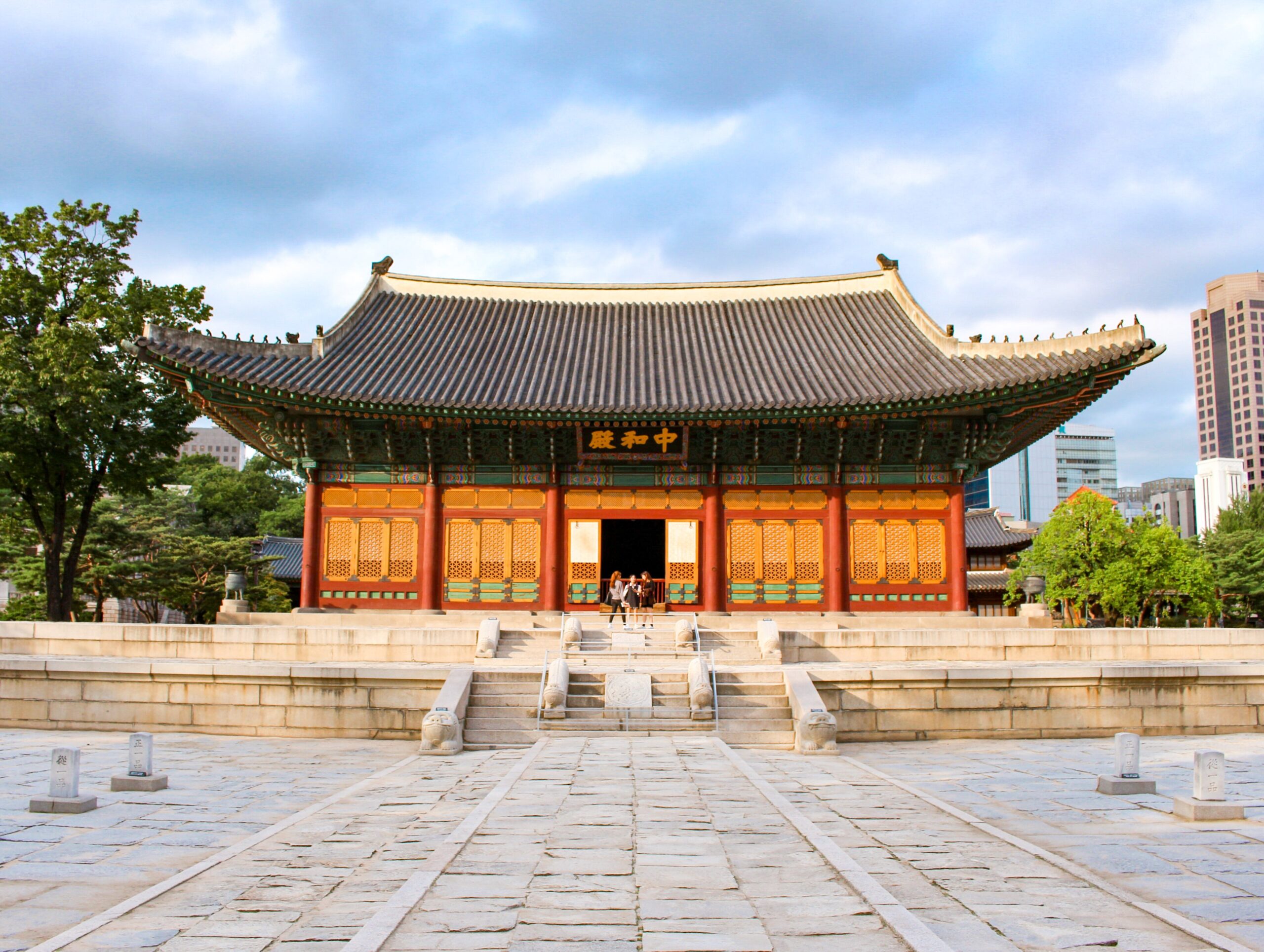
South Korea’s Workation visa lets remote workers live in Seoul or Busan for 1-2 years at a $62K/year threshold — modest by Asia-Pacific standards for the infrastructure you get. Add Korea’s startup ecosystem and K-content boom, and it’s one of Asia’s most overlooked moves. Verified 2026 detail.
Last verified: May 26, 2026.
F-1-3 / F-2-7 / D-7-1 long-stay visas + Workation visa overview
- Workation Visa (F-1-D): 1-2 yrs, requires KRW 85M (~$62K) annual income, remote work for non-Korean employer
- Other relevant: D-7 (intra-company), F-2-7 (points-based), F-5 (PR after 5 yrs)
- Cost: KRW 100K-200K ($75-150)
- Tax: 6-45% progressive (high)
- Healthcare: National Health Insurance enrollment mandatory after 6 months
Why South Korea works
- Seoul has world-best urban infrastructure (transport, internet, food, delivery)
- Fastest broadband globally + 5G everywhere
- K-content boom — fashion, food, music, cosmetics, design all booming
- Strong startup + tech ecosystem (Naver, Kakao, Samsung, LG)
- Direct flights to most major Asian + US west coast cities
Eligibility requirements
- Non-Korean citizen + remote employer/freelance (Workation track)
- Income KRW 85M+/yr (Workation) — equivalent to 2x Korean GDP per capita
- Health insurance + Korean address proof
- Apostilled criminal record
- For D-7: company transfer documentation
Cost of living — South Korea 2026
- 1-bed Seoul (Gangnam, Itaewon, Hongdae): KRW 1.5M-2.5M ($1,100-1,850/month) — typically with massive jeonse deposit OR monthly wolse
- 1-bed Busan / Daegu: KRW 800K-1.5M ($600-1,100)
- Restaurant meal: KRW 10K-30K ($7-22)
- Couple comfortable monthly: $2,800-4,500 USD (Seoul) / $1,800-3,000 (smaller cities)
FAQ
What’s jeonse and how does it work?
Korean rental system: instead of monthly rent, you deposit a huge lump sum (50-80% of property value) which the landlord uses/invests, then returns at lease end. Most foreigners use wolse (deposit + monthly rent) instead, with smaller deposits (KRW 5-30M).
Is Korean hard to learn for daily life?
Hangul (Korean alphabet) takes ~2 weeks to learn. Conversational Korean is harder but English signage is everywhere in Seoul. Most Koreans under 40 speak basic English. Major service apps (KakaoTalk, Naver Map) have English UI options.
F-1-D Workation Visa + D-7 + F-2-7 application process step by step
Step 1. Workation visa (F-1-D): apply at Korean consulate or HiKorea online portal. Income proof KRW 85,000,000/year (~$62K).
Step 2. D-7 (intra-company): employer-sponsored transfer from foreign company’s Korea branch.
Step 3. F-2-7 (points-based): self-application via HiKorea after meeting points threshold.
Step 4. F-5 (PR): after 5+ years on appropriate visa categories.
Step 5. Application fee: KRW 100,000-200,000 ($75-$150).
Banking + practical setup in South Korea
Major banks: KB Kookmin Bank, Shinhan Bank, Hana Bank, Woori Bank. International: Citi Korea, Standard Chartered Korea.. KB + Shinhan most foreigner-friendly with English-speaking branches in Seoul. Account opening requires ARC (Alien Registration Card, issued after registering residence) + passport + proof of address. KakaoBank fintech also accepts foreigners post-ARC.
Cultural notes for newcomers
Korean culture is increasingly visible globally via K-content (K-pop, K-drama, K-beauty, Korean cuisine). Seoul is one of Asia’s most modern cities — best public transit, fastest internet, world-class food + cafe culture, vibrant nightlife. Confucian-influenced social structure means hierarchy + age respect matter. Some English in Seoul tourist + tech districts; Korean essential outside.
Real cost of living + lifestyle
Seoul (Gangnam, Itaewon, Hongdae) couple: KRW 2.5M-4M ($1,850-$2,950)/month basics + housing. Busan: KRW 1.5M-2.5M. Jeonse rental system (huge deposit, no monthly rent) is uniquely Korean; wolse (deposit + monthly rent) more common for foreigners. Healthcare: NHI (National Health Insurance) mandatory after 6 months, excellent system.
Most common newcomer pitfall
Jeonse deposit can be KRW 50-300M ($37K-$220K) — recovered at lease end but illiquid during stay. Wolse with smaller deposit (KRW 5-30M) + monthly rent is more practical for first-year expats. Korea’s alien registration system is strict — register within 90 days or face fines.
How South Korea compares to regional peers
Vs Japan: Korea has stronger startup ecosystem + faster pace + better English in tech. Japan has deeper cultural traditions + more visa pathways + better immigration to nationals.
Additional FAQ
Is the Workation visa really new + viable?
Yes — F-1-D launched January 2024 as Korea’s formal digital-nomad visa. ~3,000 issuances in first 18 months. Korea adapted slowly to remote-work demand. The visa is genuinely new — many older articles online describe pre-2024 routes that no longer apply.
How much Korean do I need to learn?
Hangul (Korean alphabet) takes ~2 weeks to learn — high payoff for daily life. Conversational Korean essential outside Seoul tourist districts. Most Koreans under 35 in Seoul speak basic English; older Koreans + outside Seoul less so. Apps (Papago for translation, Naver Map) bridge gaps.
Why this country/region in 2026 specifically
South Korea’s F-1-D Workation visa (launched January 2024) is Asia’s most prestigious new nomad pathway — KRW 85M/year (~$62K) threshold filters for genuine remote-work professionals, while Seoul’s position as Asia’s top tech ecosystem city + world-best infrastructure creates premium nomad environment. For tech professionals + K-content creators + cross-cultural professionals, Korea offers Asia’s most rapidly-developing creative economy.
Korea’s F-1-D issuance has been deliberate + slow — government wants quality over quantity. ~3,000 active F-1-D holders as of mid-2026. Seoul’s Gangnam + Itaewon + Hongdae districts have rapidly-expanding nomad infrastructure. F-2-7 points-based pathway provides longer-term option for those wanting beyond Workation visa’s 1-2 year scope.
Even more FAQ
Can I convert F-1-D Workation to longer-term Korean visa?
Yes — F-1-D can be converted to D-7 (intra-company), D-8 (investor), D-10 (job-seeker), or F-2-7 (points-based) depending on circumstances. Most common conversion: F-1-D → D-7 if you join a Korean company’s overseas branch → F-2-7 (points-based) → F-5 (PR after 5 years). Long-term Korea pathway is achievable through these conversions.
Related: full visa comparison · Thailand DTV · Bali B211A.
✓ Last verified: May 26, 2026.
Further reading
- US F-1 student visa 2026: complete application guide, financial requirements, OPT and H-1B pathway
- Countries with golden visa programs in 2026: investment requirements, residency rights, citizenship pathways
- Erasmus+ 2026: monthly grants, how to apply, Erasmus Mundus Joint Masters, Turing Scheme for UK
- Masters in Australia for international students 2026: tuition, Student visa, post-study work permit
- Masters in Canada for international students 2026: tuition, Study permit, PGWP, Express Entry