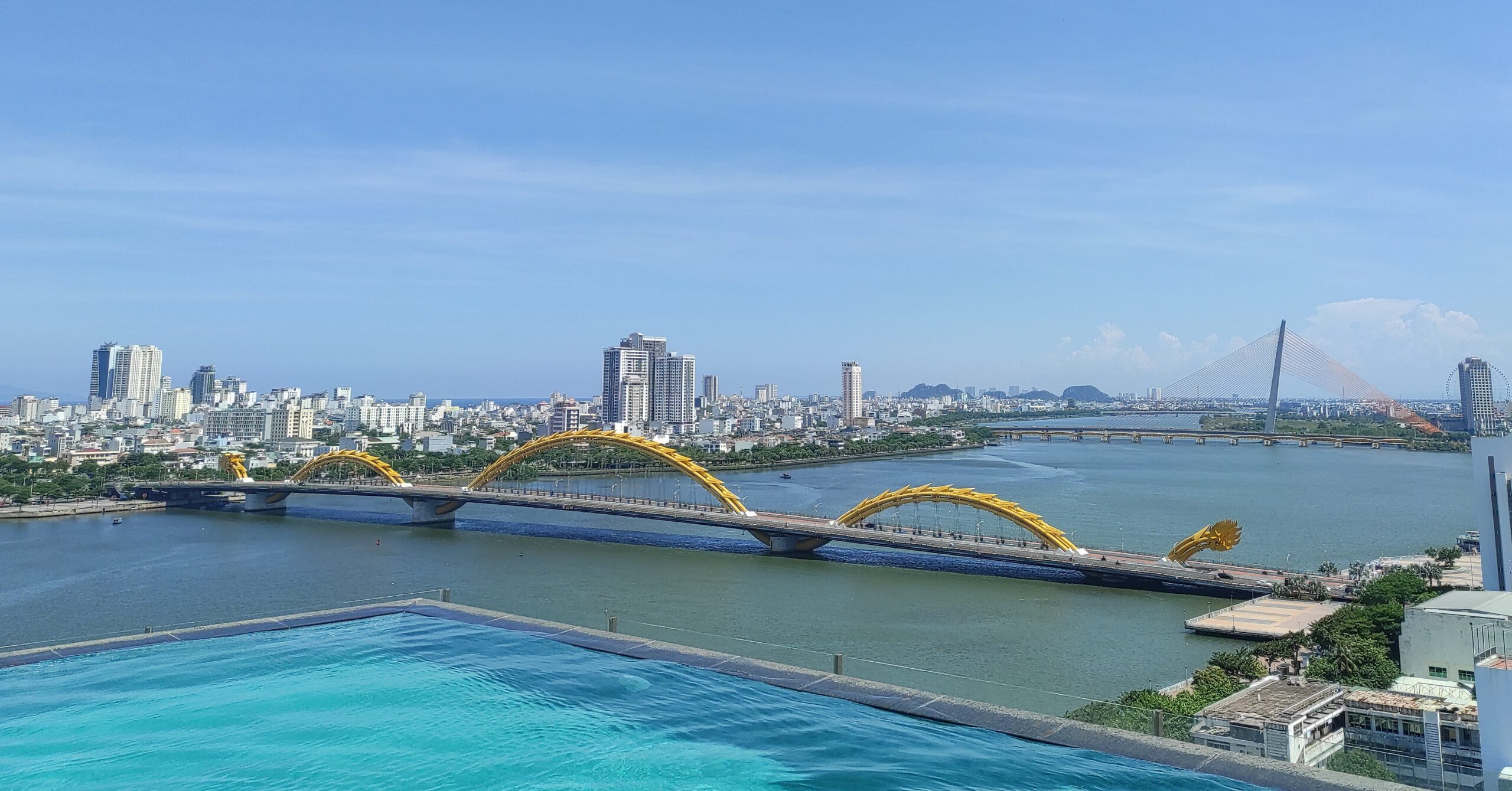
Vietnam offers Asia’s lowest-cost nomad lifestyle ($900-1,800/month couple budgets), with Da Nang emerging as the region’s fastest-growing nomad hub. Verified 2026 visa paths and real cost detail below.
Last verified: May 26, 2026.
Tourist E-Visa, Work Permit, and Temporary Residence Card overview
- E-visa (most popular): 90 days, single or multiple entry, $25-50 fee, online application
- Work permit: employer-sponsored, 2 yrs validity, requires university degree + 3 yrs experience
- Temporary Residence Card (TRC): 2-5 yrs, requires investor/employer/family-tie status
- Tax: Vietnamese resident if 183+ days; progressive 5-35%
Why Vietnam works
- Lowest cost of living among major Asian nomad bases (cheaper than Thailand, Malaysia, Indonesia)
- Da Nang has become Asia’s fastest-growing nomad hub (great beach + low cost + good infrastructure)
- Hanoi for culture, Saigon (HCMC) for nightlife + business
- E-visa is one of Southeast Asia’s easiest online applications
- Phenomenal food culture at low prices
Eligibility requirements
- E-visa: passport scan, photo, $25-50, application via evisa.xuatnhapcanh.gov.vn (official) — approval typically 3-7 days
- Work permit: sponsoring Vietnamese employer + degree + 3 yrs experience + health check + apostilled criminal record
- TRC: investor or married-to-Vietnamese or work-permit holder track
Cost of living — Vietnam 2026
- 1-bed Da Nang (beachfront): VND 8M-15M ($330-620)
- 1-bed Saigon (District 1, District 3): VND 12M-25M ($495-1,030)
- 1-bed Hanoi (Old Quarter, Tay Ho): VND 10M-20M ($415-825)
- Restaurant meal: VND 80K-200K ($3.30-8.25)
- Couple comfortable monthly: $900-1,800 USD (cheapest of major Asian nomad bases)
FAQ
Is the Vietnam DTV-equivalent visa coming?
Vietnam announced plans in 2024 for a digital nomad-style long-stay visa, with implementation expected 2026-2027. As of mid-2026, the e-visa + repeated border runs is the practical workaround most nomads use.
How do visa runs work for long-stay Vietnam?
Many nomads stack: 90-day e-visa → exit to Bangkok/Phnom Penh/Singapore (cheap flights) → apply for new e-visa → re-enter. Total annual cost: ~$200 in fees + flights. Not sustainable for full residency but works for 1-2 years.
Multiple — E-visa, Work Permit, TRC application process step by step
Step 1. E-visa (most popular): online at evisa.xuatnhapcanh.gov.vn. Single or multi-entry, 90 days max.
Step 2. Required: passport scan, photo, $25-$50 fee. Processing: 3-7 days.
Step 3. Work permit: employer-sponsored, requires degree + 3+ years experience.
Step 4. TRC (Temporary Residence Card): 2-5 years, requires investor/employer/family-tie status.
Step 5. Vietnam announced plans for formal digital-nomad visa in 2024-2026 timeframe but full implementation pending.
Banking + practical setup in Vietnam
Major banks: Vietcombank, BIDV, Techcombank, VPBank, ACB. International: Citi Vietnam, HSBC Vietnam, Standard Chartered.. Techcombank + VPBank most fintech-friendly. Account requires TRC + passport + Vietnamese address. E-visa holders generally cannot open Vietnamese bank accounts — workaround: use Wise + Revolut + USD-denominated accounts via international banks with Vietnam branches.
Cultural notes for newcomers
Vietnam combines Confucian heritage with French colonial influence + dynamic modern energy. North (Hanoi) is more traditional + reserved; south (Saigon/HCMC) is commercial + entrepreneurial; central (Da Nang, Hoi An) blends both. Three regions, three accents, three culinary traditions (Northern pho, Central royal cuisine, Southern sweet/spicy). Vietnamese language is tonal — Mandarin background helps.
Real cost of living + lifestyle
Da Nang (beach + tech hub) couple: $900-$1,500/month — among Asia’s lowest for nomad lifestyle. Hanoi (Old Quarter, Tay Ho): $1,000-$1,700. Saigon (District 1, District 3): $1,100-$1,800. Healthcare: Vinmec hospital chain (Saigon, Hanoi, Da Nang), FV Hospital (Saigon) — JCI-quality at 20-30% of US prices.
Most common newcomer pitfall
E-visa stack approach (90 days → exit → re-enter on new e-visa) used by many long-stay nomads but tightening enforcement in 2024-2025. Vietnamese immigration started flagging frequent border-bouncers in 2024. For long-term stay, work permit + TRC remains the proper path.
How Vietnam compares to regional peers
Vs Thailand: Vietnam is cheaper + faster-growing tech scene (Da Nang) + better food culture (subjective, fierce debate). Thailand has more mature infrastructure + visa options + Bangkok’s international scene.
Additional FAQ
When will Vietnam launch its digital-nomad visa?
Government announced intent in 2023; legislative process ongoing through 2025-2026. Most reliable expectation: limited pilot 2026, full launch 2027. Likely structure: 1-2 year validity, $1,500-$2,500/month income threshold, work-permit-style restrictions on Vietnamese clients. Watch immigration ministry (Bộ Công an) announcements.
Best Vietnamese city for first-time nomads in 2026?
Da Nang — beach + mountains within 30 minutes, lowest cost of three major cities, growing English-speaking infrastructure, weather better than Hanoi (no winter) or Saigon (less humid). Hanoi for culture + history + lower humidity in winter. Saigon for nightlife + business + commercial energy.
Why this country/region in 2026 specifically
Vietnam’s 2026 nomad value combines Asia’s lowest cost-of-living among Tier-1 nomad destinations ($900-$1,500/month couple) with rapidly-developing infrastructure (Da Nang specifically) + emerging tech ecosystem + dramatic landscapes (north Sapa mountains, central beaches, south Mekong delta). The pending formal digital-nomad visa (expected 2026-2027) will further legitimize what’s already become a major nomad destination.
Vietnamese government announced intent to launch dedicated digital-nomad visa in 2023; implementation timeline 2026-2027. Da Nang has emerged as Southeast Asia’s fastest-growing nomad hub — coastal lifestyle + tech infrastructure + government nomad-friendliness. Saigon (HCMC) for nightlife + business; Hanoi for culture + history.
Even more FAQ
When will Vietnam launch its dedicated nomad visa?
Government drafts in 2023-2024 indicated 1-2 year validity, $1,500-$2,500/month income threshold, work-permit-style restrictions on Vietnamese clients. Full implementation expected 2026-2027 after legislative completion. Current workaround: 90-day e-visa stacking or work-permit conversion for those with Vietnamese employer.
Related: full visa comparison · Thailand DTV · Bali B211A.
✓ Last verified: May 26, 2026.
Further reading
- US F-1 student visa 2026: complete application guide, financial requirements, OPT and H-1B pathway
- Countries with golden visa programs in 2026: investment requirements, residency rights, citizenship pathways
- Erasmus+ 2026: monthly grants, how to apply, Erasmus Mundus Joint Masters, Turing Scheme for UK
- Masters in Australia for international students 2026: tuition, Student visa, post-study work permit
- Masters in Canada for international students 2026: tuition, Study permit, PGWP, Express Entry