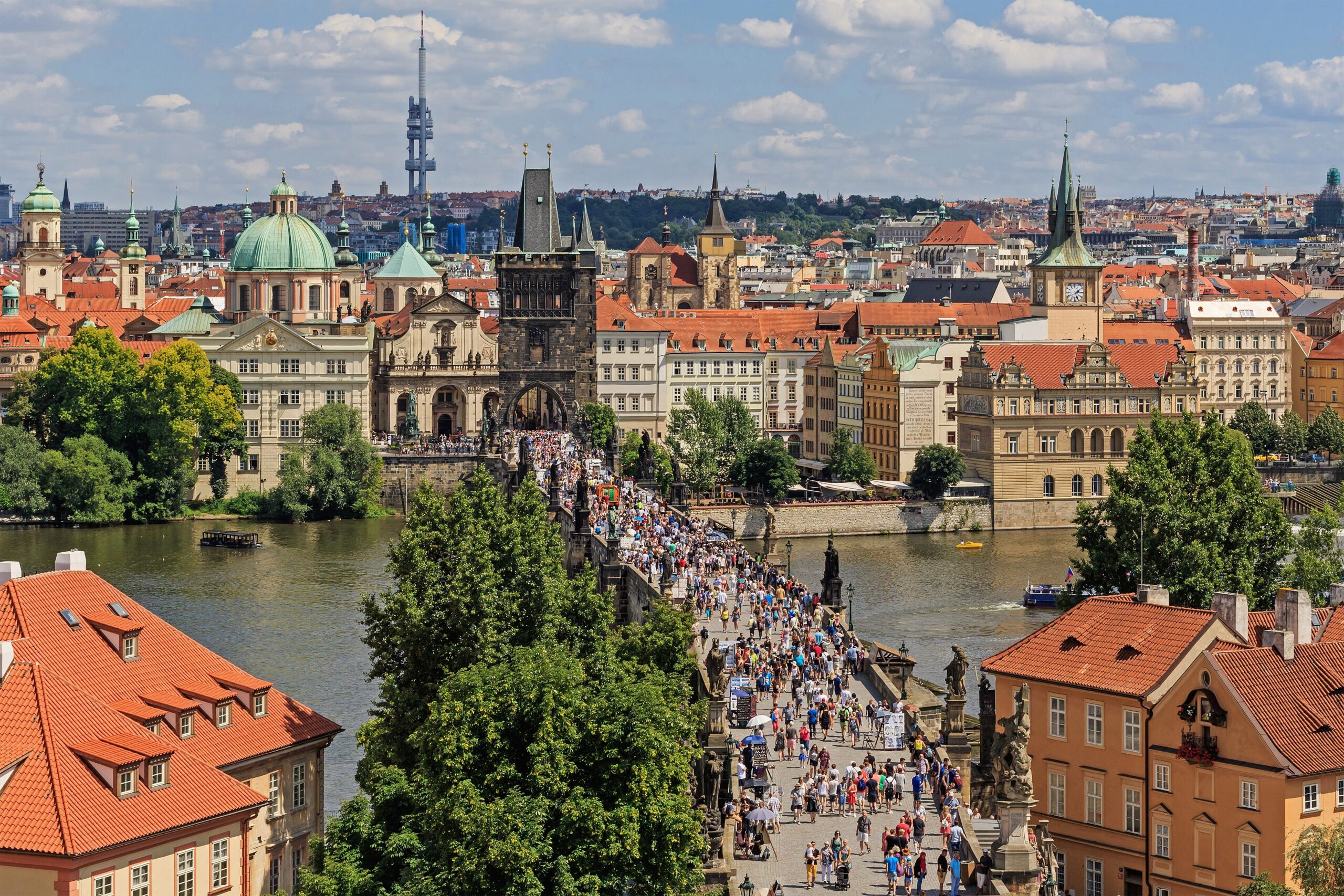
Eastern Europe is the EU’s underrated frontier for expats. 30-50% cheaper than Western Europe, English-friendly tech scenes, strong food + cultural traditions. Here are the 6 best cities for foreign workers in 2026.
Last verified: May 6, 2026.
1. Prague, Czech Republic — best overall
Prague is the gold standard for Eastern European expat life. Strong digital nomad infrastructure, excellent public transport, walkable, beautiful architecture, vibrant cultural scene.
- Cost (mid-range 1-bed lifestyle): €1,500-2,500/month
- Major industries: tech (Avast, GoodData, Microsoft offices), pharma, automotive
- English in workplace: very common, especially in tech + international firms
- Visa path: Czech Zivno (trade license) for self-employed; EU Blue Card for skilled employees
- Best neighborhoods: Vinohrady (residential, beer gardens), Holešovice (artsy), Karlin (riverside, restaurants), Žižkov (bohemian)
- Pros: beautiful, walkable, dense cultural scene, great beer + food, easy travel within EU
- Cons: tourist crowds in summer in Old Town, rising prices since 2020, limited non-Czech career mobility
2. Warsaw, Poland — best for tech careers
Warsaw has emerged as Eastern Europe’s top tech hub. Major fintech, e-commerce, software outsourcing presence. Higher salaries than other regional capitals.
- Cost: €1,400-2,200/month for similar lifestyle
- Major industries: tech (Allegro, Brainly, DocPlanner, Google), banking, media
- English in workplace: standard in tech + international firms
- Visa path: Polish Blue Card for skilled workers, Polish ‘temporary residence card’ for self-employed
- Best neighborhoods: Mokotów (residential), Praga (artsy), Powiśle (riverside), Wola (modern + transit)
- Pros: highest tech salaries in EE, growing modernity, robust public transport
- Cons: historical city center largely rebuilt (less old-world charm), winters cold, traffic intense
3. Budapest, Hungary — best balance of cost and quality
Budapest combines beautiful Habsburg architecture with thermal baths, ruin pubs, growing nomad scene. Lowest cost of major regional capitals while maintaining good infrastructure.
- Cost: €1,200-2,000/month for typical 1-bed expat lifestyle
- Major industries: shared services (BlackRock, Citi, Morgan Stanley back offices), tech (Prezi, IBM)
- English in workplace: common in international + tech firms
- Visa path: Hungary Digital Nomad Visa (€2,000/month income) since 2024
- Best neighborhoods: District 7 (Jewish Quarter, ruin pubs), District 5 (downtown), District 13 (residential), Buda Hills (quieter, family)
- Pros: stunning architecture, thermal baths, ruin pub culture, low cost, excellent food scene
- Cons: Hungarian language barrier outside tourism, political climate concerning to some
4. Bucharest, Romania — emerging value play
Bucharest is one of Europe’s cheapest capitals while maintaining EU membership. Tech sector growing rapidly with major outsourcing centers + emerging startups.
- Cost: €900-1,500/month for similar lifestyle
- Major industries: tech (UiPath unicorn, BitDefender, Endava), shared services, automotive engineering
- English in workplace: tech + international firms have English working language
- Visa path: Romania Digital Nomad Visa (€3,700/month income) since 2022
- Best neighborhoods: Old Town (Centrul Vechi – tourist-heavy), Floreasca (residential, growing), Aviatorilor (upscale)
- Pros: very cheap (40% less than Western Europe), beautiful Belle Époque architecture, friendly locals, growing tech ecosystem
- Cons: infrastructure mixed (some areas underdeveloped), traffic intense, less polish than Prague/Warsaw
5. Kraków, Poland — best second-tier
Smaller than Warsaw but charm-packed. Major tech outsourcing + tourism hub. Cheaper than Warsaw but smaller career market.
- Cost: €1,200-1,900/month for typical lifestyle
- Major industries: tech outsourcing (Capgemini, Sabre), tourism, gaming (CD Projekt Red)
- English: very common in tech and tourism
- Visa path: Polish Blue Card / temporary residence
- Best neighborhoods: Kazimierz (Jewish quarter, restaurants, bars), Stare Miasto (Old Town, tourist), Podgórze (residential, growing)
- Pros: beautiful Old Town (UNESCO), great food + drink, friendly community, easy weekend trips
- Cons: tourist saturation in summer, smaller market than Warsaw, public transport less developed
6. Tallinn, Estonia — best for digital tech
Estonia is Europe’s digital pioneer with e-Residency, government digitization, and strong startup scene (TransferWise/Wise + Skype + Bolt). Tallinn is small but punches above weight.
- Cost: €1,400-2,200/month for similar lifestyle
- Major industries: tech (Wise, Skype, Bolt, Pipedrive), e-government services, fintech
- English: excellent — most professionals fluent
- Visa path: Estonia Digital Nomad Visa (€4,500/month) — relatively easy + fast
- Best neighborhoods: Old Town (touristy but charming), Kalamaja (artsy, gentrifying), Kadriorg (residential, parks)
- Pros: world-class digital infrastructure, English-friendly, gateway to Helsinki + Stockholm, e-Residency program for global founders
- Cons: small (450K population), winters dark + cold, smaller cultural scene than larger cities
Honorable mentions
Riga, Latvia
Like Tallinn but cheaper. Less tech industry, more shared services + finance. Beautiful Art Nouveau architecture. €1,200-1,900/month.
Vilnius, Lithuania
Smallest of Baltic capitals. Growing fintech (Revolut Eastern European HQ). Quiet, walkable, charming Old Town. €1,200-1,800/month.
Sofia, Bulgaria
Cheapest EU capital. Tech outsourcing growing, especially TS-related. Mountain access. €800-1,400/month. Limited English outside tech + tourism.
Belgrade, Serbia
Not EU but emerging. Vibrant nightlife, growing nomad scene. €1,000-1,600/month. Visa-friendly for many nationalities (90 days visa-free + extensions).
How to choose between cities
Match the city to your priorities:
- Career-focused (tech): Warsaw > Tallinn > Prague > Kraków > Bucharest
- Lifestyle-focused: Prague > Budapest > Kraków > Tallinn > Warsaw
- Cost-optimized: Sofia > Bucharest > Belgrade > Budapest > Riga
- English-immersive: Tallinn > Prague > Warsaw > Riga > Vilnius
- Family-friendly: Prague > Tallinn > Budapest > Kraków
- Cultural scene: Budapest > Prague > Kraków > Bucharest
- Closest to Western Europe: Prague > Warsaw > Kraków > Budapest
Common mistakes when choosing Eastern European cities
- Optimizing only for cost: Sofia is 40% cheaper than Prague but the quality of life trade-off is significant. Don’t optimize one variable
- Ignoring winters: all these cities have proper winters (-5 to -15°C, dark by 4pm). If you’re sun-dependent, factor this in
- Underestimating language barrier: while English works in tech + tourism, daily life (banks, government, doctors) often requires local language. Allocate 6-12 months to learn basics
- Choosing based on travel charm vs living reality: visiting Budapest as tourist is enchanting; living there is different. Try a 1-month Airbnb before committing
- Career mobility limits: outside Warsaw + Prague, mid-career professionals can find limited ‘next career step’ opportunities. Plan 3-5 year horizons
Visa pathways summary
- Czech Republic Zivno (€5,400/year, 1-year renewable, EU PR after 5): best long-term path for self-employed
- Poland (varies): Blue Card for skilled workers (€55K+ salary), temporary residence for self-employed
- Hungary Digital Nomad (€2,000/month): 1-year non-renewable
- Romania Digital Nomad (€3,700/month): 1-year renewable
- Estonia Digital Nomad (€4,500/month): 1-year non-renewable
- Lithuania Self-Employed: requires registered Lithuanian business + €30K+ income
Related: Czech Zivno visa · best digital nomad visas.
✓ Last verified: May 6, 2026.
Further reading
- Cost of living in Medellín, Colombia 2026: monthly budget for expats
- Cost of living in Chiang Mai, Thailand 2026: monthly budget for expats
- Cost of living in Bali, Indonesia 2026: monthly budget for expats
- Cost of living in Tbilisi, Georgia 2026: monthly budget for expats
- Cost of living in Da Nang, Vietnam 2026: monthly budget for expats