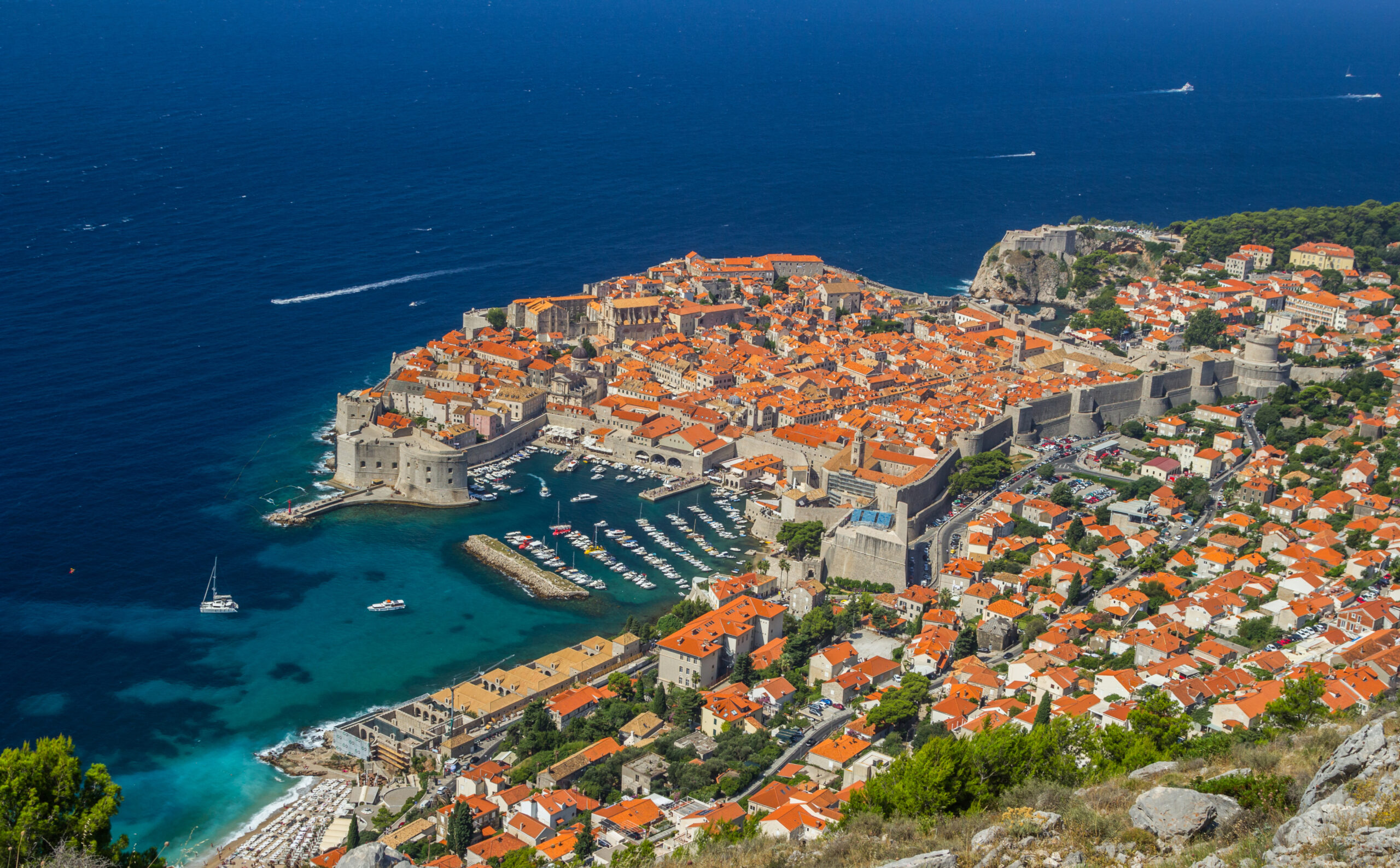
Croatia introduced its digital nomad visa in 2021 and it’s quietly become one of Europe’s most attractive remote work residencies. Income threshold lower than Portugal’s, no Croatian income tax for nomads, and stunning Adriatic lifestyle.
Last verified: May 6, 2026.
What makes Croatia’s nomad visa unique
- Lower income threshold: €2,540/month (~€30,480/year) vs Portugal’s €3,480/month
- No Croatian income tax: nomad visa holders are explicitly exempt from Croatian income tax on their foreign-earned income (rare in EU)
- Schengen access: Croatia joined Schengen in January 2023. Free movement to 26 countries
- Family included: spouse + children get same residence rights
- 1-year non-renewable: the catch — must leave for 6 months before reapplying. Different from Spain/Portugal which renew annually
- Affordable cost of living: 30-40% cheaper than Western Europe
Eligibility requirements 2026
- Non-EU/EEA citizen: EU citizens use freedom of movement
- Remote work for non-Croatian employer/clients: employees of foreign companies, freelancers, or self-employed not earning from Croatian sources
- Income proof: €2,540/month minimum for 6 months prior, OR €30,480 in savings
- Health insurance: private coverage valid in Croatia for the visa duration
- Background check: no criminal record from home country
- Croatian address: rental contract for the visa period
- Valid passport: 6+ months remaining + 2 blank pages
Application process step-by-step
Step 1: Apply at Croatian consulate (your country)
- Documents required:
- Completed visa application form
- Passport-size photo (2x)
- Passport + copy
- Employment contract OR freelance contracts (current)
- Bank statements (6 months) showing €2,540+ monthly income
- Health insurance certificate (valid in Croatia)
- Background check (apostilled, dated within 6 months)
- Proof of accommodation in Croatia
- Application fee (~€110)
- Timeline: 30-60 working days
Step 2: Travel to Croatia within 90 days of approval
Visa approval gives you 90-day window to enter Croatia. After arrival:
- Within 30 days: visit local police station (Policijska uprava) to register residence
- Receive residence card (Boravišna iskaznica): 1-3 months after registration
- Get Croatian tax ID (OIB): at Tax Administration (Porezna uprava) office. Required for many transactions
Costs and tax structure
Application costs
- Visa application fee: ~€110
- Apostille certifications: €30-100 per document (varies by country)
- Document translations to Croatian: €40-100 per document if Croatian translation required
- Consulate-specific fees: some consulates charge service fees ~€20-50
- Total application cost: €200-400 + travel to consulate
Tax obligations
Critical and unique feature: nomad visa holders pay ZERO Croatian income tax on foreign-source income. This includes:
- Salary from foreign employers
- Freelance income from non-Croatian clients
- Investment income (dividends, capital gains) from non-Croatian assets
- Pension or other passive income
Conditions:
- Cannot earn from Croatian companies/clients: any Croatian-source income breaks the exemption + makes you tax-resident
- 183-day rule still applies for tax residency: spending 183+ days in Croatia could trigger tax residency, but the nomad visa exemption supersedes
- You may still owe taxes in your home country: US citizens pay US tax regardless. UK residents may have ongoing obligations. Talk to cross-border tax adviser
Cost of living in Croatian cities (2026)
Split (most popular for nomads)
- 1-bed apartment (Old Town, Bačvice, Marjan): €700-1,200/month
- 1-bed apartment (Žnjan, Dujam): €500-800/month
- Groceries: €200-300/month
- Restaurants (mid-range): €25-45/meal for two
- Coworking (Saltwater Workspaces, Niche): €100-200/month
- Total mid-range: €1,500-2,500/month
Zagreb (Croatia’s capital)
- 1-bed apartment (Centar, Maksimir, Trešnjevka): €600-1,000/month
- Total mid-range: €1,300-2,200/month
- Pros: better infrastructure, cheaper, less seasonal tourism
- Cons: not coastal — 4-hour drive to sea
Dubrovnik
- 1-bed apartment: €900-1,500/month (year-round); much higher in summer
- Pros: stunning UNESCO Old Town, dramatic walls, Game of Thrones filming
- Cons: overrun by tourists June-September, expensive, traffic, smaller community
Other options
- Rovinj (Istria): charming Italian-influenced town, growing nomad scene, €600-1,000/1-bed
- Hvar: beautiful island, very seasonal, summer-only practical
- Zadar: coastal, less touristy than Split, €500-900/1-bed
- Pula: Roman ruins, growing nomad community, €500-900
- Korčula: small island, very laid-back, summer-only
Where to base in Croatia (recommendation)
For most nomads:
- Year-round practicality: Split or Zagreb
- Summer focus: Hvar, Korčula, Rovinj
- Best balance: Split — coastal + restaurant culture + Old Town + ferries to islands + decent infrastructure year-round
- Worst choice: Dubrovnik for serious work (tourist overload year-round, cost, difficult logistics)
Healthcare on the nomad visa
Mandatory private health insurance covering Croatia. Options:
- SafetyWing: usually accepted
- Croatian commercial insurance: Croatia Osiguranje, Allianz, UNIQA. €30-100/month for nomad-grade coverage
- EU EHIC: if you’re EU citizen, you have public healthcare access (but not under nomad visa terms specifically)
- Cigna Global / IMG Global: if you want family + comprehensive coverage
Croatian public healthcare quality is solid. Doctors English-speaking in major cities. Private hospitals available for premium service.
Common mistakes Croatia nomad visa applicants make
- Trying to get Croatian-source income: any Croatian company employment or contracts breaks the tax exemption + can revoke visa
- Insufficient bank statements: 6 months of consistent €2,540+ deposits required. One short month doesn’t qualify
- Health insurance not Croatia-valid: SafetyWing works but verify with current consulate. Some have stricter requirements
- Address documents not translated: rental contract often needs Croatian translation by certified translator
- Applying without proper apostille: apostille from Croatia + apostille from your country both required for some documents
- Counting on permanent residency path: nomad visa is non-renewable. After 1 year, must leave 6 months before reapplying. NOT a path to Croatian permanent residency
Renewals and the 6-month gap rule
Critical to understand: Croatia’s nomad visa is 1 year, non-extending. To stay longer:
- Leave Croatia after 1 year
- Wait 6 months in another country (any non-Croatia destination)
- Reapply for new nomad visa
This is different from Spain/Portugal/Estonia which allow consecutive renewals. Plan accordingly. Many nomads cycle: 1 year Croatia, then 6 months in Portugal/Mexico/elsewhere, then 1 year back in Croatia.
Doing adventure activities (hiking, scuba, motorbike, surf)? Look at World Nomads instead — they cover 200+ activities that SafetyWing excludes, plus lost-gear and trip cancellation. (Affiliate link.)
Visa-accepted health insurance
Genki Native — built for Croatia DN visa applications
Comprehensive private health insurance accepted by EU consulates for long-stay visa applications (Portugal D7, Spain NLV, Italy DN, Hungary White Card, Romania DN, Estonia DN). No co-pays, no waiting periods, full European coverage. The German parent company has been underwriting expat insurance since 2008.
Get a Genki Native quote → affiliate link — we earn a commission, you pay nothing extra
See it in context: compare this visa against 35+ other nomad, freelancer, and retirement visas worldwide in every nomad visa in one sortable table — income thresholds, tax treatment, family rules, path to PR. Updated quarterly from official immigration sources.
FAQ
Can family members work? Spouse + children get residence permits but cannot work for Croatian companies. Spouses can work remotely under their own digital nomad rules.
Is Croatian language required? No, English widely spoken in Split + Zagreb tourism areas. Smaller towns less English; basic Croatian helpful.
Can I drive on home license? EU/UK/Australia/Canada/USA licenses valid 12 months from arrival. After that, exchange for Croatian.
Path to citizenship? Croatian permanent residency requires 5 years of continuous residence. Nomad visa years count IF you don’t break the chain. But practically, Croatia is a 1-year gap then 6-month break visa, so accumulating 5 years takes 7-8 calendar years.
Related: Czech Republic Zivno visa · best digital nomad visas ranked.
✓ Last verified: May 6, 2026.
Further reading
- Cost of living in Málaga, Spain 2026: digital nomad and expat budget
- Cost of living in Buenos Aires, Argentina 2026: expat monthly budget
- Cost of living in Split, Croatia 2026: expat and digital nomad budget
- Cost of living in Porto, Portugal 2026: expat monthly budget
- Cost of living in Penang, Malaysia 2026: expat monthly budget